
Technology – Page 11
-
 Article
A novel class of drug candidates for neurodegenerative diseases
At AAIC 2024, AC Immune unveiled a new class of antibody drug conjugates, called morADC (Morphomer® antibody drug conjugate). In this Q&A, CEO of AC Immune, Andrea Pfeifer, discusses how morADC uses the capabilities of the company’s two discovery platforms to combine two highly selective molecules, resulting in drug candidates ...
-
 Article
The rising demand for lentiviral vectors for in vivo gene therapy
Fuelled by advances in rare disease treatments and vaccination efforts, Natalia Elizalde, CBO at VIVEbiotech, discusses how the market demand for lentiviral vectors is evolving, the new therapeutic areas emerging as potential targets for in vivo gene therapy and the latest technological advancements in the development and delivery of in ...
-
 Article
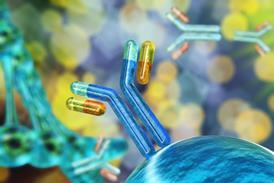
Combatting disease with antibody drug conjugates
Tune into this episode where we investigate how antibody drug conjugates can be optimised, as well as the future of the field.
-
 Article
Part two: the impact of poor data quality
In this four-part series, Dr Raminderpal Singh will discuss the challenges surrounding limited data quality, and some pragmatic solutions. In this second article, he discusses the problems that occur when using data of poor quality.
-
 Article
Women in STEM with Charlotte Owens
As Senior Vice President and Head of Global Medical Affairs & Outcomes Research at the global healthcare company Organon, Charlotte Owen’s extensive work is advancing women’s healthcare and overcoming health inequities.
-
 Article
Part one: an introduction to data quality
In this four-part series, Dr Singh will discuss the challenges surrounding limited data quality, and some pragmatic solutions. In this first article, the key attributes that define data quality and its requirement for data scientists are elucidated.
-
 Article
The art and science of drug formulation
Drug formulation is a cornerstone of modern medicine, turning raw active ingredients into consumable, effective therapies. This critical phase in drug development ensures that medications are safe, effective, and user-friendly. Here Ningfeng Fiona Li, founder and CEO of VasoDynamics, explores the world of drug formulation from its foundations to exploring ...
-
 Article
Advanced techniques in toxicity testing
Tune in to this episode where we explore how innovative assays and human-relevant cell models are transforming toxicity screening in drug development.
-
 Article
How mRNA technology could revolutionise therapeutics
In this episode, we explore how mRNA technology could revolutionise cancer therapeutics.
-
 Article
Supercharging conventional monoclonal antibodies
In this Q&A, Krishna Polu and Dennis Pedersen, senior leaders of Commit Biologics, which is backed by Novo Holdings and Bioqube Ventures, elucidate how their technology differs from other existing therapeutic platforms and highlight its implications for the treatment of both cancer and autoimmune disease.
-
 Article
The power of big data to advance genomics into clinical care
The integration of genomics into patient care will lead to more precise, personalised treatments. In this Q&A, Hylton Kalvaria, Chief Commercial Officer of Helix, explains how the Helix Research Network is creating a large-scale clinicogenomics dataset to advance research into molecular and genetic determinants of disease risk and drug response. ...
-
 Article
Part three: pragmatic guidelines to getting the best out of LLMs
There have been a slew of announcements over the past few months from AI-led biotechs around the potential of Large Language Models (LLM) in early drug discovery. In the third of a three-part series, Dr Raminderpal Singh presents some pragmatic guidelines for scientists in accessing and obtaining value from LLMs.
-
 Article
Unleashing the potential of lab-grown recombinant polyclonal antibodies
In this Q&A, Sheila Keating, Vice President of Immunology at GigaGen, a Grifols company, explains how its developments in recombinant polyclonal antibody therapies are helping to build a pipeline of highly effective treatments for a wide range of diseases, including the hepatitis B virus.
-
 Article
Part two: how ChatGPT enriched animal study results
Recently there has been a flurry of announcements from AI-led biotechs around the potential of Large Language Models (LLM) in early drug discovery. In the second of a three-part series, Dr Raminderpal Singh presents an example of usage of ChatGPT, which demonstrates how accessible LLMs have become for lab scientists.
-
 Article
Could illuminating the surfaceome help find new targeted cancer therapies?
At the heart of precision oncology is the need to increase our understanding and knowledge of surface proteins found on tumour cells. Here Roman Thomas, CEO of DISCO Pharmaceuticals, explains how it is using cutting-edge technology to explore the surfaceome – a map of the proteins on the cell’s surface ...
-
 Article
How MMR-deficient colorectal cancers regulate their growth
Understanding how MMR-deficient colorectal cancers drive tumour growth and avoid immune detection could pave the way for personalised cancer medicine.
-
 Article
Brain organoids: a fascinating and powerful tool for drug discovery
Human brain organoids are complex in vitro tools derived from stem cells, designed to model the molecular basis of neurodevelopment and the pathogenesis of neurological disorders. By mimicking the function of the human brain, in both health and disease, their application in drug discovery holds significant potential for identifying new ...
-
 Article
Changing the paradigm of drug discovery processes with AI
We had the privilege of speaking to Cellarity’s CEO, Fabrice Chouraqui, about how the company is leveraging AI to completely revolutionise the drug discovery process and unlock treatments for a vast array of diseases, even in the absence of known targets.
-
 Article
Part one: what can scientists do with LLMs today?
Recently there have been a flurry of announcements from AI-led biotechs around the potential of Large Language Models (LLM) in early drug discovery. In the first of a three-part series, Dr Raminderpal Singh explores what LLMs are, how early stage biotechs can take advantage of them, and what challenges they ...
-
 Article
Kickstarting the use of AI for biotechs: part three
Traditional wet lab scientists working on target discovery, drug identification and drug optimisation have an opportunity to catch up with their AI-enabled peers – but why should they, and how? In this article – the third of a three-part series – Dr Raminderpal Singh touches on the decisions that need ...