



All Companies articles – Page 9
-
 Article
Why most T-cell engagers fail - and how to fix it
Bispecific T-cell engagers are advancing fast - but complexity still slows development. This article explores how data-driven, platform-based strategies are helping overcome design and manufacturing hurdles to bring these next-gen therapies to patients faster.
-
 Report
Beyond the Lab: Biomarkers Powering Tomorrow’s Therapies
Biomarkers are redefining how precision therapies are discovered, validated and delivered. This exclusive expert-led report reveals how leading teams are using biomarker science to drive faster insights, cleaner data and more targeted treatments – from discovery to diagnostics.
-
 Article
Antibodies come full circle: biopharma back at the bench
Recombinant antibody technology is redefining research standards - bringing biopharma-grade precision, consistency, and customisation to the lab. Discover how advances like Fc engineering and chimerisation are accelerating progress from basic discovery to clinical insight.
-
 Article
From lab to clinic: the rise of Radio-DARPins in oncology
As radioligand therapy continues to show promise, its application in solid tumours remains limited by long-standing biological challenges. In this interview, Julien Torgue, CSO at Orano Med, discusses a new collaborative platform – Radio-DARPins – and how it could help overcome key barriers to clinical progress.
-
 News
NewsELRIG announces keynote speakers for Drug Discovery 2025 in Liverpool
ELRIG (European Laboratory Research & Innovation Group) has announced the keynote speakers for Drug Discovery 2025, Europe’s premier life sciences conference, taking place at ACC Liverpool from 21–22 October 2025.
-
 Article
Why smarter financial planning could be key to clinical trial success
Effective financial management is vital for clinical trial success, yet many preclinical and clinical companies face inefficiencies due to outdated systems. Jennifer Kyle, CEO of Condor Software, explains how advanced financial platforms can streamline processes, improve forecasting and ensure better resource allocation throughout drug development.
-
 Webinar
Innovating Obesity Drug Discovery: Trends, Challenges, and Translational Strategies
Facing roadblocks in obesity drug discovery? Discover how integrated, validated strategies are helping teams accelerate development and reduce risk.
-
 Article
Fixing failed drugs: AI solutions for toxicity in drug discovery – part 3
What role could large language models and AI agents play in drug safety? In Part 3, Layla Hosseini-Gerami of Ignota Labs discusses how emerging technologies might make toxicity analysis faster, more accessible and part of the drug discovery workflow from day one.
-
 News
NewsNew AI model PROTsi identifies aggressive tumours using protein markers
Researchers in Brazil and Poland have developed an AI-powered tool that predicts cancer aggressiveness by analysing protein expression - offering new insights into tumour behaviour.
-
 News
News€15M-backed tech targets tumour complexity
Paris-based One Biosciences, a precision oncology biotech company, has raised €15 million in Series A financing to accelerate the development of its AI-powered single-cell tumour profiling platform.
-
 News
NewsNew standards for brain organoids aim to boost drug discovery
A new international framework introduces rigorous validity standards for the use of brain organoids and iPSC-derived models in studying neuropsychiatric disorders. These guidelines aim to accelerate drug discovery and bring precision treatments closer to reality.
-
 Article
Fixing failed drugs: AI solutions for toxicity in drug discovery – part 2
Why do so many drug candidates fail before reaching patients – and can AI help stop the losses? In Part 2, Layla Hosseini-Gerami of Ignota Labs outlines the scope of the toxicity problem and explains why failures often come too late to fix.
-
 Article
The future of CNS drug development: signs of real progress
New therapeutic approaches are emerging for CNS disorders – but can they overcome the toughest barriers in drug development? Find out what is driving progress and what still stands in the way.
-
 Article
NGS is evolving: collaboration and tech lead the way
Next-generation sequencing (NGS) is advancing fast – and it’s not happening in isolation. Strategic partnerships and automation are streamlining workflows and reshaping what's possible in genomics research.
-
 Article
Fixing failed drugs: AI solutions for toxicity in drug discovery – part 1
Why do so many drug candidates fail before reaching patients – and can AI help stop the losses? In Part 1, Layla Hosseini-Gerami of Ignota Labs outlines the scope of the toxicity problem and explains why failures often come too late to fix.
-
 Article
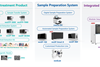
Smart automation for every lab, not just big pharma
Drug Target Review spoke with Giancarlo Basile at SLAS Europe 2025 about MGI’s bold shift from sequencing specialist to automation partner – helping research companies of all sizes achieve accuracy, speed and reproducibility.
-
 Webinar
Early De-Risking: In Vitro Safety Strategies for Pre-IND Success
Safety data is no longer just a regulatory checkbox - it’s a strategic advantage. Discover how in vitro and computational tools reduce the reliance on animal testing and support smarter, earlier decision-making in drug discovery.
-
 News
NewsLeukaemia-on-a-chip mimics bone marrow for better CAR T testing
A new “leukaemia-on-a-chip” device replicates human bone marrow and immune interactions, enabling researchers to observe CAR T cell therapies in action - potentially allowing for more personalised treatment strategies for leukaemia patients.
-
 News
NewsSmall molecule therapy improves islet transplant success in diabetes
A study from Weill Cornell Medicine shows that pre-treating pancreatic islet cells with a small molecule cocktail significantly improves survival after transplantation in type 1 diabetes models. The approach could help make donor cells go further and transplants more efficient.
-
 Article
Time for change: non-human primates in drug research
As ethical pressures and new regulations shake up preclinical research, the industry faces a turning point: can we finally move beyond non-human primates? Dr Mariana Argenziano, Associate Director Manufacturing Technologies at Ncardia, discusses the innovations reshaping drug development and what’s coming next.