
Diseases – Page 2
-
 Article
Peptides in practice: what it takes to advance these therapies to clinic
Peptide therapeutics are emerging as a powerful class of medicines capable of targeting diseases that challenge traditional modalities. This article reveals their rising clinical impact and the key development, safety and translational challenges that must be addressed to bring them successfully to patients.
-
 Event
EventAAPS National Biotechnology Conference
The AAPS National Biotechnology Conference (NBC) uncovers the latest science and trends that impact today’s research and pharmaceutical markets, specifically in the areas of biologics, biotechnology products, and advanced therapies. Join leading pharmaceutical scientists May 11-14, in San Diego, CA, for sessions covering new modalities, technologies, and novel strategies in ...
-
 Article
Why patient-derived biology matters for ADC discovery
What can we learn from tumours after they stop responding to treatment? By studying patient tissue directly, researchers are finding new ADC targets that conventional screening often misses.
-
 Article
Building better biologics and a stronger future for women in STEM
Great biologics don’t happen by chance, and neither do great STEM careers. Dr Lidia Serina shares the lessons behind both.
-
 Article
The future of obesity drugs starts in preclinical discovery
Progress in preclinical models and biomarker science is improving early-stage obesity drug development. This article outlines the emerging targets and technologies behind this shift.
-
 Article
RNA that lasts longer and lands exactly where it should
RNA therapies are moving past burst-and-fade limits. New advances in circular RNA and targeted delivery could transform how we treat autoimmune disease, infections and beyond.
-
 Article
Protein folding interference: a new path to hard-to-drug targets
Protein folding interference offers access to targets long considered unreachable by traditional drug discovery. By acting on transient folding intermediates, this approach presents a new opportunity to eliminate disease-driving proteins.
-
 Article
Logic-gated DARPins show targeted T-cell activation in tumours
What if a T-cell therapy could activate only inside a tumour? New preclinical data on Molecular Partners’ Switch-DARPin suggest it may do just that.
-
 Article
RNA that knows where to go: the rise of targeted delivery
What if RNA medicines could be guided directly to tumours, sparing healthy tissue and reducing side effects? Advances in targeted delivery are bringing that vision closer to reality.
-
 Article
The partnership changing the pace of radiopharmaceutical development
A new collaboration between Crown Bioscience and Medicines Discovery Catapult is bringing advanced tumour models together with world-class imaging and radiochemistry to accelerate the development of next-generation radiopharmaceuticals.
-
 Article
Redesigning paclitaxel: expanding the therapeutic window through oral delivery
The potent chemotherapy drug paclitaxel is widely employed for various cancers despite toxicity and efficacy challenges. Maite Agüeros reveals how novel nanoparticle technology has enabled oral delivery of the drug – showing promising signs of improved tolerability and treatment success.
-
 Article
The mother of invention: from steam engines to AI-designed drugs
Every great leap in history started with a single, urgent need. Now AI is emerging as the next great engine of invention, transforming the future of medicine faster than ever imagined.
-
 Article
Mapping the genome in 3D to reveal new drug targets
Find out how a three-dimensional view of the genome is giving scientists a clearer picture of disease biology and revealing new opportunities for targeted therapies.
-
 Article
Mapping lipid pockets to drug the undruggable proteome
Tasca Therapeutics is using chemical proteomics to map lipid-binding pockets on proteins. By targeting auto-palmitoylation, the company aims to turn previously undruggable cancer drivers into viable therapeutic targets.
-
 Article
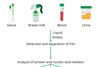
Advancing disease biomarker research with EV multiplex profiling
Vanitha Margan, Global Product Manager for Bio-Plex Multiplex Immunoassays at Bio-Rad Laboratories, reveals how multiplexing is being used to realise the full potential of extracellular vesicles in disease monitoring.
-
 Article
AI and policy reform set to reshape UK drug development
BCG’s Chris Meier outlines how advances in AI and new UK policies could accelerate drug development, streamline clinical trials and strengthen the country’s life sciences sector.
-
 Article
RVX-001: a universal vaccine to tackle antimicrobial resistance
Drug-resistant infections are on the rise, endangering global health. Neil Murray from ReNewVax explains how the company’s universal pneumococcal vaccine, RVX-001, could reduce antibiotic use and help curb antimicrobial resistance.
-
 Article
Deep data not big data
Bigger isn’t always better. In drug discovery, Dr Michael Ritchie argues that the future belongs not to those with the most data, but to those who understand its biological depth.
-
 Article
AI and the future of biomarker analysis in early R&D
AI is transforming biomarker analysis in early drug discovery, revealing hidden biological patterns that improve target discovery, patient selection and trial design for more precise and predictive R&D.
-
 Article
Circular RNA technology: the future of gene therapy
Pioneering circular RNA could redefine what the future of gene therapy looks like. Erik Digman Wiklund, CEO of Circio, shares how his company’s platform is enhancing gene expression and tackling toxicity challenges through smarter design and scientific collaboration.