



All Drug Discovery articles – Page 33
-
 Article
Malaria unravelled: decoding the parasite's gene expression control
Researchers from Tokyo Tech's World Research Hub Initiative conducted a study to investigate the regulation of gene expression in the apicoplast of the malaria parasite Plasmodium falciparum.
-
 Webinar
Functional assays for the development of agonistic antibodies
Watch this webinar to discover qualified bioassays assessing therapeutic antibody mechanisms, case studies about agonistic effects in antibodies initially deemed antagonistic, and explore Fc receptor impacts on antibody response in co-culture assays.
-
 Article
Condensate biology: advancing drug discovery for complex diseases
In this interview with Drug Target Review’s Izzy Wood and Dr Isaac Klein, Chief Scientific Officer at Dewpoint Therapeutics, discuss the innovative potential of condensate biology in revolutionising drug discovery. By targeting disease-driving condensates, Dewpoint’s research pushes boundaries by offering new hope for tackling diseases like ALS and colorectal ...
-
 Article
Biochemical assays and deep cyclic inhibition in cancer treatment
Drug Target Review's Taylor Mixides exclusively interviews Brett Hall, Chief Scientific Officer at Immuneering, about his company’s aim to develop a universal-RAS therapy.
-
 Article
The future of central nervous system research
Central nervous system (CNS) research is making breakthroughs with innovative therapies and next-generation technologies. Researchers are now able to use human tissue to identify relevant novel drug targets and biomarkers for a broad range of CNS diseases including schizophrenia, Alzheimer’s disease and Parkinson’s disease. As our understanding of the brain ...
-
 Article
Epigenetic editing: the next generation of genetic medicine
Dr Blythe Sather at Tune Therapeutics reveals why epigenetic editing offers benefits above and beyond those of gene editing, potentially bridging the gaps to breakthroughs in the clinic.
-
 Article
Exploring alternatives to animal testing in drug discovery
The use of animal studies in drug development has become a growing ethical concern, particularly given the high failure rate of clinical trials, which can reach up to 90 percent. This article highlights non-animal models that could expedite the drug delivery process from bench to bedside.
-
 Article
Targeted protein degradation: turning undruggable targets into druggable targets
Targeted protein degradation (TPD) is a cutting-edge approach in drug discovery that offers a more precise and efficient way to alter cellular pathways, offering the capability to convert 'undruggable targets' into 'druggable targets.' In this article, Drug Target Review’s Izzy Wood interviewed Astellas’ Masahiko Hayakawa, Head of Targeted Protein Degradation, ...
-
 Article
The promise of iPSC-based multi-cell therapeutics
Drug Target Review’s Taylor Mixides exclusively interviews Matt Angel, PhD, Chief Executive Officer and President of Eterna Therapeutics, about a potential new class of cell therapies that may play an important role in the development of new cancer treatments.
-
 Article
A 3D tool for measuring intracellular lipid droplets
Tomographic phase microscopy in flow cytometry showcases its ability to accurately measure intracellular lipid droplets.
-
 Whitepaper
Application note: Novel screening tools for TMEM175 drug discovery
In this article, learn about how TMEM175 is an exciting new target in normal physiology and in disease. Also, read about how the use of biomarkers in Alzheimer’s drug development will address many of the challenges currently encountered.
-
 Article
Women in STEM with Dr Jo Brewer
Come and join us for our monthly series highlighting Women in STEM. We are excited to present the latest edition for June, featuring an exclusive interview with Dr Jo Brewer, Chief Scientific Officer at Adaptimmune. With a remarkable 15-years of experience in cell therapy, Jo's passion for cells has been ...
-
 Whitepaper
Product hub: Enhancing drug discovery and development with cutting-edge microplate readers
Dr Marina Junqueira explores the main research interest of a lab focusing on opioids, cannabinoids, terpenoids and 5HT receptor agonists with the aim to understand the molecular-level signaling of drugs and how polymorphisms can affect this process.
-
 Article
Drug Target Review Imaging eBook
In this eBook, explore how cutting-edge imaging modalities can elevate your biomedical research.
-
 Article
Drug Target Review Screening eBook 2023
In this eBook, uncover the transformative potential of AI/ML in single-cell technologies and gain insights into disease progression.
-
 Article
Game-changing pan-TEAD inhibitor for solid tumours
Insilico Medicine has announced the nomination of ISM6331 as a potential best-in-class pan-TEAD inhibitor for the treatment of advanced solid tumours.
-
 Article
Chemotherapy-free treatment for patients with blood cancer
Dr Andy Souers highlights the unwavering commitment to finding an enhanced therapeutic approach that eliminates the need for chemotherapy in blood cancer treatment. This transformative discovery represents a significant leap forward in the way we combat this complex disease, offering new hope to countless patients worldwide.
-
 News
NewsPlacenta's role in genetic risk of schizophrenia
A recent study led by the Lieber Institute for Brain Development has revealed that over 100 genes associated with the risk of schizophrenia appear to contribute to the development of the illness primarily through their influence on the placenta.
-
 Whitepaper
Infographic: Targeted protein degradation
In this infographic, we discuss both inhibition and degradation, the advantages and challenges related to each approach and the key points you need to consider when designing your protein degraders.
-
 Article
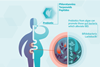
Algae: a source for prebiotics and drugs to treat IBD
An increasing number of people worldwide suffer from inflammatory bowel disease (IBD). However, no treatment is effective for all patients. In this article, researchers working on the Algae4IBD project explain how algae may represent a valuable source of prebiotics and new therapeutic agents for IBD and other diseases.