
Drugs and therapies – Page 16
-
 Article
eBook: Drop by drop: the future of liquid biopsy
The future of liquid biopsy is poised to revolutionise medical diagnostics and treatment. Explore the latest advancements and future prospects of liquid biopsy in our comprehensive eBook.
-
 Article
Recce Pharmaceuticals’ synthetic approach to combatting AMR
As antimicrobial resistance continues to advance, novel therapeutics are needed that stop infection and do not contribute to resistance. Australian biotech Recce Pharmaceuticals is paving the way for a new class of synthetic anti-infectives and providing hope for those with resistant infections. Recce’s lead candidate, RECCE® 327 (R327), is a ...
-
 Article
The promise of vectors targeting the LDL receptor
In this Q&A, Pascaline Lécorché, Head of Chemical Biology at Vect-Horus, outlines the potential of RNA interference therapeutics and the challenges of their use in vivo. There are several strategies to overcome these, and why peptide-based vectors targeting the LDL receptor are a promising approach.
-
 Article
Women in Stem with Dr Rachel Lagiakos
Dr H. Rachel Lagiakos is a Senior Principal Scientist in the Therapeutics Group at Schrödinger which she joined in 2018. She completed her PhD in Synthetic Organic Chemistry at Monash University and began her medicinal chemistry career at Cancer Therapeutics (CTx) in Melbourne, Australia in 2012. At CTx, Rachel’s contributions ...
-
 Article
Exploring the wonders of molecular biology
In this episode, we explore our understanding of DNA and its implications for health outcomes. Additionally, we discuss the transition from DNA sequencing to actionable insights in medicine, contrasting genetics-driven drug discovery with traditional methods. Finally, we examine the evolving landscape of genetic technology and its potential impact on the ...
-
 Article
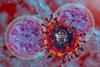
Harnessing natural killer cells to combat age-related diseases
In this Q&A, Celularity’s CEO and founder Dr Robert Hariri details the preclinical research that indicates that placenta-derived unmodified NK cells and genetically modified NK cells can target and selectively eliminate cells expressing stress ligands.
-
 Article
Leveraging ADCs in precision oncology strategy
In this Q&A, senior leaders at Caris Life Sciences discuss how the company is advancing precision medicine by integrating ADCs into patient-specific cancer treatment plans, focusing on novel target discovery through comprehensive molecular profiling and clinico-genomic data.
-
 Article
Improving treatment responses to solid tumours with trispecific TCEs
Following Zymeworks’ presentation at AACR 2024, in this Q&A, Dr Nina Weisser explains how the next generation trispecific T cell engager platform with integrated CD28 costimulation is engineered to tackle solid tumours.
-
 Article
Enhancing gene therapy with Circio
In this Q&A, Erik Wiklund, CEO of Circio, explains the key findings of their circVec circular RNA platform technology, why they chose AAV-based gene therapy for AATD as the lead programme, and their plans for the future to enhance the potency and reduce the cost of current gold-standard gene therapy. ...
-
 Article
Transomics’ impact on a promising liver cancer therapeutic
Using its AI-driven platform, Pepper Bio discovered a promising therapeutic for liver cancer. In this Q&A session with Jon Hu, CEO and co-founder of Pepper Bio, we dive into how the identification of two inhibitors led to a $135M in-licensing deal.
-
 Article
A new era of genetic and mechanistic molecular neuroscience
Neuroscientists are increasingly viewing disorders of the brain through the lens of the underlying molecular mechanisms as sometimes illuminated by genetic variants, rather than classifying disorders based solely on the clinical symptoms. The next step in the evolution of antiseizure medication will likely come from studying these ...
-
 Article
The promise of therapeutics from molecules within our body
In this article, senior leaders at SFA Therapeutics emphasise the importance of re-establishing homeostasis in drug development approaches.
-
 Article
Kickstarting the use of AI for biotechs: part one
Traditional wet lab scientists working on target discovery, drug identification and drug optimisation have an opportunity to catch-up with their AI-enabled peers – but why should they, and how? In this article – the first of a three-part series – Dr Raminderpal Singh seeks to demystify the topic by outlining ...
-
 Article
Utilising engineered peptides for immunotherapy
In this Q&A, Dr DaeYong Lee discusses how a new method for building up natural immune response could lead to new immunotherapy drugs with safer toxicity profiles.
-
 Article
Overcoming the limitations of current drug discovery approaches
In this Q&A, Simon Kerry, CEO of Curve Therapeutics, shares the company’s recent milestones, insights into the innovative Microcycle platform, and how Curve plans to remain on the cutting edge of drug discovery.
-
 Report
Beyond the lab: cell and gene therapy
Download this report now to access exclusive content on innovative cancer treatments, regenerative medicine, gene therapy, and expert insights from leading professionals in the field.
-
 Article
Biomarker identification in the realm of rare diseases
In this Q&A, Debiopharm’s Principal Scientist Dr Luke Piggott defines the critical requirement of biomarkers for identifying rare diseases. He illuminates how AI-enhanced approaches are accelerating the drug discovery process, particularly regarding clinical trial enrolment, and the breakthroughs he hopes to see in the future.
-
 Article
Women in Stem with Stefanie Flückiger-Mangual
Stefanie Flückiger-Mangual, Chief Executive Officer, is one of TOLREMO’s scientific founders and an expert in drug resistance in cancer therapy. She is a biomedical scientist and biochemist by training (University of Fribourg and ETH Zurich, Switzerland) and holds a PhD in Molecular and Translational Biomedicine from ETH Zurich. She led ...
-
 Article
Machine learning’s growing importance in researching cells
As we move towards more generalised AI models, neural networks and natural language interfaces, we’re starting to see machine learning take the place of higher order reasoning and data analysis “sense making.” Traditional scientific inquiry has typically been about asking specific questions of a specific model system under specific conditions. ...
-
 Article
Unlocking the potential of antibody drug conjugates
Zymeworks’ Dr Paul Moore, Dr Raffaele Colombo and Dr Jamie Rich discuss how advancements in ADCs are redefining cancer treatment. They elucidate the innovative strategies that are being developed to improve drug stability and how personalised medicine approaches are optimising outcomes for individual cancer patients, offering new hope across several ...