
Drugs and therapies – Page 17
-
 Article
Women in Stem with Laura Figulla
Dr Laura Figulla is the CEO of mbiomics. Laura co-founded mbiomics which is dedicated to unlocking the true value of the microbiome by developing next-generation live biotherapeutics (LBPs). Throughout her career, Laura has combined her entrepreneurial spirit with her diverse academic background in business, economics, and medicine to build companies ...
-
 Article
Assay design for Alzheimer’s disease: key considerations and emerging trends
In this Q&A, we speak to Dr Emma Murphy, Head of Biology at the Alzheimer’s Research UK Oxford Drug Discovery Institute. Among her many insights, she discusses how the challenges in developing reproducible assays can be addressed, as well as strategies used to translate promising findings into clinically relevant tools ...
-
 Article
Overcoming the complexity of free energy perturbation calculations
In this article, Dr Robert Scoffin, Chairman and CEO at Cresset, explores FEP and its current challenges, and outlines how continuous advancements and strategic approaches are helping to drive the adoption of FEP methods in drug discovery.
-
 Article
Developing the next generation of antibody drug conjugates
In this Q&A, Léo Marx, Medicinal Chemistry Project Manager at Debiopharm, details how the therapeutic window of ADCs can be impacted, how we can overcome the challenges associated with achieving site-specific bioconjugation, and other essential considerations for optimising ADC performance.
-
 Article
Women in Stem with Lidia Pieri
Lidia Pieri earned a Master’s degree with honours in high energy physics at CERN, a PhD in theoretical astroparticle physics from Rome-3 (Italy) and an Executive MBA in Business Innovation with honours from the MIB school in Trieste. During the academic period she gained international exposure and recognition working as ...
-
 Article
The immune system’s role in lung cancer risk
In this Q&A, Ichan Mount Siani researchers Dr Diego Chowell and Dr Robert Samstein share their new insights about the associations between human leukocyte antigen (HLA) class II loci and lung cancer risk.
-
 Article
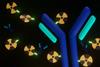
Pioneering the advancement of pre-targeted radioimmunotherapies
Although pre-targeting is still in its infancy, it has immense potential to increase state-of-the-art radioligand therapies. In this Q&A, PreTT reveals how their pre-targeted RLTs surpass traditional methods, transforming cancer treatment.
-
 Article
Identifying vascular disease associations
In this Q&A, Associate Professor Dr Mete Civelek shares insights from the University of Virginia’s exciting recent study identifying several potential therapeutic targets for accelerating translational research in cardiovascular disease treatment, with a focus on proteins associated with the extracellular matrix (ECM) secretion by smooth muscle cells (SMCs).
-
 Article
Using AI to predict metastatic behaviour of NSCLC
Dr Richard Cote and Dr Ramaswamy Govindan of the Washington University School of Medicine elucidate how AI, particularly deep learning networks, could identify histopathologic features in non-small cell lung cancer, and impact the treatment approach for early-stage patients.
-
 Article
Finding the right CDMO partner for cell line development
The commercial production of recombinant proteins, such as antibodies and enzymes, relies on generating and maintaining specific cell lines designed to produce these specialised molecules. However, the creation of cell lines is a technically demanding and time-consuming process. For this reason, many businesses seek partnerships with contract development and manufacturing ...
-
 Article
Investigating antipsychotics in a Parkinson’s disease psychosis model
In this Q&A, Dr Nicholas Waters, Head of R&D at IRLAB, shares how three compounds, including IRLABs Mesdopetam and an experimental dopamine D3 receptor antagonist, could reverse features associated with the psychosis-like state of Parkinson’s disease.
-
 Article
Breaking resistance – the future of immunotherapy in oncology
In this episode, we explore the current status and potential solutions to addressing major hurdles in oncology.
-
 Report
Beyond the lab: vaccine development
This report provides insights into current research and future prospects from potential breakthroughs to global collaboration in pandemic preparedness.
-
 Article
Developing an mRNA therapy for Duchenne muscular dystrophy
In this Q&A, Aki Ko, CEO and co-founder of Elixirgen Therapeutics, elucidates how their new mRNA technology could potentially restore muscle function in those suffering from Duchenne muscular dystrophy.
-
Article
The advancement of drug-free immunotherapy
Researchers have created a neutrophil therapy, involving micropatches that maintain the cells’ antitumour state, which could offer significant clinical and commercial value.
-
 Article
Streamlining the path from lab to market with 3D bioprinting
In this Q&A, Dr Vidmantas Šakalys, CEO of Vital3D, provides insights into the potential of 3D bioprinting to revolutionise the traditional drug development process, facilitating more accurate models and limiting the use of animal testing.
-
 Article
Driving efficiency across upstream bioprocess workflow
Dr Anis H Khimani from Revvity explores how key developments have enhanced biotherapeutic workflows, and explores how a transposon system can aid stable clone development.
-
 Article
Women in Stem with Katherine Tran
Introducing Kratherine Tran! Katherine joined the SCIEX team with a strong desire to further the company’s mission of delivering solutions to advance human wellness. Her main area of interest is within mass spectrometry-based proteomics from which she has accumulated a wealth of knowledge and experience in this space over the ...
-
 Article
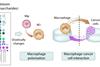
Ubiquitous pyrogens and 3D cancer models
A recent study has highlighted the impact of endotoxins on the accuracy of three-dimensional (3D) cancer models. In this Q&A, Dr Bjorn Vergauwen reveals details and key findings of the research.
-
 Article
Breakthrough for pancreatic cancer treatment
Researchers have designed the first small molecule drug targeting K-Ras GD12, which could improve pancreatic cancer outcomes.