



All Microscopy articles – Page 2
-
 News
NewsNon-invasive method images brain development in juvenile mice
Stanford researchers have developed a non-invasive method to make juvenile mice’s skin transparent, allowing repeated imaging of developing neural circuits. The breakthrough could be used to develop new treatments for neurodevelopmental disorders.
-
News
Next-gen malaria vaccine created using mapped parasite protein
Australian scientists have, for the first time, visualised a malaria parasite protein complex – a discovery that has led to a new mRNA vaccine capable of blocking the parasite’s reproduction in mosquitoes and potentially halting transmission.
-
 News
NewsIntersectin protein discovery may help treat cognitive disorders
Researchers have discovered that the protein intersectin plays a crucial role in organising synaptic vesicles – enabling direct communication essential for learning and memory.
-
 News
NewsHow FtsZ and ZapA proteins drive bacterial cell division
Japanese researchers have discovered how the bacterial proteins FtsZ and ZapA work together to drive cell division – a discovery that could guide the development of new antibacterial treatments.
-
 News
NewsScientists discover neuron-like communication in gut cells
Scientists in Singapore have discovered that gut support cells – known as telocytes – use neuron-like extensions to deliver signals directly to intestinal stem cells. This could lead to new treatments for diseases such as inflammatory bowel disease and colon cancer.
-
 News
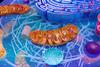
NewsMitochondria: melanoma’s hidden vulnerability
Scientists at Lund University have shown that aggressive melanoma tumours are driven by overactive mitochondrial processes – revealing a potential treatment strategy using drugs already approved for other conditions.
-
 Article
What single cells are revealing about brain disorders
Single-cell and spatial technologies are giving researchers an unprecedented view of how brain diseases like Alzheimer’s really work. The result? Faster discovery, clearer targets and a new path towards more effective treatments.
-
 Article
Machine Learning and AI in Enhancing Image Analysis of 3D Samples
Want to understand the real impact of AI in 3D sample analysis? This episode cuts straight to how machine learning is accelerating research and overcoming current limitations.
-
 News
NewsMeet the hemifusome: a new organelle with big impact
Scientists have discovered a previously unknown organelle inside human cells - the hemifusome - that could change our understanding of rare genetic disorders.
-
 News
NewsScientists grow 3D brain that mimics the real thing
Researchers at POSTECH have developed a new 3D brain model that closely mimics the structure and function of human brain tissue – marking a major advance in early disease detection.
-
 News
News3D model reveals hidden drivers of smell regeneration
Scientists have developed a simple- 3D mouse tissue model to study how the nose regenerates smell-sensing neurons. The goal is to create an organoid system that can be used to screen potential therapies for smell loss.
-
News
Stanford grows vascularised mini-organs
Stanford scientists have successfully grown heart and liver organoids that include functioning blood vessels. This breakthrough overcomes a major size and maturity barrier, which could advance disease modelling and regenerative therapies in the future.
-
 News
NewsExperimental peptide targets glioblastoma’s most resilient cells
An experimental peptide from Virginia Tech may offer a new way to stop glioblastoma from coming back by disrupting the cancer’s treatment-resistant core.
-
 News
NewsMechanism linking obesity to inflammation uncovered
This study is first to demonstrate with statistical certainty that human visceral adipose tissue accumulated in the abdominal cavity secretes more extracellular vesicles.
-
 News
NewsNew pathway to transition neural stem cells into a proliferative state
Understanding the signalling pathway controlling neural stem cell reactivation could offer a strategy for using existing drugs to treat neurodevelopmental disorders.
-
 News
NewsThe real-time capture of transcription complex formation
Researchers have obtained images with a previously unseen level of detail, demonstrating how RNA polymerase opens the transcription bubble.
-
 News
NewsExploring the conditions in which pathological 4R tau misfolds
Researchers have presented new findings that offer potential pathways to arrest critical steps toward the accumulation of mutant tau.
-
 News
NewsEnhancing the collateral network for beneficial reperfusion
Future interventions for ischaemic stroke patients should enhance collateral function to reduce brain haemorrhage and mortality.
-
 Whitepaper
Application Note: Understanding The Multiplex Imaging Landscape
Learn about the different types of multiplexed imaging available, as well as their applications, benefits and disadvantages.
-
 Whitepaper
Application note: In situ identification of cancer stem cell niches (HCC)
This app note explores a groundbreaking multiplex immunodetection approach to identify cancer stem cell niches within hepatocellular carcinoma (HCC).
- Previous Page
- Page1
- Page2
- Page3
- Next Page