



News – Page 51
-
 News
NewsCancer and the DNA fork reversal mechanism
Researchers find that polymerase epsilon exonuclease is an essential target for cancer diagnosis and treatments that rely on DNA damage.
-
 News
NewsEssential role of Nrg1 in heart development
New research identifies how trabeculae transform into ventricles, which could positively impact heart disease treatments.
-
 News
NewsNew bacterial protein found to improve mitochondrial function
Protein released by C. burnetti interacts with antioxidising enzyme GPX4 to prevent cell damage and death.
-
 News
NewsPotential for improved rheumatoid arthritis treatment
Six types of inflammation with various cell types and disease pathways identified may provide better treatment of rheumatoid arthritis.
-
 News
NewsHuntington’s disease: danger of repeated DNA sequences
Scientists find a way to slow the progression of Huntington’s disease by analysing DNA and find the basis of a potential treatment.
-
 News
NewsNew technique to extract and analyse extracellular vesicles
Cellulose nanofiber sheets enable analysis of EVs, and miRNAs within them, offering potential for cancer treatment and personalised medicine.
-
 News
NewsHow glucose restriction causes aggressive lung cancer phenotype
New understanding of how lung cancer cells become more aggressive when nutrient deprived could lead to novel combination treatments.
-
 News
NewsLimiting diaphragm atrophy in intensive care
Mitochondrial fragmentation mechanism that can cause ventilator-induced diaphragm dysfunction (VIDD) found, and a therapeutic to mitigate it.
-
 News
NewsDNA epigenetic changes: a key cause of cancer
Analysis of cells shows many regions in DNA are differentially activated or inactivated in a cancer-specific manner.
-
News
Potential new targets for chronic liver disease
Fatty liver disease treatments may become more effective after identification and greater understanding of more drug targets.
-
News
Utilising CAAR T cells to treat antibody-caused brain disease
Researchers have engineered CAAR T cells to destroy harmful antibodies, improving NMDA receptor encephalitis treatment.
-
 News
NewsUnderstanding Z-RNA structure could provide new treatments
A $1.2 million grant has been given to observe how Z-RNA is formed and explore its benefits for various diseases.
-
 News
NewsReduced motor symptoms of Parkinson's disease
In rodent and nonhuman primate animals, circuit-specific gene therapy offers promise for Parkinson’s disease and other brain disorders.
-
 News
NewsChemotherapy success calculated by new machine learning model
Percent necrosis calculated with machine learning model for patients with osteosarcoma provides an accurate prognosis for survival.
-
 News
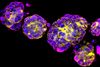
NewsNew understanding of early breast cancer development
Mammary organoid cultures show the effects of BRCA2 mutations on breast tissue cells, increasing the likelihood of early, targeted treatment.
-
 News
NewsiPSC-derived cells can augment remuscularisation of the heart
Researchers have improved the method of regenerating heart muscle after a heart attack using a combination of iPSC-derived cells.
-
News
Metabolic change in hippocampus indicates Alzheimer's disease
Using RNA sequencing, scientists find that metabolic increase in the brain is an early indicator of Alzheimer's disease.
-
 News
NewsDirect link between hyperinsulinemia and pancreatic cancer found
Excessive insulin levels in people with obesity and type 2 diabetes overstimulates pancreatic cells, initiating disease.
-
 News
NewsSynthetic proteins key to modular nanoparticle design
Researchers have been able to customise nanoparticles to target biological entities, like tumours and viruses.
-
 News
NewsMechanism that triggers dendritic elongation discovered
Short-chain fatty acids produced by intestinal bacteria initiate dendritic elongation, a mechanism that could be used as a drug target.