



News – Page 60
-
News
Helper T cells may hold key to precision allergy treatment
US researchers have connected a rare T cell called Th9 with treating allergies, testing in mouse models with asthma.
-
 News
NewsReviving T cells to tackle immunotherapy-resistant cancers
US researchers utilise a new approach to immunotherapy, using exhausted T cells that could help overcome treatment resistance in cancers.
-
 News
NewsChances of eliminating HIV infection increased by dual gene-editing method
US researchers suggest that combing a dual gene-editing approach with antiretroviral drugs can eliminate HIV infections in animal models.
-
 News
NewsScientists uncover new insights into rare childhood liver cancer
Researchers from the Netherlands have utilised organoids and the CRISPR-Cas9 "molecular scissor" system to better understand the features and biology of fibrolamellar carcinoma (FLC), a rare type of liver cancer that affects adolescents and young adults.
-
 News
NewsBlocking a microRNA may prevent age-related conditions
Conditions like chronic inflammation, muscle loss and bone loss have an elevated microRNA, US researchers attempted to block this in aged mice.
-
 News
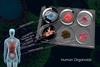
NewsResearchers establish the first human respiratory organoid culture system
A team from the University of Hong Kong has developed the first human respiratory organoid culture system, using it to unveil a novel mechanism for the high transmissibility of the SARS-CoV-2 Omicron variant.
-
 News
NewsStudy links nutrients, brain structure, cognition in healthy aging
US researchers found that nutrient intake, brain structure and cognitive function contribute to healthier brains in aging adults, by looking at correlating blood markers.
-
 News
NewsGenetics behind facial and skull changes in Down Syndrome mouse model
Progress in identifying the gene responsible for facial and skull changes in mouse model of Down Syndrome, made by UK researchers.
-
 News
NewsRhythmic brain activity helps maintain temporary memories
US researchers have discovered that rhythmic brain activity organises the neuronal pathways that maintain short-term memories.
-
 News
NewsT cells show immunity to a variety of bacteria
Australian scientists explored a group of bacterial pathogens that share a protein sequence which is recognised by human T cells.
-
 News
NewsOrgan-on-a-chip device aids the study of thrombosis without animal models
Scientists from the University of Birmingham have developed an organ-on-a-chip-model to better understand the mechanisms of deep vein thrombosis.
-
 News
NewsInnovative treatment targets blood clots without increased bleeding risk
Safer and more effective blood thinners could be on the way following a ground-breaking discovery by US researchers, that have designed a new compound to target blood clots.
-
 News
NewsResearchers develop Raman imaging probes for detecting enzyme activities
Japanese researchers have developed activatable Raman probes based on 9CN-rhodol, offering a promising tool for detecting multiple enzyme activities in heterogeneous biological tissues. This new molecular design strategy allows for highly specific and sensitive detection of enzyme activities, offering potential applications in disease diagnosis and biological research.
-
 News
NewsNovel tool helps differentiate between cancerous and healthy cells for AML
Spanish scientists have developed a new method to identify between cancerous and healthy cells for cases of acute myeloid leukaemia (AML).
-
 News
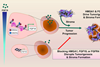
NewsNew treatment pathway for deadly pancreatic cancers
US scientists have used mouse models of pancreatic cancer to identify genes used by tumour cells to grow uncontrollably.
-
 News
NewsInflammation 'brake' gene may impact kidney disease outcomes
Australian researchers uncover a gene that controls inflammation in kidney disease, which could pave the way for more precise disease diagnostics and personalised treatments.
-
 News
NewsRecombining drugs helps restore gene's ability to signal for death of leukaemia cells
US researchers find combination of chloroquine and venetoclax promotes cancer cell death in mouse models with acute myeloid leukaemia (AML).
-
 News
NewsCannabinoids used in worms can help regulate various body systems
US study suggest worms could be a good research model for understanding the endocannabinoid system—and possibly developing better drugs.
-
News
Brain cells found to transfer material to neurons in mice
Researchers have discovered that oligodendrocyte-lineage cells transfer cell material to neurons in a mouse brain. They have provided the first evidence of coordinated nuclear interaction between these cells and neurons.
-
 News
NewsImproved cognitive function in rats with serine racemase upregulation
US researchers have found that increasing the expression of the enzyme serine racemase in the prefrontal cortex of middle-aged rats can enhance cognitive function.