
Research and development – Page 19
-
 Article
Game-changing pan-TEAD inhibitor for solid tumours
Insilico Medicine has announced the nomination of ISM6331 as a potential best-in-class pan-TEAD inhibitor for the treatment of advanced solid tumours.
-
 Article
Neoantigen-directed cancer treatment
This exclusive interview with Dr Sharon Benzeno, Chief Commercial Officer, Immune Medicine at Adaptive Biotechnologies, explores research on T-cell therapy for cancer, which has seen the first TCR-based therapeutic candidate progress to clinical development, offering promising advancements in innovative cancer treatments.
-
 Article
Chemotherapy-free treatment for patients with blood cancer
Dr Andy Souers highlights the unwavering commitment to finding an enhanced therapeutic approach that eliminates the need for chemotherapy in blood cancer treatment. This transformative discovery represents a significant leap forward in the way we combat this complex disease, offering new hope to countless patients worldwide.
-
 Article
Targeting the immunotherapy potential of cytokines IL-12 and IL-18 with new advancements in protein engineering
In this article Dr Raymond Winquist, Oncology Fellow at Alkermes, covers the longstanding research challenges associated with cytokines: IL-12 and IL-18, and their untapped potential in immunotherapy and immuno-oncology.
-
 Article
Breakthrough drug candidates and cancer treatment innovations
In this exclusive interview with Dr Paul Moore, Chief Scientific Officer from Zymeworks, we explore the impressive responses of Zymeworks' antibody-drug conjugate ZW191 in FRα-low expressing models, indicating its efficacy in treating various oncology indications.
-
 Article
Promising human antibodies fighting SARS-CoV-2
Scientists have discovered that a vaccinated San Diego resident has produced antibodies that are effective against multiple variants of SARS-CoV-2, including Omicron. The research also identified three antibodies that can neutralise the virus, giving new insights into different binding mechanisms with the SARS-CoV-2 spike protein. The findings could help to ...
-
 Article
Episode 19 – A current look into adoptive cell therapies
Tune into this podcast to hear experts discussing the current landscape of adoptive cell therapies!
-
 Article
Algae: a source for prebiotics and drugs to treat IBD
An increasing number of people worldwide suffer from inflammatory bowel disease (IBD). However, no treatment is effective for all patients. In this article, researchers working on the Algae4IBD project explain how algae may represent a valuable source of prebiotics and new therapeutic agents for IBD and other diseases.
-
 Article
Framework for understanding cell organisation and variation
From a database of more than 200,000 high-resolution, three-dimensional images of human induced pluripotent stem cells, researchers have devised a model to quantify cell shape and internal organization. Susanne Rafelski, Deputy Director of the Allen Institute for Cell Science, revealed details of their study to Drug Target Review.
-
 Article
ebook: Advances In Cell Imaging and Retrieval
Unleash the power of drug discovery with this FREE ebook supported by Sartorius! Explore the limitless potential of CRISPR applications and single cell sequencing for drug discovery. Access exclusive insights from industry leaders and stay ahead of the curve with the latest trends. Don't miss out on this opportunity to ...
-
 Article
CRISPR and single-cell sequencing highlight genetic variants for traits and diseases
This article highlights a new approach to address human genetics, using STING-seq which provides roadmap to identify variants and genes, enabling deeper understanding of the noncoding genome and targets for therapies
-
 Article
Revolutionary nanoparticles enable gene-editing in lungs
This article outlines the development of a new type of nanoparticle that can perform gene-editing in the lungs. Scientists from MIT and the University of Massachusetts Medical School have collaborated to create this Ribonucleic acid (RNA) delivery particles, which have the potential to revolutionise the treatment of lung diseases such ...
-
 Video
VideoWebinar: The Role of Neuronal Metabolism in Early Drug Discovery
Learning about the mitochondrial role in a neurodegenerative disorder.
-
 Article
The role of ABCs in lupus: insights for developing precision therapies
Researchers from the University of Pittsburgh have found that age-associated B cells (ABCs) are key drivers of lupus, a chronic autoimmune disorder that attacks the patient's own organs.
-
 Article
Yersinia bacteria: can it be eliminated in the intestine?
This article outlines new research from the University of Pennsylvania, concerning Yersinia pseudotuberculosis, a relative of the bacterial pathogen that causes plague by triggering the body’s immune system to form lesions in the intestines.
-
 Article
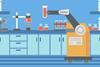
The future of lab automation: streamlining drug research
In this article, Drug Target Review's Ria Kakkad and Izzy Wood explore the results of the latest research on lab automation techniques and technologies designed to accelerate drug discovery.
-
 Article
Episode 18 – Scaling up organoids
Tune into this podcast to hear experts discussing scaling up 3D organoids!
-
 Video
VideoWebinar: Accurate detection of mitochondrial toxicity
Using Agilent Seahorse XF technology with the XF Mito Tox Assay allows for streamlined, reliable identification of mitochondrial toxicants.
-
 Video
VideoVideo: Spatial imaging as a tool for discovery
Watch Dr David Rimm from the Yale School of Medicine talk about his recent work and take on the future of multiplex spatial profiling of the TME.
-
 Article
Episode 17 – Imaging: data analysis of organoids
Tune into this podcast to hear experts discuss imaging and analysing data from organoids!