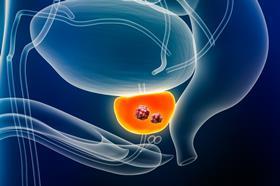
Spatial proteomics is becoming stronger. But how can researchers turn complex, high-dimensional spatial data into meaningful insights – and which challenges remain hardest to solve?
Prostate cancer outcomes vary between men of different ethnic and ancestral groups, yet it remains unclear which biological features of the tumour microenvironment may contribute to these disparities.
In this webinar, Dr Nicola Annels and James Thetford from the University of Surrey show how high-plex spatial proteomics can examine tumour, stromal and immune biology within archival formalin-fixed, paraffin-embedded (FFPE) prostate tissue while preserving spatial information that conventional profiling can lose.
Using James Thetford’s PhD research as a case study, the speakers will take attendees through an end-to-end spatial profiling workflow using the MACSima Platform, from marker-panel design and cyclic imaging to image quality control, cell segmentation and hierarchical phenotyping.
The session will show how tissue architecture, cellular composition, phenotypic states and spatial patterns can be analysed step by step to investigate ancestry-associated differences in the tumour microenvironment.
Attendees will also gain practical guidance on designing studies, interpreting data and communicating complex spatial proteomics findings, including how to visualise high-dimensional results clearly and form testable biological hypotheses from discovery data.
Access the free webinar by registering for a membership or logging into your account.
MEET THE EXPERTS

Dr Nicola Annels | Senior Research Fellow, University of Surrey
Dr Nicola Annels is a Senior Research Fellow at the University of Surrey. Her research focuses on translational cancer biology and the tumour immune microenvironment, with a particular interest in applying advanced tissue profiling approaches to clinically relevant research questions.
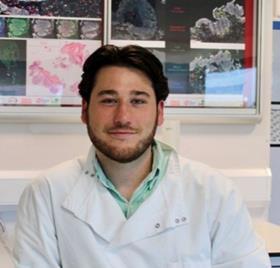
James Thetford | PhD Student, University of Surrey
James Thetford is a PhD student at the University of Surrey investigating biological factors that may contribute to ethnic disparities in prostate cancer. His research integrates patient genetic ancestry, tumour microbiome profiling and characterisation of the tumour immune microenvironment, including high-plex spatial proteomics.
What will you learn?
- Why spatial context matters when studying the prostate tumour microenvironment.
- How to follow an end-to-end spatial proteomics workflow, from tissue and marker-panel design to cyclic imaging, quality control and cell phenotyping.
- See how hierarchical classification can distinguish tumour, stromal and immune compartments and identify major immune-cell subsets.
- Explore how cellular composition, phenotypic states and spatial patterns can be analysed to investigate the tumour microenvironment.
- Practical ways to visualise high-dimensional spatial proteomics data and form testable biological hypotheses.
Who should attend?
This webinar is ideal for scientists and research professionals working in spatial proteomics, cancer biology, pathology, immunology, spatial biology and prostate cancer research.
It will also be valuable for professionals involved in tumour microenvironment research, biomarker discovery, translational research and high-plex imaging, particularly those working with archival formalin-fixed, paraffin-embedded (FFPE) tissue and antibody-based spatial profiling.
Join the conversation
Whether you’re working in spatial biology, cancer research, pathology or therapeutic development, this live expert discussion will provide valuable insight into how high-plex spatial proteomics can reveal cellular and spatial features of the tumour microenvironment, as well as practical approaches to designing studies, analysing complex datasets and developing testable biological hypotheses.
Access the free webinar by registering for a membership or logging into your account.
Is the panel discussion free?
Yes – there is no charge to watch the panel discussion, either live or on-demand.
When will the panel discussion take place?
The webinar will be taking place on October 28th 2026
Can I watch it later?
The panel discussion will become available to watch on-demand shortly after the live webinar takes place.
What are the benefits of attending live?
You’ll be able to ask the speakers your questions, which will be answered live in the Q&A towards the end of the session.
How long will the panel discussion be?
This panel discussion will last up to an hour.
What do I need to watch this panel discussion?
All you need is a computer with an internet connection. We recommend using headphones if possible if you’re in an office environment.