

Virus-like particles for vaccine serology: from dengue VLP production to neutralising antibody detection
Sponsored by  LGC Diagnostics and Genomics2026-11-18T13:00:002026-11-18T13:00:002026-11-18T14:00:00
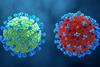
Find out how virus-like particles are produced at scale, and how they can be used to measure IgM, IgG and neutralising antibody responses in vaccine development.
Assessing antibody responses is an important part of vaccine development, but measuring these responses accurately can be challenging. Serological assays need antigens that closely resemble the native virus, while live-virus neutralisation tests can be time-consuming and labour-intensive. For some viruses, they also require high-containment facilities.
Virus-like particles (VLPs) offer an alternative. They mimic the structure of a virus but contain no viral genetic material and cannot cause infection. VLPs are already the basis of licensed vaccines, including those against HPV and hepatitis B. They can also act as native-like capture antigens in serological assays.
In this webinar, Holger Hannemann, Director of R&D for antigens and reagents at LGC, will discuss the company’s work on Nipha virus, Influenza, Mayaro, Japanese encephalitis and Parvovirus B19, as well as alphavirus and calicivirus VLPs.
The session will cover the advantages of stable cell lines over transient transfection, alongside the purification and quality control steps that affect VLP reagent consistency. Holger will also share preliminary results from producing dengue VLPs in bioreactors.
He will then present data on VLPs as capture antigens in serological assays, including for IgM and IgG detection, and discuss preliminary findings on their potential to support the detection of antibodies associated with viral neutralisation.
What will you learn?
- How VLP-based assays can support IgM and IgG detection when assessing vaccine responses
- What early data show about VLPs as capture agents for detecting neutralising antibodies
- Why stable cell lines can offer advantages over transient transfection for VLP production, with preliminary results from dengue VLP manufacture in bioreactors
- How purification and quality control affect the consistency of VLP reagents
There will also be an opportunity to put your questions to Holger during a live Q&A.
Who should attend?
Vaccine researchers, immunologists and assay scientists working in preclinical or early clinical vaccine development, particularly against viral diseases. The webinar will also interest teams developing serology or diagnostic assays, and anyone involved in producing or sourcing VLPs.