New approach methodologies (NAMs) are becoming an established part of early drug discovery. Human-relevant in vitro systems, advanced imaging and computational models are increasingly used to inform experimental design and decision making.
Despite this progress, adoption remains uneven. Many teams are still working through how to integrate these methods into established workflows and use them confidently in decision making.
This roundtable brings together leading experts to explore where NAMs are delivering value today and what needs to change for broader, more confident adoption.
Why attend
Walk away with a clearer picture of how NAMs are being applied in real discovery workflows and what is still holding teams back:
• Where NAMs are informing early discovery decisions today
• How human-relevant models are evolving and where they provide the most value
• The role of data-rich approaches and integration in decision making
• Where NAMs provide advantages over traditional animal models and where gaps remain
• Challenges around validation, trust and workflow integration
• What is required for broader and more consistent adoption.
Register now to watch this on demand >>
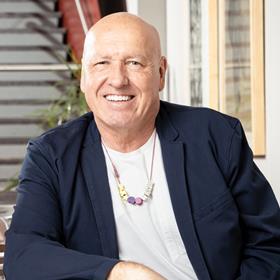
Professor Thomas Hartung – Professor at Johns Hopkins Bloomberg School of Public Health (Moderator)
Prof Thomas Hartung MD PhD is Professor at Johns Hopkins Bloomberg School of Public Health in Environmental Health and Engineering and in Molecular Microbiology and Immunology. He also holds appointments at the Whiting School of Engineering and the School of Medicine in Cellular and Molecular Medicine. Hartung is Director of the Centers for Alternatives to Animal Testing (CAAT) in the US and Europe and Field Chief Editor of Frontiers in AI. He has authored more than 760 scientific publications with over 56,000 citations (h-index 128), and his Coursera toxicology courses have attracted more than 23,000 active learners.

Professor Piet van der Graaf. Senior Vice President and Head of Quantitative Systems Pharmacology, Certara
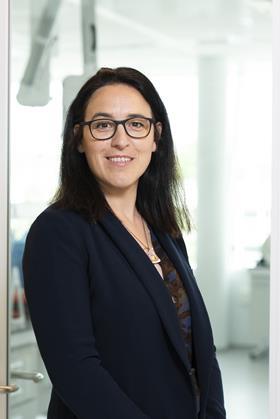
Dr Sylvia Boj – Chief Scientific Officer at HUB Organoids
Sylvia Boj earned her PhD at the University of Barcelona and completed her postdoctoral training as an EMBO fellow at the Hubrecht Institute, where she contributed to pioneering the first adult stem cell–derived human organoids in the laboratory of Prof. Hans Clevers. As a founding scientist of the HUB, she led programmes in cystic fibrosis and pancreatic cancer and played a central role in transforming organoid technology from an academic breakthrough into a scalable, industry‑validated platform. As Scientific Director and later Chief Scientific Officer, Sylvia shaped HUB’s scientific strategy, expanded its global partnerships, and guided the successful commercialisation of organoid‑based assays for drug discovery and personalised medicine. Now part of Merck, she continues to drive innovation by integrating human‑relevant biological models into R&D pipelines, advancing predictive science, and accelerating the development of more effective therapies.

Dr Lena Smirnova – Assistant Professor at Johns Hopkins University and Georgetown University
Dr Lena Smirnova is an assistant professor in the Department of Environmental Health and Engineering at the Bloomberg School of Public Health and the Center for Alternatives to Animal Testing at Johns Hopkins University, where she leads a programme on microphysiological systems. She also holds joint appointments at the Johns Hopkins School of Engineering and Georgetown University.
Her research focuses on developing new approaches for developmental neurotoxicity testing and understanding gene–environment interactions in autism. She promotes the concept of organoid intelligence as a new field for studying learning and memory using an in vitro brain model.
Dr Smirnova is a co-organiser of a series of conferences on microphysiological systems (MPS) and a co-founder of the International MPS Society, where she served as founding president and is currently past president.

Danilo Tagle – Senior Scientific Advisor on Regulatory and Translational Research at the National Center for Advancing Translational Sciences (NCATS) of the National Institutes of Health (NIH).
Danilo Tagle is currently Senior Scientific Advisor on Regulatory and Translational Research at the National Center for Advancing Translational Sciences (NCATS) of the National Institutes of Health (NIH). He recently retired as Director of the Office of Special Initiatives, where he led efforts to develop innovative tools and technologies that can greatly accelerate the development of diagnostics and therapeutics.
These programmes involve interdisciplinary collaborations between the intramural and extramural components of NIH and entail partnerships with other agencies such as FDA, NASA and DARPA, as well as with the private sector. The programmes include tissue chips, 3D bioprinting, automated chemistry, electronic nose technology for disease diagnosis, quantum technologies and the isolation and analysis of exosomes for biomarker and therapy development. He has served on numerous advisory and review committees, including the Biological and Physical Sciences Federal Advisory Committee, the White House OSTP Microgravity Science and Technology Interagency Working Group, the International MPS Society Board and, more recently, the LabCorp NAM Scientific Advisory Board.
Dan obtained his PhD and MSc in molecular biology and genetics from Wayne State University School of Medicine. He was an NIH National Research Service Award postdoctoral fellow in human genetics at the University of Michigan.
Dan has authored many scientific publications and received numerous awards, including several NIH Director’s Awards and, more recently, the Roscoe O Brady Award for Innovation and Accomplishment, the Henry J Heimlich Award for Innovative Medicine, the Department of Health and Human Services Secretary’s Award for Distinguished Service: Rapid Acceleration of Diagnostics (RADx) Initiative and the NASA Silver Group Achievement Award.
Is the panel discussion free?
Yes – there is no charge to watch the panel discussion, either live or on-demand.
When will the panel discussion take place?
The webinar will be taking place on 24th June 2026 at 2pm.
Can I watch it later?
The panel discussion will become available to watch on-demand shortly after the live webinar takes place.
What are the benefits of attending live?
You’ll be able to ask the speakers your questions, which will be answered live in the Q&A towards the end of the session.
How long will the panel discussion be?
This panel discussion will last up to an hour.
What do I need to watch this panel discussion?
All you need is a computer with an internet connection. We recommend using headphones if possible if you’re in an office environment.