
NAMs are now part of early drug discovery, but adoption remains uneven. Join leading experts for a discussion on current applications, limitations and what is required for wider use. The session includes live questions with the panel.
New Approach Methodologies (NAMs) are becoming an established part of early drug discovery. Human-relevant in vitro systems, advanced imaging and computational models are increasingly used to inform experimental design and decision-making.
Despite this progress, adoption remains uneven. Many teams are still working through how to integrate these methods into established workflows and use them confidently in decision-making.
This live roundtable brings together leading experts to explore where NAMs are delivering value today and what needs to change for broader, more confident adoption.
Why Attend
Walk away with a clearer picture of how NAMs are being applied in real discovery workflows and what is still holding teams back:
• Where NAMs are informing early discovery decisions today
• How human-relevant models are evolving and where they provide the most value
• The role of data-rich approaches and integration in decision-making
• Where NAMs provide advantages over traditional animal models and where gaps remain
• Challenges around validation, trust and workflow integration
• What is required for broader and more consistent adoption
If you are working out how to integrate NAMs into your discovery process or making the case internally for why it matters, this is a discussion worth being part of.
Register today to be part of the discussion >>
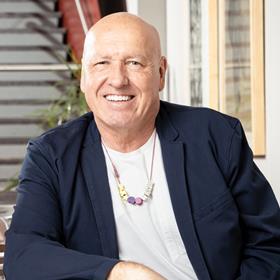
Professor Thomas Hartung - Professor at Johns Hopkins Bloomberg School of Public Health
Prof Thomas Hartung MD PhD is Professor at Johns Hopkins Bloomberg School of Public Health in Environmental Health and Engineering and in Molecular Microbiology and Immunology. He also holds appointments at the Whiting School of Engineering and the School of Medicine in Cellular and Molecular Medicine. Hartung is Director of the Centers for Alternatives to Animal Testing (CAAT) in the US and Europe and Field Chief Editor of Frontiers in AI. He has authored more than 760 scientific publications with over 56,000 citations (h-index 128), and his Coursera toxicology courses have attracted more than 23,000 active learners.
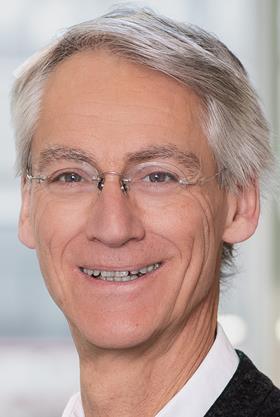
Professor Marcel Leist - Professor and Chairman at University of Konstanz
Professor Marcel Leist obtained an MSc in Toxicology (Guildford 1989) and a PhD in Pharmacology (Konstanz 1993). Since 2006, he has been Head of the Department of In Vitro Toxicology and Biomedicine at the University of Konstanz, established by the Doerenkamp-Zbinden Foundation and Director of the Center for Alternatives to Animal Testing in Europe (CAAT-Europe), a joint initiative with Johns Hopkins University. From 2000 to 2006, he worked as Head of Department of Disease Biology at Lundbeck A/S, focusing on the discovery of drugs for neurology and psychiatry. His research has resulted in more than 400 publications, cited over 40,000 times and has been recognised with numerous national and international awards. His current work focuses on how cell-based models can be used to predict adverse effects of chemicals in humans. This includes the development of non-animal New Approach Methodologies (NAMs), integration of multiple data streams for next generation risk assessment, extrapolation of model data to real-world scenarios and analysis of uncertainty in predictions. He has contributed to international initiatives including the GIVIMP guideline issued by the OECD and the developmental neurotoxicity in vitro test battery (GF377).
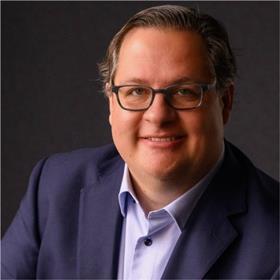
Dr Joshua Apgar - VP and Head of QSP Software at Certara and co-founder of Applied BioMath
Dr Joshua Apgar is VP and Head of QSP Software at Certara and co-founder of Applied BioMath, acquired in December 2023. Previously, he was a Principal Scientist in Immunology and Inflammation at Boehringer Ingelheim, where he used physics-based models to translate data, assess target feasibility, understand mechanisms of action and predict human doses. His work focuses on reducing late-stage attrition through quantitative analysis of pharmacology and pathophysiology. He received his PhD in Biological Engineering from MIT, where he focused on experimental design for systems biology, and earlier worked at Avaki developing scalable software for high-performance computing and life sciences.
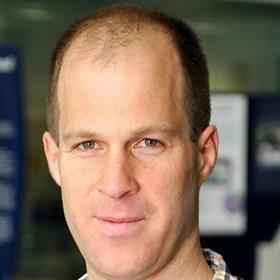
Professor Frank Von Delft - Professor of Structural Chemical Biology at the University of Oxford
Frank von Delft is Professor of Structural Chemical Biology at the University of Oxford and Principal Beamline Scientist at Diamond Light Source. He leads the XChem facility, the world’s leading platform for high-throughput fragment screening using X-ray crystallography. His work focuses on making structural biology a routine and predictive tool for drug discovery, bridging protein crystallography and medicinal chemistry to accelerate the design of small molecule therapeutics. He has played a key role in advancing high-throughput crystallography methods and has contributed to solving over 650 human protein structures. Frank co-founded the COVID Moonshot, a global open science initiative to develop accessible antiviral treatments for SARS-CoV-2. He also led the development of widely used tools such as PanDDA, which are now applied across industrial and academic drug discovery.
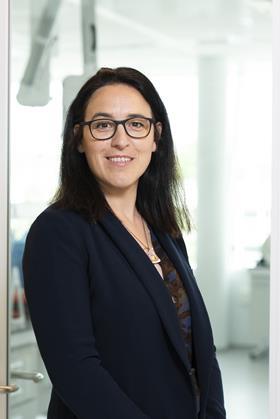
Dr Sylvia Boj - Chief Scientific Officer at HUB Organoids
Sylvia Boj earned her PhD at the University of Barcelona and completed her postdoctoral training as an EMBO fellow at the Hubrecht Institute, where she contributed to pioneering the first adult stem cell–derived human organoids in the laboratory of Prof. Hans Clevers. As a founding scientist of the HUB, she led programmes in cystic fibrosis and pancreatic cancer and played a central role in transforming organoid technology from an academic breakthrough into a scalable, industry‑validated platform. As Scientific Director and later Chief Scientific Officer, Sylvia shaped HUB’s scientific strategy, expanded its global partnerships, and guided the successful commercialisation of organoid‑based assays for drug discovery and personalised medicine. Now part of Merck, she continues to drive innovation by integrating human‑relevant biological models into R&D pipelines, advancing predictive science, and accelerating the development of more effective therapies.
Is the panel discussion free?
Yes – there is no charge to watch the panel discussion, either live or on-demand.
When will the panel discussion take place?
The webinar will be taking place on 24th June 2026 at 2pm.
Can I watch it later?
The panel discussion will become available to watch on-demand shortly after the live webinar takes place.
What are the benefits of attending live?
You’ll be able to ask the speakers your questions, which will be answered live in the Q&A towards the end of the session.
How long will the panel discussion be?
This panel discussion will last up to an hour.
What do I need to watch this panel discussion?
All you need is a computer with an internet connection. We recommend using headphones if possible if you’re in an office environment.