

All Article articles – Page 6
-
 Article
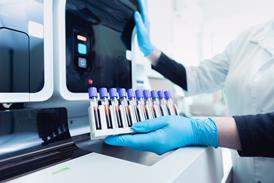
Consumables engineered for speed and reproducibility in drug discovery
What if familiar lab formats could be redesigned to remove the weak points in permeability and absorbance testing? This article explores how design choices in common consumables can improve both speed and reproducibility in early-stage research.
-
 Article
Beyond the hype: a veteran's honest assessment of AI in drug discovery - Part 2
Thibault Géoui explains why AI could finally help pharma overcome its productivity crisis and why the payoff won’t come as quickly as the optimists claim.
-
 Article
What if drug discovery took months, not decades?
Drug discovery is slow, costly and often unsuccessful. DTR hears how GATC Health is applying AI and multiomics to make the process faster, more precise and less reliant on trial and error.
-
 Article
How to select the optimal bispecific antibody format for therapeutic success
Choosing the right bispecific antibody format can make or break your therapy’s success. This article explores how format impacts function, manufacturability and development strategy - helping you make the best choice from the start.
-
 Article
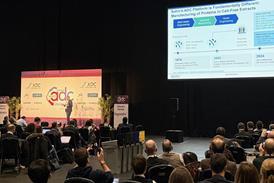
Challenges in developing robust potency assays for ADCs
Developing robust potency assays for Antibody-Drug Conjugates (ADCs) is crucial for ensuring their clinical success, but designing assays that meet both technical and regulatory standards is challenging. Here, Abzena’s CSO Campbell Bunce explores the complexities of assay development and the importance of ensuring accuracy, consistency and regulatory alignment for ADCs ...
-
 Article
Beyond the hype: a veteran's honest assessment of AI in drug discovery - Part 1
An interview with Thibault Géoui reveals why this technology wave might finally break through pharma’s productivity crisis – and why it will take longer than the optimists claim.
-
 Article
Lupus reimagined: targeting the cause, not just the symptoms
Engineered cell therapies are offering a potential new way to treat lupus – not by suppressing symptoms, but by reprogramming the immune system itself. For the first time, lasting remission looks like a real possibility.
-
 Article
From injections to pills: oral peptides set to transform drug development
Oral peptide-based drugs are set to revolutionise the pharmaceutical industry, overcoming the long-standing challenge of poor bioavailability. Santosh Kulkarni reveals how new breakthroughs in drug discovery and delivery offer the potential for more convenient, effective treatments for a range of conditions – without the need for injections.
-
 Article
How AI is quietly changing drug manufacturability
AI is moving beyond drug design to answer a critical question: can a promising compound actually be manufactured at scale? By predicting synthetic feasibility early, machine learning tools are helping drug developers avoid costly failures, streamline R&D and design molecules that are both effective and practical to produce.
-
 Article
Why most T-cell engagers fail - and how to fix it
Bispecific T-cell engagers are advancing fast - but complexity still slows development. This article explores how data-driven, platform-based strategies are helping overcome design and manufacturing hurdles to bring these next-gen therapies to patients faster.
-
 Article
Tracing ACLY from cardiovascular target to liver therapy lead
Can a cholesterol enzyme help treat an untreatable liver disease? Esperion’s ACLY programme is using multiomic and preclinical data to evaluate its potential in primary sclerosing cholangitis.
-
 Article
Antibodies come full circle: biopharma back at the bench
Recombinant antibody technology is redefining research standards - bringing biopharma-grade precision, consistency, and customisation to the lab. Discover how advances like Fc engineering and chimerisation are accelerating progress from basic discovery to clinical insight.
-
 Article
From lab to clinic: the rise of Radio-DARPins in oncology
As radioligand therapy continues to show promise, its application in solid tumours remains limited by long-standing biological challenges. In this interview, Julien Torgue, CSO at Orano Med, discusses a new collaborative platform – Radio-DARPins – and how it could help overcome key barriers to clinical progress.
-
 Article
Managing CGT trials: the role of IRT from discovery to clinical development
Discover how interactive response technology (IRT) is revolutionising the management of cell and gene therapy (CGT) trials by streamlining complex workflows, ensuring regulatory compliance and enhancing patient outcomes.
-
 Article
Why smarter financial planning could be key to clinical trial success
Effective financial management is vital for clinical trial success, yet many preclinical and clinical companies face inefficiencies due to outdated systems. Jennifer Kyle, CEO of Condor Software, explains how advanced financial platforms can streamline processes, improve forecasting and ensure better resource allocation throughout drug development.
-
 Article
Plasmids: Tackling Supply Chain and Manufacturing Challenges
Gene therapy’s progress depends on reliable supply chains and efficient manufacturing. In this episode, we explore the challenges and strategies involved in plasmid production - an essential component in advancing life-changing therapies.
-
 Article
Fixing failed drugs: AI solutions for toxicity in drug discovery – part 3
What role could large language models and AI agents play in drug safety? In Part 3, Layla Hosseini-Gerami of Ignota Labs discusses how emerging technologies might make toxicity analysis faster, more accessible and part of the drug discovery workflow from day one.
-
 Article
Designing antibodies to think before they bind
Standard antibody therapies bind their target and trigger a response. But what if the real breakthrough is designing antibodies that first recognise context before they act? This article looks at how bispecifics are becoming smarter, more selective and more precise.
-
 Article
Fixing failed drugs: AI solutions for toxicity in drug discovery – part 2
Why do so many drug candidates fail before reaching patients – and can AI help stop the losses? In Part 2, Layla Hosseini-Gerami of Ignota Labs outlines the scope of the toxicity problem and explains why failures often come too late to fix.
-
 Article
The future of CNS drug development: signs of real progress
New therapeutic approaches are emerging for CNS disorders – but can they overcome the toughest barriers in drug development? Find out what is driving progress and what still stands in the way.