
All Article articles – Page 3
-
 Article
The partnership changing the pace of radiopharmaceutical development
A new collaboration between Crown Bioscience and Medicines Discovery Catapult is bringing advanced tumour models together with world-class imaging and radiochemistry to accelerate the development of next-generation radiopharmaceuticals.
-
 Article
Redesigning paclitaxel: expanding the therapeutic window through oral delivery
The potent chemotherapy drug paclitaxel is widely employed for various cancers despite toxicity and efficacy challenges. Maite Agüeros reveals how novel nanoparticle technology has enabled oral delivery of the drug – showing promising signs of improved tolerability and treatment success.
-
 Article
The mother of invention: from steam engines to AI-designed drugs
Every great leap in history started with a single, urgent need. Now AI is emerging as the next great engine of invention, transforming the future of medicine faster than ever imagined.
-
 Article
Mapping the genome in 3D to reveal new drug targets
Find out how a three-dimensional view of the genome is giving scientists a clearer picture of disease biology and revealing new opportunities for targeted therapies.
-
 Article
Fast, scalable free energy prediction with nonequilibrium switching
Nonequilibrium switching (NES) offers a faster, more scalable way to predict how strongly drugs bind to their targets. By replacing slow equilibrium simulations with rapid, parallel transitions, NES delivers accurate free energy predictions at speed.
-
 Article
Mapping lipid pockets to drug the undruggable proteome
Tasca Therapeutics is using chemical proteomics to map lipid-binding pockets on proteins. By targeting auto-palmitoylation, the company aims to turn previously undruggable cancer drivers into viable therapeutic targets.
-
 Article
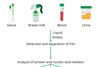
Advancing disease biomarker research with EV multiplex profiling
Vanitha Margan, Global Product Manager for Bio-Plex Multiplex Immunoassays at Bio-Rad Laboratories, reveals how multiplexing is being used to realise the full potential of extracellular vesicles in disease monitoring.
-
 Article
AI and policy reform set to reshape UK drug development
BCG’s Chris Meier outlines how advances in AI and new UK policies could accelerate drug development, streamline clinical trials and strengthen the country’s life sciences sector.
-
 Article
Tackling the organ shortage through vascular bioengineering
Frontier Bio’s vascular bioengineering research connects tissue modelling with graft development to advance regenerative medicine and drug discovery.
-
 Article
Transforming central labs with automation and AI: setting new standards for modern trials
Demands on central laboratories are consistently increasing, heightening the challenge to deliver operational excellence and the highest standard of scientific integrity with both speed and agility. ICON Laboratories is transforming the way we leverage data and intelligent operational models to meet evolving trial needs.
-
 Article
RVX-001: a universal vaccine to tackle antimicrobial resistance
Drug-resistant infections are on the rise, endangering global health. Neil Murray from ReNewVax explains how the company’s universal pneumococcal vaccine, RVX-001, could reduce antibiotic use and help curb antimicrobial resistance.
-
 Article
Making science run at the speed of thought: the reality of AI in drug discovery – Part 1
Everyone talks about AI speeding up drug discovery, but Eric Ma explains why, without clean data and statistical discipline, it can actually do the opposite.
-
 Article
Resetting retinal networks with a gene-agnostic approach
What if treating blindness did not mean fixing a single faulty gene? Find out how modifier gene therapy is designed to protect vision by targeting broader retinal pathways.
-
 Article
Deep data not big data
Bigger isn’t always better. In drug discovery, Dr Michael Ritchie argues that the future belongs not to those with the most data, but to those who understand its biological depth.
-
 Article
AI and the future of biomarker analysis in early R&D
AI is transforming biomarker analysis in early drug discovery, revealing hidden biological patterns that improve target discovery, patient selection and trial design for more precise and predictive R&D.
-
 Article
Circular RNA technology: the future of gene therapy
Pioneering circular RNA could redefine what the future of gene therapy looks like. Erik Digman Wiklund, CEO of Circio, shares how his company’s platform is enhancing gene expression and tackling toxicity challenges through smarter design and scientific collaboration.
-
 Article
Why first-void urine could potentially change the future of HPV screening
From richer biomarker content to patient-friendly sampling, first-void urine is emerging as a promising tool in precision health. Here is why scientists are paying attention.
-
 Article
Nasal drug delivery: the non-invasive future of treatment
Advances in formulation science and device technology are transforming nasal drug delivery, enhancing absorption, stability and patient adherence. This article examines the innovations driving its growth and highlights future applications ranging from systemic treatments to nose-to-brain therapies and vaccines.
-
 Article
Beyond weight loss: the gap in current drug development for obesity
Current obesity drug development remains overly focused on short-term weight reduction, despite obesity being a chronic, multifactorial disease. Broader, mechanism-driven approaches are needed to ensure durable efficacy, safety and accessibility.
-
 Article
Recombinant KLK1: the next step in stroke and preeclampsia treatment
With its lead candidate DM199, DiaMedica Therapeutics is advancing a recombinant form of KLK1 to restore blood flow, improve endothelial function and address unmet needs in the treatment of stroke and preeclampsia.