


All Artificial Intelligence (AI) articles – Page 9
-
News
ProRNA3D-single: new AI for drug discovery and disease research
Virginia Tech computer scientists have created a new AI tool, ProRNA3D-single, that can generate 3D models of how viral RNA binds to human proteins – a development that could speed up drug discovery.
-
 News
Mapping lung disease: new atlas to accelerate drug discovery
Helmholtz Munich and Parse Biosciences have collaborated to create the world’s largest lung disease perturbation atlas – which could aid the discovery of new therapeutic targets and accelerate the development of future lung disease treatments.
-
 Article
Making sense of AI: bias, trust and transparency in pharma R&D
AI is increasingly used in drug discovery, but hidden bias and ‘black box’ models threaten trust and transparency. This article explores how explainable AI can turn opaque predictions into clear, accountable insights.
-
 Article
AI meets human tissue to fast-track precision medicine development
By combining human tissue models with explainable AI, researchers can analyse complex patient data to identify which treatments work best for which patients. First applied to inflammatory bowel disease, this approach could improve clinical trial success rates across many diseases.
-
 Article
Lab of the future: four technologies to watch
From precision proteomics to AI-powered immune profiling, next-generation laboratory technologies are changing how new therapies are discovered and developed. Here are four innovations set to shape the lab of the future - and the future of drug discovery.
-
 News
AI designs new antibiotics to take on drug-resistant superbugs
Penn engineers have built an AI model that creates new antibiotics – and early tests show some work as well as existing approved drugs.
-
 Article
Animal-free drug discovery is closer with QSP
Quantitative Systems Pharmacology (QSP) is fast becoming a standard tool in drug development, offering a human-relevant way to predict drug effects before the clinic. Dr Josh Apgar of Certara explains how it is helping to cut reliance on animal testing and speed discovery.
-
 Article
Inside the search-and-develop model tackling 1,000 untreated skin diseases
With over 1,000 skin diseases lacking approved treatments, a search-and-develop model is changing how new therapies are sourced and developed. Chief Scientific Officer, Jacob Pontoppidan Thyssen, outlines the strategy behind it.
-
 News
New AI method maps how tuberculosis drugs destroy bacteria
Scientists at Tufts University have developed an AI tool that demonstrates how tuberculosis drugs kill bacteria – an advancement that could speed-up the discovery of shorter, more effective treatments.
-
 Article
Beyond the hype: a veteran’s honest assessment of AI in drug discovery – Part 3
AI is starting to transform drug discovery, but progress is still slow and big challenges remain. Thibault Géoui explores the gaps, hurdles and breakthroughs needed before it can truly change pharma R&D.
-
 Article
Beyond the hype: a veteran's honest assessment of AI in drug discovery - Part 2
Thibault Géoui explains why AI could finally help pharma overcome its productivity crisis and why the payoff won’t come as quickly as the optimists claim.
-
 Article
What if drug discovery took months, not decades?
Drug discovery is slow, costly and often unsuccessful. DTR hears how GATC Health is applying AI and multiomics to make the process faster, more precise and less reliant on trial and error.
-
 Article
Beyond the hype: a veteran’s honest assessment of AI in drug discovery - Part 1
An interview with Thibault Géoui reveals why this technology wave might finally break through pharma’s productivity crisis – and why it will take longer than the optimists claim.
-
 Article
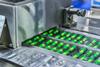
How AI is quietly changing drug manufacturability
AI is moving beyond drug design to answer a critical question: can a promising compound actually be manufactured at scale? By predicting synthetic feasibility early, machine learning tools are helping drug developers avoid costly failures, streamline R&D and design molecules that are both effective and practical to produce.
-
 News
AI-driven Alzheimer’s therapies show promise in early studies
Porosome Therapeutics has announced new advancements in Alzheimer’s treatment – presenting therapies that restore neuronal function, reduce Tau protein levels and reverse disease pathology in human brain organoids.
-
 Article
Tracing ACLY from cardiovascular target to liver therapy lead
Can a cholesterol enzyme help treat an untreatable liver disease? Esperion’s ACLY programme is using multiomic and preclinical data to evaluate its potential in primary sclerosing cholangitis.
-
 Article
Why smarter financial planning could be key to clinical trial success
Effective financial management is vital for clinical trial success, yet many preclinical and clinical companies face inefficiencies due to outdated systems. Jennifer Kyle, CEO of Condor Software, explains how advanced financial platforms can streamline processes, improve forecasting and ensure better resource allocation throughout drug development.
-
 Webinar
Innovating Obesity Drug Discovery: Trends, Challenges, and Translational Strategies
Facing roadblocks in obesity drug discovery? Discover how integrated, validated strategies are helping teams accelerate development and reduce risk.
-
 Article
Fixing failed drugs: AI solutions for toxicity in drug discovery – part 3
What role could large language models and AI agents play in drug safety? In Part 3, Layla Hosseini-Gerami of Ignota Labs discusses how emerging technologies might make toxicity analysis faster, more accessible and part of the drug discovery workflow from day one.
-
 News
New AI model PROTsi identifies aggressive tumours using protein markers
Researchers in Brazil and Poland have developed an AI-powered tool that predicts cancer aggressiveness by analysing protein expression - offering new insights into tumour behaviour.