



A POSTECH-led team has engineered an automated, modular cell-free protein synthesis platform that dramatically reduces costs, preparation time and manual complexity – opening new possibilities for therapeutic development, enzyme engineering and biofoundry workflows.
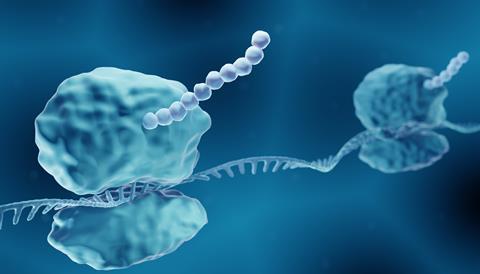
Scientists in South Korea have developed an automated system for producing proteins outside living cells that could significantly reduce costs and improve efficiency in biotechnology research and early-stage drug discovery.
The study, led by researchers at POSTECH (Pohang University of Science and Technology), centres on a new modular method for assembling cell-free protein synthesis systems, which allows scientists to produce proteins in test tubes rather than inside living cells.
The technology has attracted growing interest because it offers researchers greater control over protein production and can be used in applications ranging from synthetic biology to therapeutic development.
However, widespread adoption has been limited by high costs and complex preparation processes.
Cutting costs and preparation time
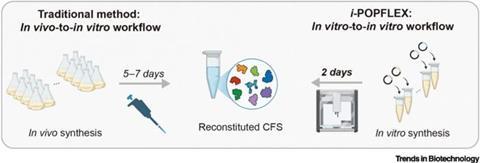
According to the research team, the new platform reduced preparation costs by 95 percent compared with commercially available systems. It also improved protein synthesis performance five-fold while reducing preparation time from four days to just two.
The researchers compared the process to instant coffee, where key ingredients are prepared in advance and only require the addition of water before use.
The new platform reduced preparation costs by 95 percent compared with commercially available systems
In a similar way, cell-free protein synthesis systems contain the molecular machinery required to produce proteins. Scientists simply add DNA instructions that determine which protein will be made.
Despite its advantages, preparing these systems has traditionally required considerable expertise and labour. Ready-to-use commercial kits are available from only a limited number of suppliers and can be prohibitively expensive for many laboratories.
Automated and reproducible process
To address these challenges, the researchers redesigned the production process by generating key components outside living cells.
Using an E. coli lysate-based cell-free protein synthesis platform, the researchers produced translation factors directly in test tubes and integrated the workflow with an automated liquid-handling system.
The researchers redesigned the production process by generating key components outside living cells
The approach reduced manual work, streamlined production and improved consistency between batches, helping to overcome one of the longstanding challenges associated with cell-free technologies.
The platform’s automated design could make advanced protein production techniques more accessible to laboratories and research facilities seeking faster and more reliable experimental workflows.
Flexible design offers wider applications
A major feature of the new platform is its modular structure, which allows researchers to add or remove individual components depending on the requirements of a particular experiment.
The team demonstrated this flexibility by successfully incorporating non-canonical amino acids into peptides and proteins. These modified building blocks can be used to create proteins with enhanced or entirely new functions.
Such capabilities could be valuable in the development of advanced therapeutics, including antibody-drug conjugates, which combine antibodies with targeted drug payloads to improve treatment precision.
The technology may also benefit biofoundries, highly automated research facilities that use robotics and artificial intelligence to design, build, test and learn from large numbers of biological experiments.
A major feature of the new platform is its modular structure, which allows researchers to add or remove individual components depending on the requirements of a particular experiment
Scientists believe a lower-cost and customisable cell-free system could help address important bottlenecks in areas such as enzyme engineering, synthetic biology and preclinical drug discovery.
“We have built an automated platform that makes cell-free protein synthesis dramatically faster and cheaper, while allowing its components to be freely customised depending on the application,” said Professor Joongoo Lee, who led the study.
The researchers hope the system will provide scientists with a more practical and affordable way to produce proteins, potentially accelerating innovation across a range of biotechnology and pharmaceutical fields.


No comments yet