



All Computational Techniques articles – Page 2
-
 Article
2026: the year AI stops being optional in drug discovery
AI is moving from a supporting role into the core of drug discovery. By 2026, it is expected to shape how targets are chosen, how biology is analysed and how development decisions are made.
-
 News
Newsinsitro expands AI drug discovery with CombinAbleAI acquisition
insitro has acquired Israeli AI therapeutics company CombinAbleAI and launched its TherML platform, creating an end-to-end, modality-agnostic system for designing small molecules, antibodies, oligonucleotides and other complex biologics.
-
 News
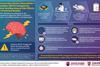
NewsNew study revives long-doubted target for depression drugs
Researchers have shown that changing the molecular structure of NK1 receptor antagonists may restore antidepressant effects after decades of failed trials.
-
 Article
AI steps into drug safety: predicting liver injury earlier than ever before
Drug-induced liver injury remains one of drug development’s most costly pitfalls. Now, AI and transcriptomics may offer a way to spot risks long before they reach patients.
-
 News
NewsSchrödinger partners with Lilly TuneLab on AI drug discovery
Schrödinger has announced a collaboration with Eli Lilly’s TuneLab platform, integrating advanced AI-driven drug discovery workflows into its LiveDesign enterprise informatics system.
-
 News
NewsNew Type 2 diabetes drugs may improve insulin sensitivity
Scientists have used advanced computer modelling and lab techniques to design potential new diabetes drugs that improve insulin sensitivity.
-
 News
NewsNew AI genomics platform targets kidney and cardiorenal disease
Seattle-based biotech company, Variant Bio, have launched Inference, an AI-powered genomics platform designed to accelerate drug discovery and identify genetically supported targets.
-
 News
NewsNew Lumos AI platform targets precision in mental health drugs
Headlamp Health has launched Lumos AI®, a new decision-support platform designed to bring greater precision to neuroscience drug development.
-
 Article
Agentic AI: teaching machines to think like scientists
What happens when AI stops guessing and starts reasoning? Agentic AI is bringing scientific logic into the heart of drug discovery.
-
 News
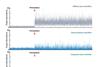
NewsControlling cellular noise may stop cancer and bacterial relapse
Scientists have developed a new mathematical ‘Noise Controller’ that can stabilise random cellular fluctuations, offering a potential breakthrough in preventing cancer recurrence and antibiotic resistance.
-
 Article
The data fragmentation problem holding drug discovery back
The DMTA cycle depends on clear data flow, yet most labs still work across disconnected systems. Sean McGee, Director of Product at Certara, explains how better infrastructure and AI can help teams work faster and make decisions with more confidence.
-
 Article
Protein folding interference: a new path to hard-to-drug targets
Protein folding interference offers access to targets long considered unreachable by traditional drug discovery. By acting on transient folding intermediates, this approach presents a new opportunity to eliminate disease-driving proteins.
-
 News
NewsNew beta lab platform to streamline early-stage research
UK life science software company Lab Thread has launched the beta of its unified lab platform, designed to streamline research workflows.
-
 News
NewsLife sciences face ‘scientific content crisis’ in AI adoption
A new survey by the Pistoia Alliance reveals a growing ‘scientific content crisis’ in life sciences, showing that incomplete data and weak governance are limiting the accuracy and adoption of AI in research and development.
-
 News
NewsBits2Bonds: AI system accelerates discovery of RNA delivery polymers
Researchers at LMU Munich have developed Bits2Bonds, the first platform to fuse molecular simulations with machine learning – accelerating the discovery of polymer carriers for therapeutic RNA.
-
 Opinion
Making science run at the speed of thought: the reality of AI in drug discovery – Part 2
Can automation and AI finally make science run at the speed of thought? Eric Ma shares how disciplined systems, not new models, will drive the next wave of discovery.
-
 Article
Fast, scalable free energy prediction with nonequilibrium switching
Nonequilibrium switching (NES) offers a faster, more scalable way to predict how strongly drugs bind to their targets. By replacing slow equilibrium simulations with rapid, parallel transitions, NES delivers accurate free energy predictions at speed.
-
 News
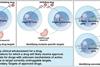
NewsDeepTarget tool helps identify secondary cancer drug targets
A new computational tool, DeepTarget, is demonstrating context-specific targets and repurposing opportunities, showing that what may be a side effect in one patient could serve as a treatment in another.
-
 Article
Making science run at the speed of thought: the reality of AI in drug discovery – Part 1
Everyone talks about AI speeding up drug discovery, but Eric Ma explains why, without clean data and statistical discipline, it can actually do the opposite.
-
 Article
Deep data not big data
Bigger isn’t always better. In drug discovery, Dr Michael Ritchie argues that the future belongs not to those with the most data, but to those who understand its biological depth.