



All Drug Discovery Processes articles – Page 30
-
 Article
The evolution of AI in drug discovery: learning from history's mistakes (Part 2)
In this second part of a two-part series, we continue Sujeegar Jeevanandam’s exploration of the future of AI in drug discovery. We share his vision for transformative AI applications, such as simulating human pharmacokinetics and pharmacodynamics, and offer strategic recommendations for biotechs looking to adopt AI.
-
 News
NewsNew research offers hope for high-grade glioma treatment
High-grade glioma, an aggressive brain cancer affecting both paediatric and adult patients, remains difficult to treat. A collaborative study from the University of Michigan, Dana-Farber Cancer Institute, and the Medical University of Vienna reveals a promising new treatment approach.
-
 Report
Beyond the Lab: Artificial Intelligence
Download our latest report to discover how AI is transforming drug discovery, accelerating treatments and driving personalised care.
-
 News
NewsNanoparticle therapy shows potential to prevent spread of pancreatic cancer to liver
Pancreatic cancer is notoriously hard to treat, especially when it spreads to the liver in advanced stages. Researchers at UCLA’s California NanoSystems Institute (CNSI) have developed an innovative nanoparticle technology to tackle this challenge.
-
 News
NewsCeSPIACE: New peptide drug blocks COVID-19 variants
Scientists have developed CeSPIACE, a peptide drug that offers broad protection against COVID-19 variants, including Omicron XBB.1.5. Find out how it targets a stable part of the virus’s spike protein, making it resistant to mutations.
-
 Article
Abelacimab: the next frontier in safer anticoagulation therapy
Abelacimab represents a breakthrough in drug discovery, offering a novel approach to anticoagulation that could potentially prevent strokes with minimal bleeding risk. Learn how this innovative treatment could set new standards for both clinical practice and pharmaceutical research.
-
 News
NewsFairJourney Biologics acquires Charles River’s South San Francisco facility
FairJourney Biologics S.A., a global leader in antibody discovery and optimisation, has announced its acquisition of Charles River Laboratories’ South San Francisco site.
-
 News
NewsBeckman Coulter Life Sciences and Rarity Bioscience partner to advance oncology research
Beckman Coulter Life Sciences, a global leader in laboratory automation and innovation, has partnered with Rarity Bioscience to introduce a groundbreaking approach to oncology research.
-
News
Scientists discover key to long COVID lung damage and potential treatment
Scientists at the University of Virginia (UVA) School of Medicine have uncovered a crucial mechanism behind the lingering effects of long COVID, revealing how severe COVID-19 infections impair immune cells’ ability to repair lung tissue.
-
 Article
The future of mental health treatment: Zelquistinel's role
Learn about zelquistinel, an innovative NMDA receptor modulator that is transforming treatment possibilities through a novel approach to synaptic plasticity. This breakthrough drug offers new insights into early drug discovery and the future of neuropsychiatric treatment.
-
 News
NewsFirst AI-designed drug, Rentosertib, officially named by USAN
Insilico Medicine’s AI-designed drug for idiopathic pulmonary fibrosis (IPF), Rentosertib, has been granted an official name by USAN. This is the first drug where both the target and compound were discovered using generative AI, marking a major milestone in AI-driven drug development.
-
 Article
The evolution of AI in drug discovery: learning from history's mistakes (Part 1)
AI is transforming drug discovery, but its adoption mirrors past technological shifts in the industry. In this first part of a two-part series, we reveal Sujeegar Jeevanandam’s observations of the parallels between AI and the electronic lab notebook revolution, highlighting key challenges, lessons learned, and what the future holds for ...
-
 Article
Navigating the AI revolution: a roadmap for pharma’s future
AI-driven drug development, powered by advanced models and expanding data access, is becoming a reality. Learn why navigating regulatory hurdles and mastering biology’s inherent complexities are crucial to fully unlocking its potential.
-
 Article
New insights into surfactant spread for lung drug delivery
A recent study led by Dr Richard McNair highlights the role of the Marangoni effect in surfactant spreading, offering potential improvements in drug development and delivery for lung diseases.
-
 News
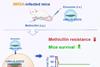
NewsScientists turn superbug MRSA into treatable infection
Researchers have discovered a breakthrough method to silence MRSA's drug resistance, restoring its sensitivity to standard antibiotics and offering new hope in the fight against superbugs.
-
 News
NewsAWS and ElevateBio join forces to advance gene editing
ElevateBio is teaming up with Amazon Web Services (AWS) to advance CRISPR gene editing using AI and cloud computing. This collaboration aims to accelerate drug discovery for genetic diseases, making next-generation therapies more efficient and accessible.
-
 News
NewsBacterial ‘jumping genes’ found to control chromosome ends
Cornell researchers have discovered how transposons, or 'jumping genes,' insert themselves into bacterial chromosome ends, potentially transforming genetic engineering and advancing biotechnology. This breakthrough could reshape antibiotic research and unlock new drug discoveries.
-
 Article
Refining and targeting exatecan with ADC technology
DTR speaks with Dr Patrick van Berkel at ADC Therapeutics to discuss how the company is transforming exatecan delivery to achieve better health outcomes.
-
 Article
Empowering women in STEM: Navigating CMC regulatory affairs
Discover how a leader in CMC regulatory affairs is transforming drug development and inspiring the next generation of scientists.
-
 News
NewsGoogle’s AI co-scientist accelerates drug development
Google has introduced an AI-powered 'co-scientist' designed to accelerate biomedical research and drug discovery by generating scientific hypotheses and identifying novel therapeutic targets.