



All Editorial articles – Page 3
-
 News
NewsLithium deficiency identified as key Alzheimer’s trigger
New research from Harvard Medical School shows that natural lithium deficiency in the brain may be a key early factor driving Alzheimer’s disease – which allow for the development of new approaches to preventing and reversing cognitive decline.
-
News
Targeted microglia transplant reverses signs of rare brain disorder
Stanford Medicine researchers have developed a targeted brain cell transplant that replaced most diseased microglia in mice with Sandhoff disease – extending their lifespan and reversing symptoms
-
News
New patent for traumatic brain injury drug announced
Drug discovery company, TauGen, has filed a US patent application for a new series of drug candidates targeting endoplasmic reticulum (ER) stress – a key factor in secondary brain injury following traumatic brain injury (TBI).
-
News
Next-gen malaria vaccine created using mapped parasite protein
Australian scientists have, for the first time, visualised a malaria parasite protein complex – a discovery that has led to a new mRNA vaccine capable of blocking the parasite’s reproduction in mosquitoes and potentially halting transmission.
-
 News
NewsAI-driven Alzheimer’s therapies show promise in early studies
Porosome Therapeutics has announced new advancements in Alzheimer’s treatment – presenting therapies that restore neuronal function, reduce Tau protein levels and reverse disease pathology in human brain organoids.
-
News
Whole-brain organoid offers breakthrough in neurological research
Johns Hopkins University scientists have engineered a new multi-region brain organoid that mimics early human brain development. The model offers a powerful new tool for studying disorders like autism, schizophrenia and Alzheimer’s disease.
-
 Article
Tracing ACLY from cardiovascular target to liver therapy lead
Can a cholesterol enzyme help treat an untreatable liver disease? Esperion’s ACLY programme is using multiomic and preclinical data to evaluate its potential in primary sclerosing cholangitis.
-
 News
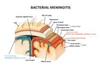
NewsMast cells: new target for preventing meningitis and brain disease
Scientists at Washington University School of Medicine have discovered that mast cells – immune cells best known for triggering allergic reactions – also help protect the brain from bacterial and viral infections. This could have important implications for treating brain infections in the future.
-
 News
NewsNew stroke drug reduces brain damage by 60 percent in preclinical study
Cambridge researchers have discovered a new drug that could dramatically improve stroke recovery by reducing brain damage caused when blood flow is restored.
-
 News
NewsNew drug GAI-17 reduces stroke-induced brain cell death
A new stroke treatment, GAI-17, developed by researchers in Japan, has shown encouraging results in reducing brain cell death and paralysis in animal models – potentially allowing for future development of treatments for other brain disorders.
-
 Article
NGS is evolving: collaboration and tech lead the way
Next-generation sequencing (NGS) is advancing fast – and it’s not happening in isolation. Strategic partnerships and automation are streamlining workflows and reshaping what's possible in genomics research.
-
 News
NewsSlowing intracellular transport boosts potential for RNA therapies
Researchers at the University of Basel and Roche have discovered that slowing the intracellular transport of RNA-based drugs significantly improves their therapeutic impact.
-
 News
NewsLINC01235 identified as driver of aggressive breast cancer
Researchers at Cold Spring Harbor Laboratory have demonstrated that an obscure RNA molecule, LINC01235, plays a crucial role in the progression of aggressive triple-negative breast cancer (TNBC) – potentially allowing for the development of targeted therapies against it.
-
 News
NewsQTX153 reverses Rett symptoms and crosses key drug delivery barrier
QTX153, a novel HDAC6 inhibitor, has shown significant symptom reversal in preclinical models of Rett syndrome. This represents progress toward a therapy for a condition with no approved options.
-
 Article
How dual-targeting ADCs aim to tackle resistance
Find out how dual-target ADCs and tumour-specific Treg depletion are shaping the next wave of targeted cancer therapies.
-
 News
NewsProtein folding milestone achieved with quantum tech
Kipu Quantum and IonQ have set a new benchmark in quantum computing by solving the most complex protein folding problem ever tackled on quantum hardware – creating potential for real-world applications in drug discovery.
-
News
New discovery shows how viral vectors release genes in therapy
Researchers at The University of Osaka have found how structural changes in the VP1 protein of AAV vectors trigger genome release - offering insights for improving the safety, efficiency and stability of gene therapy delivery systems.
-
 News
NewsScientists create advanced 3D liver model mimicking real tissue
Scientists have developed a 3D liver model, known as the periportal assembloid. This model replicates the liver’s complex structure and bile transport system, enabling more precise study of disease progression.
-
 News
NewsExperimental peptide targets glioblastoma’s most resilient cells
An experimental peptide from Virginia Tech may offer a new way to stop glioblastoma from coming back by disrupting the cancer’s treatment-resistant core.
-
 Article
Targeting GLP-1 in the brain could transform obesity care
What if a single hormone could control appetite in two entirely different ways? Professor Stefan Trapp of University College London reveals how GLP-1’s dual role in the brain and gut could transform obesity treatment.