



All Lipidomics articles
-
 News
NewsWater interaction key to smarter nanomedicine design
Scientists at Arizona State University have discovered that the way nanoparticles interact with water determines how they behave inside the human body, providing a new thermodynamic framework that could lead to more effective nanomedicines.
-
 News
NewsAlzheimer’s may disrupt fat tissue and raise metabolic disease risk
Researchers have discovered that Alzheimer’s may disrupt communication between nerves and blood vessels in fat tissue which could explain why people with Alzheimer’s are often diagnosed with heart disease and metabolic problems.
-
 Article
SPNS1 mutations reveal new lysosomal lipid recycling pathway
Scientists have linked rare mutations in SPNS1 to a previously unknown lipid recycling pathway in lysosomes, revealing how faulty fat processing can trigger muscle and liver disease.
-
 Article
Smart automation for every lab, not just big pharma
Drug Target Review spoke with Giancarlo Basile at SLAS Europe 2025 about MGI’s bold shift from sequencing specialist to automation partner – helping research companies of all sizes achieve accuracy, speed and reproducibility.
-
 News
NewsNew single-cell lipidomics method may unlock cancer treatments
A new method for a fragmentation-based identification of lipids could enable the study of cancer cells in detail not seen before.
-
 Whitepaper
Case Study: Target discovery for rheumatoid arthritis
Learn more about Euretos computational disease model and how it predicts many of the known drug targets for RA.
-
 News
NewsIncorporating microglia into brain organoids
iPS-cell-derived microglia in brain organoids have enabled scientists to understand early brain development and microglia-associated disease.
-
 Whitepaper
ebook: Maximizing preclinical confidence in target efficacy and safety
This ebook outlines Euretos’ approach to target discovery and indication expansion. Whilst also discussing data-driven target selection.
-
 News
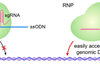
NewsResearch shows lipid nanoparticles are highly effective in gene therapy
Lipid nanoparticles have been used to encapsulate CRISPR-Cas9 and deliver it to cells in mice, where it was highly effective at knocking down expression of a target protein.