



All Proteomics articles – Page 2
-
 Article
Why tau still lacks treatments and how funders are responding
Tau drives PSP, CBD and other neurodegenerative diseases, yet there are still no disease-modifying treatments. Here, Dr Glenn Harris from the Rainwater Charitable Foundation shares how a coordinated funding effort is supporting basic research to understand tau mechanisms, improve detection and progress therapeutic development.
-
 News
NewsNew AI genomics platform targets kidney and cardiorenal disease
Seattle-based biotech company, Variant Bio, have launched Inference, an AI-powered genomics platform designed to accelerate drug discovery and identify genetically supported targets.
-
 Article
Mapping lipid pockets to drug the undruggable proteome
Tasca Therapeutics is using chemical proteomics to map lipid-binding pockets on proteins. By targeting auto-palmitoylation, the company aims to turn previously undruggable cancer drivers into viable therapeutic targets.
-
 Article
Deep data not big data
Bigger isn’t always better. In drug discovery, Dr Michael Ritchie argues that the future belongs not to those with the most data, but to those who understand its biological depth.
-
 Article
Mass spectrometry workflows powering the future of biologics
Analysing complex biologics is one of drug discovery’s biggest challenges. At Genentech, Rachel Shi is developing MS workflows that deliver clearer answers, faster.
-
 Article
Accessible automation may change your day-to-day sooner than you think
Automation is fast and precise, but too often expensive and hard to use. Now modular, DIY tools are breaking down barriers and putting lab automation in every researcher’s hands.
-
 Article
Lab of the future: four technologies to watch
From precision proteomics to AI-powered immune profiling, next-generation laboratory technologies are changing how new therapies are discovered and developed. Here are four innovations set to shape the lab of the future - and the future of drug discovery.
-
 Article
Tracing ACLY from cardiovascular target to liver therapy lead
Can a cholesterol enzyme help treat an untreatable liver disease? Esperion’s ACLY programme is using multiomic and preclinical data to evaluate its potential in primary sclerosing cholangitis.
-
 Article
Fixing failed drugs: AI solutions for toxicity in drug discovery – part 3
What role could large language models and AI agents play in drug safety? In Part 3, Layla Hosseini-Gerami of Ignota Labs discusses how emerging technologies might make toxicity analysis faster, more accessible and part of the drug discovery workflow from day one.
-
 News
NewsNew AI model PROTsi identifies aggressive tumours using protein markers
Researchers in Brazil and Poland have developed an AI-powered tool that predicts cancer aggressiveness by analysing protein expression - offering new insights into tumour behaviour.
-
 Article
The biotech mapping thousands of hidden therapeutic clues
Think drug discovery is slow? This biotech is moving faster, smarter and deeper – by asking the question that no one else has.
-
 News
NewsK Navigator: an AI co-pilot transforming biomedical research
K Navigator, a new AI-powered research co-pilot, is set to transform biomedical science by helping researchers explore complex data and accelerate discoveries.
-
 News
NewsCapgemini’s AI innovation set to boost bioeconomy
Capgemini's new AI-powered methodology reduces data requirements by 99 percent and accelerates bioengineering breakthroughs, including improved plastic degradation and faster drug discovery.
-
 News
NewsBoltz-1: A new open-source AI tool for drug discovery
MIT's new open-source AI model, Boltz-1, could transform drug discovery by accurately predicting protein structures, offering global access to researchers.
-
 News
NewsKey enzyme discovery marks a step forward in Alzheimer’s treatment
Scientists have decoded the 3D structure of a key enzyme linked to Alzheimer's disease. This breakthrough opens up new possibilities for targeted drug development and better treatment options.
-
 Article
Nobel Prize celebrates AI's role in protein structure innovation
The 2024 Nobel Prize in Chemistry honours AI's transformative impact on protein science, with breakthroughs set to reshape drug development.
-
 Article
The paradox of data in precision medicine
The path to faster breakthroughs in precision medicine begins with overcoming the complexities of multi-modal data. Discover how innovative solutions are enabling more personalised treatments.
-
News
New AI tool accurately portrays metabolic states
RENAISSANCE can quantify unknown intracellular metabolic states, including metabolic fluxes.
-
 News
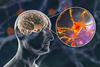
NewsIdentifying biomarkers for progressive supranuclear palsy
Protein biomarkers in spinal fluid linked to PSP could enable earlier diagnosis and treatment for this neurological disorder.
-
 News
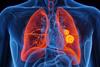
NewsProteogenomics: finding targets for never-smoker lung cancer
Through multi-omics analysis, researchers find that oestrogen signalling could be a target for never-smoker lung cancer cases.