



With tuberculosis remaining the world’s deadliest infectious disease and its notoriously slow experimental timelines hampering drug development, James Sacchettini’s laboratory at Texas A&M has built AI tools designed to help researchers make better-informed decisions about which compounds are worth pursuing.

When scientists screen potential tuberculosis drugs, they often find too many possible candidates and too little time to investigate them all. Many compounds may initially appear promising but don’t lead anywhere.
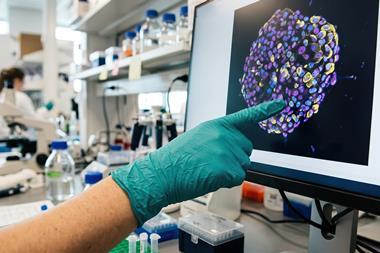
To combat this, Dr James Sacchettini’s lab at Texas A&M University has developed artificial intelligence tools to help researchers prioritise the most promising options after initial screening. The team is also using AI to organise years of collaborative research data into a searchable system that can help scientists make faster decisions.
“What information can we get that really helps us make decisions?” Sacchettini said. “If we can use AI to shorten the time it takes to go from an idea to a real treatment, that would be wonderful.”
A disease that remains difficult to defeat
The work aims to address one of the world’s most persistent infectious diseases. According to the World Health Organization, tuberculosis remains the world’s deadliest infectious disease, despite centuries of medical advances.
Standard treatments can take months to complete, while cases involving drug-resistant tuberculosis or co-infection with HIV often require even longer treatment. The disease continues to have its greatest impact in lower-income regions where access to healthcare and lengthy treatment programmes create additional challenges.
The work aims to address one of the world’s most persistent infectious diseases
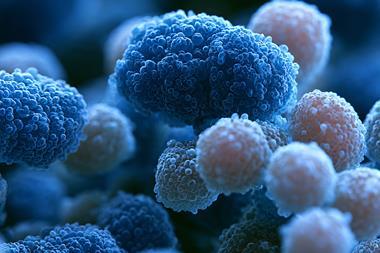
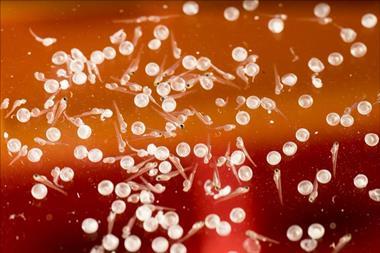
Developing new treatments is complicated by the biology of the tuberculosis bacteria. Their thick, waxy outer coating prevents many drugs from reaching their targets and their slow growth means experiments can take significantly longer than research involving other bacteria.
“To do a tuberculosis experiment takes months sometimes, where it can take a week with staph or strep,” Sacchettini said. “That’s part of the reason why drug discovery pipeline has been relatively slow. It’s a perfect area to work with AI.”
Building the data infrastructure for AI
Before creating AI tools, Sacchettini’s team first addressed how research information was stored and shared. Scientific data can often be spread across network drives, presentations and individual researchers’ memories.
The lab developed DAIKON, an open-source platform launched in 2023 that tracks drug targets from genetic information through years of chemistry research. The Gates Foundation-supported Tuberculosis Drug Accelerator, or TBDA, uses DAIKON across its partnership of laboratories and companies.
Before creating AI tools, Sacchettini’s team first addressed how research information was stored and shared
The AI systems developed by Sacchettini’s group connect directly with the platform, allowing researchers to analyse information more efficiently.
“We’re not hoping for AI to give us the exact right answer. But it can tell us what not to work on, which then informs us what we should be working on. And it really is a big time saver.”
Identifying false leads earlier
Another big challenge in drug discovery is identifying compounds that appear effective during early testing but are actually misleading. These ’nuisance molecules’ can waste significant amounts of research time and money.
“These ‘nuisance molecules’ cost us so much time,” Sacchettini said. “One goal is to identify them so we don’t spend months, years or hundreds of thousands of dollars working on them.”
One major challenge in drug discovery is identifying compounds that appear effective during early testing but are actually misleading results
The team created an AI model called CAGE-Fusion to detect these false signals. The system learns from published screening data and identifies different types of problematic compounds, including those that clump together, interfere with chemical signals, react instead of binding or attach to multiple targets.
The model can highlight potential issues before compounds move into more expensive stages of development. It also provides explanations that allow chemists to understand its predictions.
Turning years of research into accessible knowledge
AI is also helping the team make better use of TBDA’s extensive shared research archive. Siddhant Rath, an AgriLife Research scientist in Sacchettini’s lab and colleague Saswati Panda developed a system that allows researchers to search through years of project data, including molecular structures and previous results.
“In my research, I might come across a molecule and think, ‘I know I’ve seen this before,’ but there was no easy way to find it,” Sacchettini said.
The system allows scientists to trace molecules across projects and use a chat interface to quickly locate information.
AI is also helping the team make better use of TBDA’s extensive shared research archive
“It will tell me in a matter of seconds who presented something, what they said about it and give me the presentation so I can see the slides,” added Sacchettini.
As AI becomes increasingly integrated into scientific research, Sacchettini believes its greatest value is helping scientists focus their efforts.
“We’re not hoping for AI to give us the exact right answer,” he said. “But it can tell us what not to work on, which then informs us what we should be working on. And it really is a big time saver.”



No comments yet