



All University of Cambridge articles
-
 News
NewsDARG cells may drive neurodegeneration in progressive MS
Scientists have discovered a rare type of brain cell that appears to drive the chronic inflammation seen in progressive multiple sclerosis – which could potentially lead to new disease-modifying therapies.
-
 News
NewsNew stroke drug reduces brain damage by 60 percent in preclinical study
Cambridge researchers have discovered a new drug that could dramatically improve stroke recovery by reducing brain damage caused when blood flow is restored.
-
 News
NewsNew monoclonal antibody drug could combat antimicrobial resistance
Scientists have developed a monoclonal antibody drug that could help to prevent infection from Acinetobacter baumannii.
-
 News
NewsEpigenetic dysregulation mechanism in Crohn’s disease discovered
Intestinal epithelial organoids highlight a pathway implicated in CD, named major histocompatibility complex (MHC)-I.
-
 News
NewsRare genetic variants found to have a large impact on obesity risk
Researchers have gained a deeper understanding of the neural biology of obesity, which could offer potential drug targets.
-
Article
AI system develops features of complex brains
An AI system could be used to observe how physical constraints shape brains and impact people with cognitive difficulties.
-
 News
NewsInvestigating the genetic changes of the DDX3X gene
Using saturation genome editing, researchers have created a map of disease-causing mutations for neurodevelopmental disorders and cancer.
-
News
Improving ovarian cancer outcomes with artificial intelligence
Researchers have developed an AI based model that is 80 percent accurate in predicting the therapy outcome of high-grade ovarian cancer.
-
 News
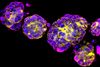
NewsNew understanding of early breast cancer development
Mammary organoid cultures show the effects of BRCA2 mutations on breast tissue cells, increasing the likelihood of early, targeted treatment.
-
News
Vascular cells essential in forming long-term memories
New research reveals capillary cells and neurons work together to ensure memory formation and storage.
-
News
Dynamic molecular aggregates within cells
Researchers from the University of Freiburg and the University of Cambridge have observed live cell formation of membraneless molecular aggregates, uncovering the interplay between biological mechanisms and physical force.