



An automated imaging system developed at ETH Zurich uses AI to detect pain in laboratory mice through facial expression analysis, offering standardised assessment that reduces observer bias and animal stress.
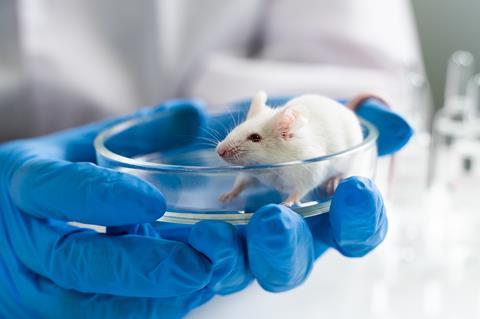
A white plastic box with an orange floor may not look like a breakthrough in animal research but scientists say it could significantly improve how laboratory mice are monitored for pain. Developed at ETH Zurich, the device forms part of a new system designed to assess welfare more accurately and consistently while reducing stress in scientific animal studies.
A humane approach to observation
At the centre of the system is a darkened enclosure where mice can behave naturally without feeling watched.
“This box allows laboratory animals to be observed in a humane and standardised way, whether by us here in Zurich or by researchers on the other side of the world,” says Oliver Sturman, Head of the 3R Hub at ETH Zurich.
At the centre of the system is a darkened enclosure where mice can behave naturally without feeling watched
The inside of the box is kept completely dark using black acrylic walls and a lid. According to Sturman, this helps the animals stay calm.
“This is important, so that the animals feel comfortable and unobserved,” he said. “When they are first placed in the box, they sniff about and explore the surroundings – which is natural behaviour. After a while, they get used to it and sometimes even fall asleep.”
Two cameras record the animals from above and from the front, using infrared light to capture clear images without disturbing them.
Detecting pain through facial expressions
The system focuses on subtle changes in a mouse’s face to determine whether it is experiencing pain or discomfort. These include narrowing of the eyes, bulging of the nose and cheeks or shifts in ear and whisker position.
An algorithm analyses these features in real time using a system known as GrimACE. This allows researchers to quickly identify when an animal may need additional pain relief.
Traditionally, scientists have relied on the Mouse Grimace Scale, manually scoring facial expressions from zero to two based on visible signs of distress. However, this approach is both time-consuming and subjective, requiring researchers to observe animals directly and compare their expressions to reference images. It can also be unreliable if the animal’s face is not clearly visible, and the presence of humans may itself cause stress.
A standardised ‘photo booth’ system
The GrimACE system aims to overcome these limitations by providing a consistent and automated method of assessment. Once a mouse is placed in the box, recording begins immediately and the system selects the most relevant frames for analysis.
Sturman compares the setup to a passport photo booth. “As we all know, these machines are always built the same: a stool that is positioned a fixed distance from the camera, a white background and a dark curtain – all that ensures you get a successful photo, whoever and wherever the machine is used.”
By standardising the environment, the system maintains accuracy regardless of where it is deployed.
Matching and surpassing human assessment
In a recent study published in the journal LabAnimal, researchers tested whether GrimACE could reliably detect pain in mice following brain surgery. The system’s assessments were compared with those of a human expert who manually reviewed thousands of images.
The results showed a close match between the automated system and the expert’s evaluations. However, when three different human raters assessed the same images, their scores varied significantly.
The results showed a close match between the automated system and the expert’s evaluations
“This is not because the experts didn’t do a good job,” says Sturman. “We secretly gave all three raters the same images to assess, to check whether their own scores were consistent.”
While each individual was internally consistent, their scoring differed from one another, highlighting the subjective nature of human assessment. “This is where we see the strength of the computer as it delivers standardised results,” said Sturman.
Global interest and future development
The technology has been released as an open-source kit, allowing researchers worldwide to adopt and improve it. As more data is collected, the system’s accuracy is expected to increase further.
“We’ve already received a number of email enquiries, for example from the US and UK,” says Sturman.
The work is part of the broader 3R principles – replacement, reduction and refinement – which aim to minimise animal use in research and ensure the highest possible standards of care.







No comments yet