





In drug discovery, a failed sample run is not just a setback – it can mean months of lost work and significant cost. At Analytica 2026, three Eppendorf experts explain how the right tools, workflows and mindset are changing that.
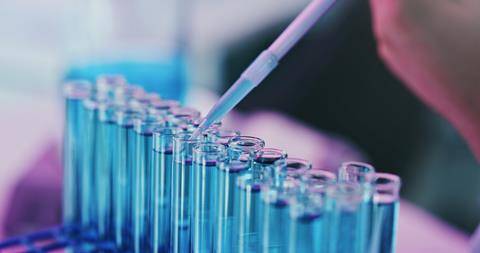
In almost any life sciences lab, you will likely find an Eppendorf product. The family-owned firm supplies a wide range of laboratory tools and instruments including liquid-handling consumables, centrifuges and automation systems for operations ranging from academic benches to tightly regulated pharma manufacturing suites. In drug discovery, where sample preparation, reproducibility and limited material are critical, these tools are used throughout laboratory workflows where consistency is essential.
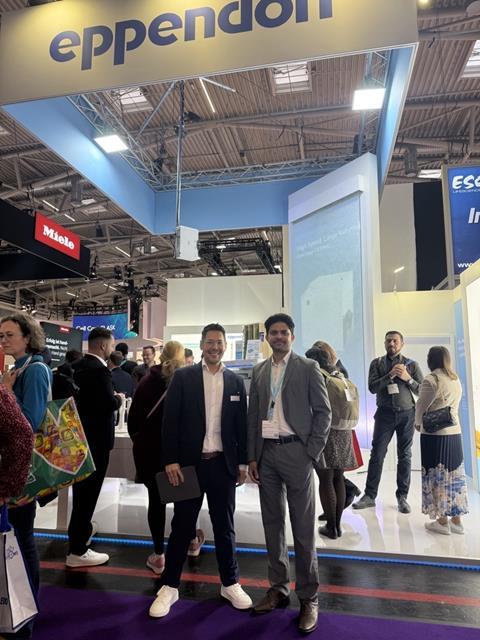
At Analytica 2026, we spoke to Axel Ziemke, Vice President and Head of Sales Central Europe, who oversees Germany, Switzerland, Austria and Poland, managing over 50 people across four teams. He was joined by Sugish Pillai, Commercial Product Manager for centrifugation across EMEA and Dr Gary Kusdian, a molecular biologist turned account manager based in Regensburg. Together, they bring perspectives from regional sales, product development and day-to-day work with laboratory users.
All three experts emphasised that Eppendorf operates as a foundational supplier, focusing on what Ziemke describes as ‘bread and butter’ core tools – pipettes, centrifuges and consumables – used across pharma, academia and the food industry. The company’s focus, he adds, is to move away from pure product thinking towards application-driven solutions particularly in complex areas such as drug discovery where sample preparation is becoming more demanding.
The pressures on sample preparation
Ziemke points to several factors affecting sample preparation: higher throughput, miniaturisation, reproducibility, standardisation, sustainability and digitalisation.
On throughput, automation is key. As throughput increases and volumes shrink, even minor inconsistencies in sample handling can lead to significant downstream variability. Eppendorf’s epMotion platforms, including the recently launched epMotion 96 Flex, sits between manual pipetting and larger automated systems. The company focuses on the up-to-mid-throughput range, targeting laboratories that need greater capacity without moving to full automation. Alongside this, the company is also adapting manual tools. Their Move It pipette offers adjustable spacing between channels, allowing users to work with formats such as 384-well plates without introducing full automation.
The more you automate, the more you need to ensure experimental reproducibility and build trust.
Reproducibility also becomes more critical as workflows become more automated. “The more you automate, the more you need to ensure experimental reproducibility and build trust from customers that you will deliver this ,” Ziemke said. Eppendorf builds this into its manufacturing processes. Pipette tips, for example, are laser-checked in the rack, one by one, to ensure consistent dimensions. This level of quality control increases cost but reduces variability and supports more reliable results.
Miniaturisation adds further constraints. Pillai described researchers in early drug screening working with highly limited material: “They don’t have the luxury of a lot of samples,” he said. “It should generate the result in one test and one run. If not, we are talking about monetary loss for them.” Pillai linked this to consumable design, referring to surface chemistries such as DNA LoBind and Protein LoBind designed to minimise sample loss during preparation.
Standardisation is particularly relevant in pharma and biotech. While academic labs often use a mix of products, regulated environments require validated, documented and consistent workflows. Ziemke noted that customers in these settings are willing to invest in solutions that combine products, certifications and technical support to meet regulatory expectations.
Sustainability: older than it looks
Ziemke takes a long view on sustainability. He recalled developing water analysis test kits in the 1980s using low levels of chemistry, refillable solvents and environmentally certified packaging. “We had the sustainable technologies over 40 years ago,” he said. What has changed, he reflected, is customer expectation. “The customer now thinks differently.”
Today, sustainability is influencing both product design and purchasing decisions, particularly in pharma and regulated environments where it is increasingly built into procurement criteria. Eppendorf is developing biobased consumables and placing greater emphasis on energy consumption in instruments. Shared instrument use, where departments pool equipment rather than purchase individually, is also gaining traction, alongside increased demand for service and maintenance plans to extend instrument lifetimes.
Kusdian said green labs and sustainability offices are becoming more common in academic settings, with a focus on reducing environmental impact. Pillai pointed to a related trend: researchers referencing sustainability in grant applications. “They buy an Eppendorf product and with that they can show that their experiments are sustainable,” he said.
The company has begun providing sustainability data sheets alongside technical documentation for products such as the Research 3 neo pipette, outlining manufacturing and environmental considerations. “We are very transparent,” Ziemke said, “that everyone knows we really take sustainability seriously.”
Tools for sample preparation in drug discovery
Three products highlighted at Analytica 2026 illustrate how Eppendorf is responding to these demands: the Spin Pro 6R centrifuge, the CellXpert CS220 CO₂ incubator shaker and the Research 3 neo pipette.
Spin Pro 6R
The Spin Pro 6R is a multipurpose centrifuge with a focus on sustainability and workflow control. It uses CO₂ as a refrigerant in place of hydrofluorocarbons commonly used in centrifuge cooling, which can have a global warming potential (GWP) of around 1,430kg CO₂-equivalent. CO₂, by comparison, has a GWP of 1. With European regulation on high-GWP refrigerants tightening, Pillai said the aim is to stay ahead of these changes.
For drug discovery workflows, the system’s approach to reproducibility is key. Administrators can pre-load centrifugation programmes and assign them to users via RFID login, ensuring protocols are followed consistently. In regulated environments where multiple users must generate comparable results, this level of control is critical.
The platform supports a range of rotor options, covering different volumes and applications. A universal rotor concept allows different vessel types to be processed using adaptors, reducing the need to switch rotors. Digital integration enables direct connection to laboratory systems via network, with data export in standard formats. An RFID chip tracks rotor usage over time, alerting users when maintenance or replacement is required.
Taken together, these features are designed to reduce variability and improve traceability in sample preparation, both of which are critical in drug discovery workflows where errors at early stages can affect downstream results.
CellXpert CS220 CO₂ incubator shaker
Kusdian described the CellXpert CS220 as a more specialised product for suspension cell culture. It provides a sealed CO₂ incubation environment with active humidification, supporting sterile working conditions and ease of use. The seamless inner chamber allows straightforward cleaning, while the upward-opening door provides full access to the platform and samples. The chamber has a capacity of 220 litres and the system can be expanded by stacking up to three units. Plus, a 180-degree high-temperature disinfection cycle simplifies sterilisation. For applications involving suspension cultures, these features are designed to reduce contamination risk and minimise downtime between experiments.
Research 3 neo pipette
The Research 3 neo updates Eppendorf’s existing pipette range with a focus on usability and ergonomics. Kusdian described the challenge of delivering meaningful improvements in a mature product category. “It was a hard task for Eppendorf to really create something innovative with new features where the customer says, okay, this is really a benefit for me,” he said.
New features include a volume gear shift that, in fast mode, increases the volume change per turn by 40 percent, allowing quicker adjustment between settings. A shorter operating button improves accessibility for users with smaller hands, while a volume lock prevents accidental changes. The pipette is also accompanied by a sustainability data sheet alongside standard technical documentation.
For routine laboratory work, these changes are designed to improve handling, reduce adjustment time and help maintain consistency during repeated pipetting steps.
Why Analytica matters to Eppendorf
For Ziemke, Analytica brings together a wide range of customers. “There are researchers, pharma, industry and biotech companies, instrument and reagent providers, startups and decision makers,” he said. “We really have a bunch of different customers here at one place.”
If something is going wrong, we need to know, because only then can we improve.
He said the focus is on listening, working with customers and building long-term relationships. Listening means understanding where time, sample or data quality is being lost in workflows. “If something is going wrong, we need to know, because only then can we improve,” he said. “We really need the hard truth if there is one.”
That feedback helps to inform product development. Pillai recalled collecting input on earlier centrifuge models at previous events. “Around 80 percent of feedback is positive,” he says. “But the remaining 20 percent is what matters and that becomes the starting point for the next generation.”
The aim is to build relationships that extend beyond individual products. “If visitors walk away thinking, these are people I can call when I need to rethink a workflow or scale up a project, then Analytica has been a success for us,” Ziemke said.
Pillai and Kusdian described this as understanding what customers actually need, beyond the initial request. That can include challenges around workflow efficiency, compliance, sustainability and usability. These conversations then feed directly into product development, particularly for drug discovery workflows where consistency and reliability are critical.









No comments yet