




As antimicrobial resistance grows and patient populations become more complex, the limitations of antibiotics are becoming harder to ignore. Dr Helen Bright, CSO at Centauri Therapeutics, discusses a new approach that targets both the pathogen and the host.
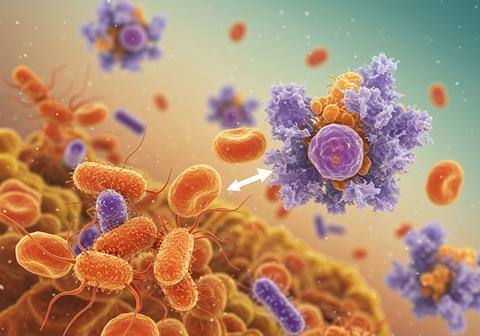
Antibacterial drug discovery has traditionally focused on identifying compounds that inhibit or kill pathogens. However, clinical outcomes depend on more than bacterial susceptibility alone. The immune system plays a critical role in clearing infection and when that response is impaired, even effective antibiotics can fall short. In response, approaches that combine direct antibacterial activity with immune engagement are being developed to address both pathogen burden and host response. Dr Helen Bright, Chief Scientific Officer at Centauri Therapeutics, is working in this area, focusing on the Alphamer® platform, which recruits naturally occurring antibodies.
“Antibiotics underpin modern medicine; without them, many routine and life-saving medical interventions – from cancer chemotherapy to caesarean sections – would not be possible,” Bright said. However, antibiotic treatment alone may be insufficient, particularly in patient groups with reduced immune function. “Elderly individuals, oncology patients and those receiving antibody or immunosuppressive therapies are at a heightened risk of bacterial infections and often respond poorly to standard antibacterial treatments – even when pathogens are classified as susceptible in vitro,” she explained.
Antibiotics underpin modern medicine; without them, many routine and life-saving medical interventions – from cancer chemotherapy to caesarean sections – would not be possible.
The majority of drug discovery in this area however still focuses solely on killing the bacteria, rather than whether the immune system can also come in to help clear the infection. The issues with this approach are clearly apparent in the difference between laboratory results and patient outcomes.
Combining antibacterial activity with immune engagement
Therapeutic approaches that combine direct antibacterial activity with mechanisms that enhance the host immune response are being explored to address both aspects of infection. In many infections, reducing bacterial load is not sufficient on its own, particularly where immune-mediated clearance is impaired.
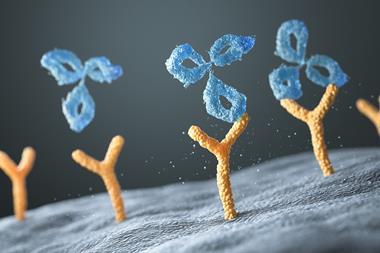
One strategy under investigation involves the use of bifunctional molecules that can both target bacteria and recruit components of the immune system. These molecules typically include a binding element that attaches to the bacterial surface and an effector component that engages immune pathways. In simple terms, the molecule attaches to the surface of the bacteria and then draws in antibodies that are already present in the body, helping to direct the immune response to the site of infection.
“At Centauri, we believe that successful treatment of infection requires addressing both the pathogen and the host. The Alphamer approach is designed to overcome current treatment failures by combining direct antibacterial activity with targeted immune activation,” Bright explained.
The Alphamer approach is designed to overcome current treatment failures by combining direct antibacterial activity with targeted immune activation.
Recruitment of natural antibodies can in turn trigger multiple immune responses, including complement activation and phagocytosis, which further contribute to bacterial clearance. “By recruiting endogenous antibodies, Alphamers promote complement-mediated lysis, phagocytosis and clearance of bacteria, including those embedded in biofilms,” Bright said. This type of approach is intended to support immune-mediated clearance, particularly in situations where the immune system is suppressed. “By directly engaging the immune system, Alphamers are designed to restore this critical final step in infection resolution,” she added.
Natural anti-glycan antibodies
The Alphamer platform builds on the presence of natural anti-glycan antibodies in humans. These antibodies develop through continuous exposure to glycan antigens in food and the gut microbiome.
The presence of abundant natural anti-glycan antibodies in humans has been known for decades. They are polyclonal and include both IgM and IgG isotypes, enabling a broad immune response. Although individual interactions between antibodies and glycans are relatively weak, presenting multiple glycan epitopes together increases binding strength. Alphamers use this principle by linking a pathogen-binding component with a glycan effector, allowing both targeting and immune recruitment.
“The result is rapid recruitment of endogenous antibodies and activation of multiple immune effector pathways, leading to efficient immune-driven bacterial killing,” Bright said.
Early discovery models
Therapies that depend on immune engagement require different approaches to evaluation. Standard in vitro assays and traditional animal models do not fully reflect the contribution of the human immune system. “Traditional preclinical infection models, often based on agar or broth in vitro assays and neutropenic animal models, do not adequately reflect the contribution of the host immune response,” Bright explained.
Centauri’s discovery process begins with identifying binding components with appropriate affinity and selectivity, followed by optimisation of immune engagement through the selection of linker and glycan combinations. “To do this, we employ a range of functional immunology assays, including complement activation, phagocytosis and cell lysis assays, alongside traditional microbiological assessments,” she said.
Animal models present additional challenges due to differences in antibody levels between species. “Most preclinical mammalian models lack sufficient levels of anti-glycan antibodies and therefore require exogenous human anti-glycan antibody supplementation,” Bright noted.
Most preclinical mammalian models lack sufficient levels of anti-glycan antibodies and therefore require exogenous human anti-glycan antibody supplementation.
To address this, Centauri uses immune-competent models alongside human-based systems such as whole blood assays. “We have taken lessons from the immune-oncology field and also employed ex vivo human whole blood and primary cell assays as translational pharmacodynamic models, as they better capture the integrated effects of immune recruitment and antibacterial activity,” she said.
From preclinical data to clinical candidate
Centauri has advanced its first Alphamer candidate into clinical development for Gram-negative bacterial infections. The decision was based on a combination of efficacy, pharmacokinetics and safety data.
“Our decision was supported by strong translational efficacy data,” Bright said. In a preclinical pneumonia model, the candidate demonstrated improved survival compared with standard treatment, despite a shorter dosing regimen. “In a nine-day mouse pneumonia model, our lead candidate demonstrated significantly improved survival compared with a standard-of-care therapy, using only a short, three-day treatment regimen,” she explained.
Human ex vivo studies also demonstrated immune-mediated bacterial killing across multiple isolates. “These findings were complemented by favourable ADME and pharmacokinetic properties, such as high lung exposure and low protein binding, as well as a safety profile supportive of achieving pharmacologically active doses in humans,” Bright added.
Supporting development and clinical translation
The programme has been supported by CARB-X, which has contributed to preclinical development and the transition into early clinical studies. As the candidate moves into first-in-human trials, the focus is on generating data on both safety and biological activity.
“We are working closely with CARB-X to design a robust Phase I clinical programme focused not only on safety, but also on the incorporation of exploratory pharmacodynamic biomarkers to inform clinical translation and future development,” she explained.
The role of immunotherapy in infectious disease
Immunotherapeutic approaches are expected to complement existing treatments rather than replace them. “Traditional antibiotics will continue to be the cornerstone of infectious disease management,” Bright said. However, for infections that are difficult to treat or occur in vulnerable patients, combining antibacterial activity with immune engagement may significantly improve outcomes.
“For complex, chronic and hard-to-treat infections – particularly in vulnerable patient populations – immunotherapeutic approaches have the potential to be transformative,” she concluded.
For infections where standard treatments fall short, combining antibacterial activity with immune engagement may offer a significantly more effective way to improve patient outcomes.












No comments yet