




Many drugs still fail after promising preclinical results, raising difficult questions about how disease is modelled in the lab. Researchers are now turning to organoids and iPSC-derived systems to build more predictive models for drug discovery and reduce costly late-stage failures.
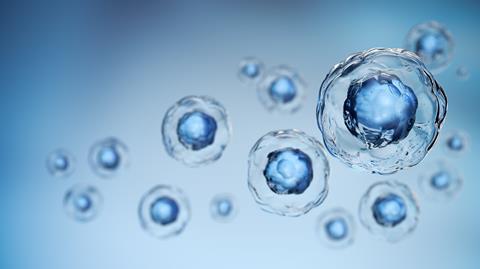
Drug discovery now relies far more heavily on human-relevant models as researchers look for ways to improve clinical translation and reduce late-stage failure. Technologies such as induced pluripotent stem cells (iPSCs) and organoids allow scientists to study disease using models that more closely reflect patient biology.
Unlike traditional cell models, iPSC-derived systems enable researchers to study disease mechanisms, treatment response and patient-specific biological variability in more physiologically relevant models. These cells can also be differentiated into organoids that mimic aspects of human tissue organisation, cellular interactions and disease biology.
As pharmaceutical companies search for models that better reflect human biology, drug discovery teams are under pressure to improve reproducibility, throughput and clinical relevance across preclinical research workflows. Steve Smith, CEO of iXCells Biotechnologies, has spent more than 25 years working on human-derived cell models and the challenges involved in using them reliably at scale. Drug Target Review spoke with Smith about organoids, iPSC-derived systems and the growing demand for preclinical models that generate more reproducible and clinically relevant data.
Why researchers are moving towards human-relevant models
For decades, preclinical research has relied heavily on immortalised cell lines and animal models. However, researchers continue to debate how effectively these systems reflect complex human disease biology.
Many neurological disorders, cancers and rare diseases involve interactions between multiple cell types, genetic factors and tissue-specific processes that are difficult to recreate using conventional models. This has led more researchers to explore iPSC-derived systems and organoids, particularly as pharmaceutical companies look for ways to improve decision-making earlier in drug development.
According to Smith, one of the biggest reasons researchers are adopting iPSC-derived and organoid systems is the need for models that better reflect human biology.
“iPSC-derived and organoid systems are already informing decision-making in early discovery and their impact on clinical translation is starting to emerge.”
Interest in human-relevant models has also received support from regulators and funding bodies, including recent initiatives from the US Food and Drug Administration (FDA) and the National Institutes of Health (NIH) focused on improving translational research tools.
iPSC-derived and organoid systems are already informing decision-making in early discovery and their impact on clinical translation is starting to emerge.
iPSCs are generated by reprogramming adult cells, such as skin or blood cells, into stem cells capable of developing into different tissue types. Researchers can then use these cells to generate disease-relevant models that retain patient-specific genetic information. This allows scientists to study how diseases develop in different individuals and investigate why patients may respond differently to treatment.
Organoids take this a step further by enabling researchers to recreate aspects of tissue organisation and cellular behaviour seen in organs such as the brain, liver and intestine.
Smith explains that these systems are particularly useful in areas where biological context matters.
“Organoids allow researchers to evaluate therapeutic effects in a setting that more closely reflects human tissue architecture and function,” he explains.
Reproducibility remains a major challenge
Despite growing interest in these technologies, reproducibility remains one of the biggest barriers to wider adoption.
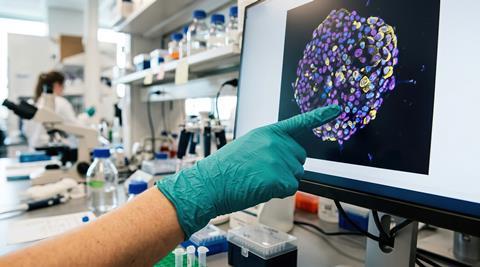
Generating complex biological models is only part of the challenge. Researchers also need systems that produce reliable results across different experiments, laboratories and large-scale discovery programmes.
“Reproducibility remains a challenge for researchers working with these types of models, particularly as they become more and more complex,” he says.
Standardisation of workflows, automation and characterisation methods will be critical to ensuring data can be trusted across programmes.
Variability can occur at several stages, including donor selection, cell reprogramming, differentiation and organoid development. Even small differences in workflow or handling can affect model behaviour, creating problems for large data-driven research programmes where consistency across datasets is essential.
Smith believes standardisation and automation will play an important role in addressing these issues.
“Standardisation of workflows, automation and characterisation methods will be critical to ensuring data can be trusted across programmes,” Smith adds.
Automation can also help reduce variability during cell culture, differentiation and organoid generation, while standardised quality control methods improve consistency between batches. More reproducible models may also reduce experimental noise, helping researchers compare datasets more reliably and make earlier decisions with greater confidence.
Scaling human-derived models for modern drug discovery
As drug discovery becomes more data-intensive, researchers need access not only to biologically relevant models, but also to large numbers of consistent models capable of supporting high-throughput research.
This is one of the main areas iXCells has focused on through its iPSCore platform.
“What differentiates iPSCore is its ability to combine biological relevance with operational performance,” Smith highlights.
The platform combines donor sourcing, cell reprogramming, differentiation and characterisation within a single workflow designed to generate scalable, reproducible iPSC-derived cells and organoid models for drug discovery research. Models are evaluated using standardised criteria, including morphology, genetic stability and pluripotency markers, helping improve consistency across larger discovery datasets.
Smith also emphasises the operational challenges involved in scaling human-derived models for pharmaceutical research. Discovery teams need systems that can support long-running programmes without major variability between batches or experimental workflows.
“Many discovery efforts now require large datasets to capture disease heterogeneity,” he says.
Disease heterogeneity refers to the biological differences seen between patients with the same condition. These differences can influence disease progression, drug response and treatment outcomes. By generating large numbers of patient-derived models, researchers can begin to investigate those differences more systematically.
“The industry increasingly needs not just high-quality models, but thousands of consistent, well-characterised models to support modern, data-driven science.”
Combining organoids with AI-driven analysis
As organoid systems become more advanced, researchers are generating larger and more complex biological datasets that require computational analysis alongside traditional laboratory methods.
Earlier this year, iXCells announced a collaboration with Rosebud Biosciences focused on combining iPSC technologies with AI-assisted organoid development. The partnership aims to improve disease modelling, particularly in rare diseases where patient populations are small and biological variability can be difficult to study at scale.
The integration of iPSC technologies with AI-driven organoid development brings together patient-specific biology with tissue-level complexity in ways that were previously difficult to achieve.
Smith believes combining patient-derived models with computational analysis could help researchers better understand disease heterogeneity and treatment response across different patient groups.
“One of the key advantages of this partnership is the ability to better capture and study heterogeneity,” he notes.
AI tools can support the analysis of complex biological datasets, helping researchers identify patterns and improve consistency in organoid development and characterisation. However, Smith stresses that biologically relevant models remain central to generating meaningful insights.
“The integration of iPSC technologies with AI-driven organoid development brings together patient-specific biology with tissue-level complexity in ways that were previously difficult to achieve,” he adds.
Where organoids are having the biggest impact
While organoid systems are still developing, several areas of drug discovery are already benefiting from their use.
One of the most important is efficacy testing. Traditional two-dimensional cell cultures remain widely used, but they often fail to reproduce how cells behave within organised tissue environments. Organoids help address this by allowing researchers to study therapeutic effects in more physiologically relevant systems.
“This is especially important in diseases where cell-cell interactions and the microenvironment play a significant role, such as neurodegenerative conditions and cancer,” Smith says.
Drug safety assessment is another area attracting attention. Since organoid systems more closely reflect human tissue organisation and cellular behaviour, researchers may be able to identify toxicities and adverse responses earlier in development, potentially reducing the risk of expensive late-stage failures.
Smith also highlights the potential role of these systems in target identification, particularly when combined with patient-derived iPSC models.
“There are also benefits in target identification, particularly when combined with patient-derived iPSC models,” he adds.
Organoid systems in drug discovery
Despite significant progress, several technical challenges still need to be addressed before organoid systems become routine tools across pharmaceutical pipelines.
“For organoid systems to be more widely adopted, the focus needs to be on reproducibility, standardisation and scalability,” Smith says.
Researchers also need clearer quality benchmarks and validation frameworks to ensure results can be compared across programmes and organisations. This remains a major challenge in organoid research, where differences in culture conditions, differentiation protocols and analysis methods can affect reproducibility between laboratories.
For organoid systems to be more widely adopted, the focus needs to be on reproducibility, standardisation and scalability.
Automation and computational analysis are also helping improve consistency, scalability and data interpretation across organoid workflows.
As these technologies continue to mature, human-derived systems are expected to play a larger role in early drug discovery, disease modelling and translational research.
“The biology is compelling, but for these models to be used broadly across pharmaceutical pipelines, the outputs must be consistent and comparable,” Smith concludes.
For researchers working to improve clinical translation, the challenge is no longer simply developing more complex human-derived models. The next step will be demonstrating that these systems can generate reproducible, scalable data robust enough for modern drug discovery.






No comments yet