




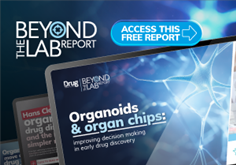
One of the biggest challenges in drug discovery is knowing which preclinical findings are most likely to translate into meaningful outcomes for patients.
Despite the vast amount of data generated during early research, uncertainty remains around target selection, compound prioritisation and predicting treatment response. Human-derived models, including organoids, organ-on-chip systems and advanced imaging technologies, are increasingly being used to address these challenges by providing a more physiologically relevant view of human biology.
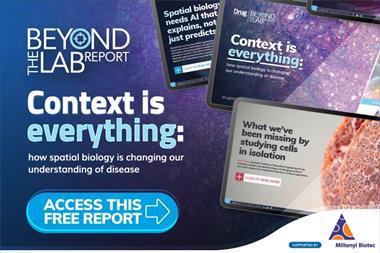
Drawing on insights from leading researchers, this report examines where these approaches are helping to improve confidence in drug discovery decisions, and where limitations and practical challenges remain.
Human-derived models are changing how researchers investigate drug activity, resistance mechanisms and patient variability during preclinical development.
This report explores the growing evidence linking patient-derived organoid responses with clinical outcomes, how organ-on-chip systems can recreate key aspects of tissue function and physiology, and how advanced imaging technologies are helping researchers track biological changes over time.
It also considers how these approaches are being applied across oncology, neurology and broader drug discovery programmes, as well as the practical considerations involved in integrating them into existing workflows.
Featuring contributions from Professor Donald E. Ingber, Professor Hans Clevers, Professor Rick Livesey, Professor Alysson Muotri, Dr Carla Verissimo, Dr Jeanine Roodhart and Dr Mengyang Liu, the report provides an overview of where human-derived models are already delivering value and what still needs to be addressed before wider adoption.
Inside the Report
- How organoid screening is being used to investigate drug response, resistance and patient variability
- The role of organ-on-chip systems in modelling tissue interfaces, fluid flow and mechanical forces
- What current research reveals about the relationship between organoid responses and clinical outcomes
- How advanced imaging is being used to monitor treatment response and identify resistant cell populations
- Applications of human-derived models across oncology, neurology and early-stage drug discovery
- Practical challenges around reproducibility, scalability and workflow integration
Download the report to explore how human-derived models can help you to make more informed decisions in drug discovery and translational research.
This report is sponsored by:
Access the full report >>
Download Now

No comments yet