




Traditional preclinical models are struggling to keep pace with a new generation of targeted therapies. As regulators embrace new approach methodologies (NAMs), vascularised tissue platforms are offering a more human-relevant approach to predicting drug efficacy and safety.

Drug development pipelines are increasingly dominated by complex, highly targeted therapies. Antibody-drug conjugates (ADCs), bispecific antibodies and immunomodulatory agents are designed to interact with human biology in precise and often novel ways. Yet the preclinical tools used to evaluate them have not kept pace, producing a persistent pattern of development-stage program failure. These failures result from underwhelming efficacy or safety signals that existing models fail to predict.
Animal models predict approximately 71 percent of human toxicities when rodent and non-rodent species are combined – and considerably less for either species alone.1 This figure reflects a broad average across drug classes. For targeted biologics, the translational gap is often wider because animal models are frequently not suitable for evaluating the actual drug candidate against the actual human target in a relevant biological context.
ADC development illustrates this challenge clearly. Therapeutic antibodies are engineered against human target antigens, yet many lack cross-reactivity to the orthologous target in rodent species due to differences in epitope structure, receptor expression levels and distribution. Humanised knock-in animals solve one piece of the cross-reactivity problem but leave the rest of the host biology, including immune context, vascular architecture and stromal interactions, as non-human. In either case, preclinical efficacy and safety data are often generated with a surrogate drug, a surrogate target, or both.2
Beyond target engagement, ADC developers must also contend with the bystander effect. Its magnitude depends on tissue architecture, vascular permeability and tissue composition, each of which differs across species. The local microenvironment determines whether a payload reaches neighbouring cells, crosses vascular barriers or accumulates in non-target tissues. As a result, animal models may misrepresent these human-relevant dynamics and either overestimate or underestimate both efficacy and off-target toxicity.
These are not edge cases. They represent structural limitations in how preclinical evidence is generated for an entire generation of targeted therapies. Consequently, drug developers are making clinical go/no-go decisions on data that may not reflect what will happen in human patients.
A regulatory framework is now in place
The FDA Modernization Act 2.0, signed in December 2022, removed the statutory requirement for animal testing in non-clinical development, enabling the use of new approach methodologies (NAMs) in support of investigational new drug (IND) and biologics license application (BLA) submissions.3 In March 2026, the Center for Drug Evaluation and Research (CDER) issued draft guidance establishing a formal validation framework for NAMs built around four pillars: Context of Use, Human Biological Relevance, Technical Characterization and Fit-for-Purpose.4 For the first time, drug developers have concrete criteria for presenting NAM-generated data in regulatory submissions. This follows the first IND approval based solely on human organoid efficacy data (Qureator Inc., October 2025),5 confirming that the regulatory pathway for human-relevant preclinical platforms is operational.
The European Medicines Agency promotes adoption of alternative methods through its 3Rs framework, encouraging in vitro and in silico approaches where scientifically appropriate.6 Across jurisdictions, the direction is consistent: non-clinical strategies must be designed around the credibility of their predictions, with well-defined context of use and reproducible datasets that withstand regulatory scrutiny.
Why vascularisation is the critical missing variable
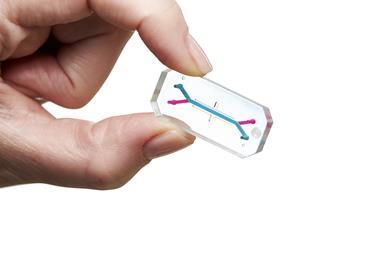
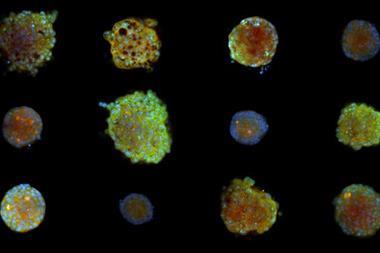
Many in vitro models, including organ-on-chip platforms and spheroid assays, improve on 2D cell culture but still omit a fundamental biological variable: the vasculature. In the body, drug exposure is shaped by perfusion, vascular permeability and endothelial barrier function. The endothelium is not a passive conduit. It regulates inflammation, immune cell trafficking and molecular transport, and is the first biological interface most therapeutics encounter. Models that lack a functional vascular network present compounds directly to target cells under non-physiological conditions, generating exposure data that does not translate.
Many in vitro models, including organ-on-chip platforms and spheroid assays, improve on 2D cell culture but still omit a fundamental biological variable: the vasculature.
The toxicities most consistently missed by animal models, including prothrombotic endothelial phenotypes, barrier disruption and vascular leak, are endothelial in origin. A preclinical model that omits the vasculature cannot generate reliable data on these processes.
An integrated platform for vascular and tissue-level drug evaluation
A promising solution to this challenge is to build vascularised 3D tissue models, specifically designed to recapitulate the biological interface that governs drug delivery, distribution and safety in humans. These models can incorporate human endothelial cells and tissue-specific cell types within a perfused, physiologically relevant vascular architecture.
Developers can produce tissues with a high degree of consistency using bioprinting technology. Pumpless perfusion systems can also deliver sustained culture under physiological flow without complex external hardware, reducing infrastructure burden for partner laboratories.
This single integrated system supports five preclinical readouts:
- Drug penetration across vascularised tissue barriers
- Extravasation of drugs and immune cells from the vascular compartment into tissue
- Target engagement within intact tissue architecture
- Efficacy in a multicellular context with simultaneous monitoring of off-target vascular impact
- Vascular toxicity, including endothelial dysfunction, barrier disruption and prothrombotic signals.
Because the vascular compartment, tissue stroma and target cells coexist within the same model, developers can generate integrated datasets that reflect the complexity of in vivo drug response.
Enabling earlier decisions within an emerging regulatory framework
Late-stage failure is the single largest driver of R&D cost inflation in the pharmaceutical industry – and the majority of that failure is attributable to efficacy gaps and safety signals not identified before clinical entry. Vascularised tissue models address this by generating decision-relevant data earlier in development, allowing candidates to be ranked on a more complete dataset. Liabilities that would otherwise surface in Phase I or later, particularly vascular and endothelial safety signals, can be identified before lead candidate selection.
The CDER draft guidance provides a clear benchmark against which NAM platforms will be evaluated. Integrated platforms such as those described above can map directly to the following criteria:
- Addressing specific regulatory decision points (context of use)
- Constructing tissues from human cell types within perfused vascular architecture (human biological relevance)
- Delivering batch-level reproducibility through standardised bioprinting and QC protocols (technical characterisation)
- Generating mechanistic data that complements or replaces traditional approaches where animal models provide inadequate prediction (fit-for-purpose).
The road ahead
The non-clinical development landscape will not shift overnight. Targeted animal studies will continue where scientifically justified. But a growing core of preclinical evidence will be generated by human-relevant models, validated against regulatory frameworks that did not exist two years ago. The question is no longer whether NAMs will be accepted; it is which platforms are capable of generating data that regulators and sponsors will act on.
The biology that determines clinical outcomes happens at the interface of the vasculature and the tissue. Preclinical models must capture that interface to be predictive.
References
1. Olson H, et al. Concordance of the toxicity of pharmaceuticals in humans and in animals. Regulatory Toxicology and Pharmacology. 2000;32(1):56–67.
2. Bornstein GG, Klakamp SL, Andrews L, et al. Surrogate approaches in development of monoclonal antibodies. Drug Discovery Today. 2009 Dec; 14(23–24):1159–1165.
3. FDA Modernization Act 2.0. Public Law 117-328, Section 3209. December 2022.
4. U.S. FDA, CDER. General Considerations for the Use of New Approach Methodologies in Drug Development. Draft Guidance, March 2026.
5. Qureator Inc. IND approval announcement, October 2025. https://qureator.com/qureators-historic-fda-approval-based-on-human-relevant-data-highlighted-in-the-bio
6. Empl et al., NAM Journal 2;100086 (2026). https://doi.org/10.1016/j.namjnl.2026.100086














No comments yet