




Researchers at Cardiff University have identified urolithin A – a compound produced by gut bacteria during the metabolism of substances found in pomegranates – as a potential new approach for treating cardiovascular disease.
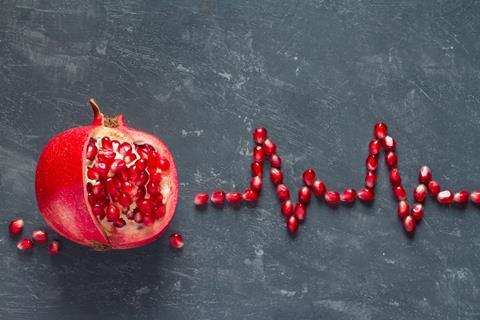
Despite major advances in cholesterol-lowering therapies, cardiovascular disease remains one of the leading causes of death worldwide. Researchers are now focusing more closely on how inflammation, oxidative stress and the gut microbiome contribute to atherosclerosis – the build-up of fatty plaques within artery walls that can lead to heart attacks and strokes.
At Cardiff University, researchers are investigating whether compounds derived from pomegranate polyphenols could help target some of these underlying processes. A recent study identified urolithin A – a molecule generated by gut bacteria from these polyphenols – as a potential way to reduce vascular inflammation and stabilise atherosclerotic plaques.
We spoke with Professor Dipak Ramji at Cardiff University about the team’s findings, the role of the gut microbiome in cardiovascular disease and the challenges of translating naturally-derived compounds such as urolithin A into potential therapeutic approaches.
Understanding the role of urolithin A
Professor Dipak Ramji, Professor of Cardiovascular Science at Cardiff University, explained that his laboratory focuses on understanding how food-derived compounds regulate the biological processes involved in atherosclerosis.
“Our research seeks to elucidate the molecular mechanisms by which food-derived polyphenols exert anti-atherogenic effects, with the goal of identifying novel preventive and therapeutic targets,” he said.
The team’s interest in pomegranate compounds emerged from growing evidence linking pomegranate consumption with improved cardiovascular outcomes. Previous studies have suggested that pomegranates can reduce oxidative stress and vascular inflammation, two major drivers of atherosclerosis. Much of this activity had been attributed to punicalagin, an ellagitannin abundant in pomegranates and other plant-based foods.
Our research seeks to elucidate the molecular mechanisms by which food-derived polyphenols exert anti-atherogenic effects, with the goal of identifying novel preventive and therapeutic targets.
However, Ramji noted that punicalagin itself is poorly absorbed by the body, raising questions about how it produces biological effects.
“Punicalagin’s poor bioavailability suggests its activity is mediated via gut microbiota-derived metabolites, particularly urolithins,” he explained.
This led the researchers to compare punicalagin with its microbial metabolites using in vitro models designed to mimic key cellular processes involved in atherosclerosis. According to Ramji, one metabolite stood out clearly from the others.
“We compared punicalagin and its metabolites using in vitro models that reflect key cellular processes underlying atherosclerosis, identifying urolithin A as the most biologically active compound,” he said.
The study found that urolithin A reduced oxidative stress and inflammatory signalling, limited the recruitment of immune cells into blood vessel walls and decreased cholesterol accumulation in vascular cells involved in plaque formation.
The researchers then moved into in vivo studies using mice prone to atherosclerosis. The results suggested that urolithin A not only slowed disease progression but also altered plaque composition in ways associated with lower cardiovascular risk.
“Supplementation resulted in smaller, less inflamed and more stable plaques with reduced potential for rupture,” Ramji said.
Why the gut microbiome matters
One of the most significant aspects of the research is the role played by the gut microbiome in generating biologically active compounds from food.
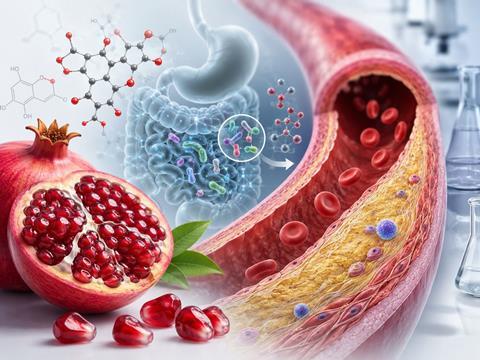
Ellagitannins such as punicalagin are hydrolysed in the stomach and small intestine to release ellagic acid before being converted by specific gut microbes into urolithins, including urolithin A.
“Importantly, the capacity to generate urolithin A varies markedly between individuals and is determined by gut microbiota composition,” Ramji explained.
This variability may help explain why dietary interventions sometimes produce inconsistent outcomes across different patient groups. Individuals able to efficiently produce urolithin A through their gut microbiota may gain greater cardiovascular benefit from ellagitannin-rich foods than those who generate lower levels of the metabolite.
“Our findings show that it’s not just what we eat, but how our gut bacteria process those foods that really matters for heart health.”
The findings also reinforce growing interest in precision nutrition and microbiome targeted therapies. Rather than focusing solely on dietary intake, researchers are increasingly considering how microbial composition influences the biological activity of nutrients and natural compounds.
Our findings show that it’s not just what we eat, but how our gut bacteria process those foods that really matters for heart health.
Ramji’s team also observed favourable changes in gut-derived short-chain fatty acids associated with improved metabolic and immune health, further supporting the idea that diet, microbial activity and cardiovascular health are closely connected.
Tackling inflammation alongside cholesterol
Importantly, the protective effects of urolithin A occurred without major changes in cholesterol levels. Instead, the compound appeared to influence inflammatory and immune pathways that contribute directly to plaque instability and cardiovascular events.
This could prove important for the future development of cardiovascular therapies. While cholesterol-lowering treatments such as statins remain highly effective, many patients continue to experience cardiovascular events despite achieving target levels.
Ramji believes urolithin A may offer a complementary approach.
“The finding that urolithin A promotes plaque stabilisation without altering cholesterol levels indicates a mode of action that is mechanistically distinct from, yet complementary to, existing lipid-lowering therapies,” he said.
By reducing inflammation, limiting necrotic core development and improving fibrous cap integrity, urolithin A may help address the processes that directly trigger heart attacks and strokes.
“This suggests it could be used alongside standard cholesterol-lowering treatments to further reduce residual cardiovascular risk,” Ramji added.
Challenges for drug development
Beyond its anti-inflammatory properties, Ramji noted that urolithin A possesses several characteristics that make it attractive from a drug development perspective.
“Urolithin A also stands out because, unlike many other compounds, it is well absorbed by the body and reaches levels in the bloodstream high enough to have meaningful effects,” he said.
He added that the compound appears to work through multiple mechanisms simultaneously, including reducing oxidative damage, supporting mitochondrial function and limiting processes associated with cellular ageing.
Urolithin A also stands out because, unlike many other compounds, it is well absorbed by the body and reaches levels in the bloodstream high enough to have meaningful effects.
These characteristics may help distinguish urolithin A from many other nutraceutical compounds that demonstrate promising laboratory activity but fail to achieve sufficient bioavailability in humans.
Human trials conducted outside cardiovascular disease have already generated encouraging safety and efficacy data. According to Ramji, phase I studies in older adults demonstrated favourable tolerability and good oral bioavailability at doses up to 1,000 mg per day.
Randomised controlled trials have also reported improvements in muscle strength, endurance, walking capacity and mitochondrial function alongside reductions in systemic inflammation.
“Emerging evidence further suggests potential benefits for immune ageing, including improvements in T cell function,” Ramji said.
Despite these findings, he emphasised that urolithin A has not yet been evaluated in dedicated cardiovascular outcome studies.
“Urolithin A has not yet been evaluated in human trials specifically targeting atherosclerosis, plaque stability or cardiovascular clinical endpoints,” he noted.
Emerging evidence further suggests potential benefits for immune ageing, including improvements in T cell function.
Translating a naturally-derived compound into a therapeutic product also presents several practical and regulatory challenges. These include variability in patient responsiveness, optimisation of dosing and formulation, long-term safety evaluation and potential drug-nutrient interactions.
Nevertheless, Ramji believes urolithin A has advantages compared with many other naturally-derived compounds.
“Urolithin A’s chemically defined structure and synthetic accessibility render it more ‘drug-like’ than many nutraceuticals, thereby strengthening its prospects for rigorous clinical development,” he said.
Moving towards clinical trials
The research group is now focused on the next phase of preclinical work. Planned studies include dose optimisation, pharmacokinetic analyses and validation in additional animal models, including female mice, as the current work was conducted exclusively in males.
The team also plans to investigate whether urolithin A can reverse established plaques rather than simply slowing disease progression.
“These will be followed by early human studies evaluating urolithin A against biomarkers and clinical parameters associated with atherosclerotic cardiovascular disease,” Ramji said.
Although large cardiovascular outcome trials have not yet begun, he believes early phase clinical studies are achievable within the next few years.
“With continued progress, early-phase cardiovascular trials are realistically achievable within the next few years, particularly as adjunctive therapy aimed at reducing inflammation and plaque vulnerability rather than targeting lipid levels alone,” he said.
While pomegranates themselves are unlikely to replace established cardiovascular therapies, studies such as this demonstrate how naturally-derived compounds may provide valuable leads for future drug discovery programmes.
For Ramji and his team, the findings highlight the important role the gut microbiome plays in converting dietary compounds into biologically active molecules linked to cardiovascular health.







No comments yet