



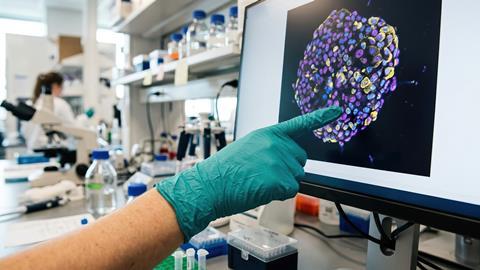

Professor Joseph C. Wu of Stanford University explains how stem cells, human-relevant models and AI are helping researchers predict which drug candidates are most likely to succeed before clinical trials.
Researchers now have access to technologies that were unimaginable mere decades ago, from genome editing to patient-derived organoids. Despite these advances, many promising drug candidates still fail during clinical development. A major reason for this drug attrition is that therapies which perform well in conventional preclinical models often fail to demonstrate efficacy or safety in patients.
Human disease is highly complex, influenced by genetics, environmental factors and biological variability that cannot always be replicated in animal models or traditional cell culture systems. As a result, accurately predicting how a therapy will perform in patients remains difficult.
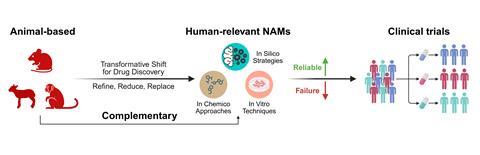
Researchers are therefore striving to develop preclinical models that better reflect human biology. Many of these fall under the umbrella of New Approach Methodologies (NAMs), which generate data directly from human-derived systems. Rather than relying on a single technology, researchers are combining patient-derived stem cells, organoids, microphysiological systems, functional genomics, multi-omics and artificial intelligence (AI) to build more predictive preclinical workflows.
For Professor Joseph C. Wu, Director of the Stanford Cardiovascular Institute at Stanford University School of Medicine, the real opportunity lies in combining these technologies rather than using them individually.
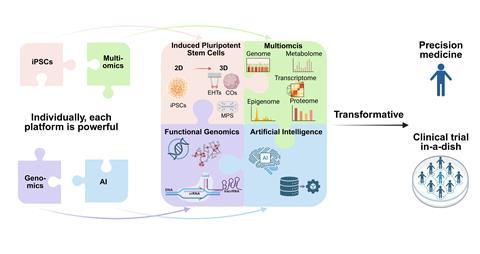
“We view these technologies not as independent tools but as components of a unified NAM ecosystem,” he explains. “Individually, each platform is powerful; together, they become transformative.”
Building more representative disease models
Traditional preclinical models have long been used to study disease and evaluate potential therapies, but they have recognised limitations. Animal models often cannot fully reproduce the genetic diversity or disease mechanisms found in patients and raise ethical considerations around animal use, whereas conventional two-dimensional cell cultures lack the structural and functional complexity of human tissues.
Human induced pluripotent stem cells (iPSCs) offer a better alternative. These cells can be generated from adult patient samples and reprogrammed into many different cell types while retaining the patient’s genetic background. Researchers can therefore study disease using cells that reflect the biology of afflicted individual patients rather than relying on generic laboratory models.
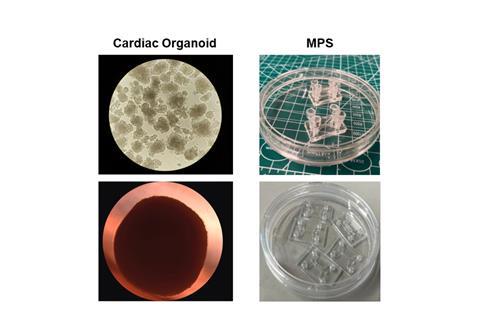
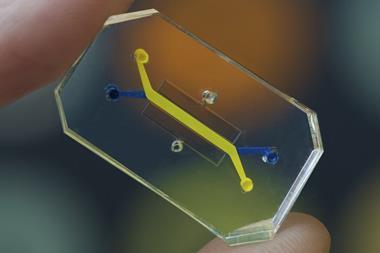
Moreover, these stem cell-derived systems can also be used to generate organoids, engineered tissues and microphysiological systems that better reproduce key aspects of human organs.
“One of the greatest strengths of iPSC-derived models is that they retain the genetic background of individual patients who are being treated,” he says. “This enables researchers to investigate disease mechanisms directly in a patient-specific context and to study how genetic diversity influences therapeutic responses.”
One of the greatest strengths of iPSC-derived models is that they retain the genetic background of individual patients who are being treated.
The additional complexity provided by organoids and engineered tissues can also improve the evaluation of drug efficacy and toxicity during preclinical development. Their closer resemblance to human physiology allows them to generate data that are more relevant to later clinical outcomes.
Combining complementary technologies
Although stem cell-derived models have received considerable attention, Dr Wu believes they are most effective when combined with complementary technologies.
Modern drug discovery generates vast amounts of biological data, from single-cell sequencing, transcriptomics, proteomics, epigenomics and advanced imaging. Dr Wu’s laboratory integrates these multi-omics datasets with CRISPR-based functional genomics to identify genes that play causal roles in disease rather than simply being associated with it.
AI is now essential to integrate and interpret these datasets, while large-scale perturbation experiments validate potential therapeutic targets before compounds progress through the discovery pipeline.
“The greatest value comes from integrating these technologies rather than using them in isolation,” Dr Wu explains. “Human-derived experimental models generate biologically relevant data, whereas genomics and AI provide the analytical framework to interpret that information and make predictions.”
The greatest value comes from integrating these technologies rather than using them in isolation.
Rather than replacing laboratory research, AI is used to analyse experimental data to help researchers prioritise the most promising targets and experiments, improving confidence before drug candidates progress to clinical testing.
From the average patient to patient diversity
One longstanding limitation of drug development is that therapies are often evaluated using models that represent an “average” patient. In reality, genetic differences among patients can lead to marked variation in treatment response, making it difficult to predict which individuals will benefit and which may experience adverse effects.
Dr Wu believes that integrating patient-derived models with genomic and computational analyses could help address this challenge through what has become known as a “clinical trial in-a-dish.” Rather than evaluating a compound in a single laboratory model, researchers can use this new approach to assess efficacy, toxicity and biological responses across collections of patient-derived cells and tissues representing different genetic backgrounds.
Together, the new methods enable researchers to identify potential responders and non-responders, investigate population-specific safety concerns and, better understand the biological factors influencing treatment outcomes before clinical trials begin. As the resulting experimental datasets grow, they could also support predictive computational frameworks such as including digital twins, which show promise of being able to forecast drug responses at both individual and population levels.
Dr Wu does not suggest that these systems will replace clinical trials. Instead, he sees them as powerful tools that can strengthen confidence in therapeutic candidates before they enter the clinic by supporting better target validation, earlier patient stratification and more informed decision-making throughout drug discovery.
AI as a partner in drug discovery
AI has become one of the most widely discussed technologies in biomedical research, with one of its key strengths being to help researchers interpret the exponentially expanding volume of biological data generated throughout drug discovery.
“AI has the potential to accelerate nearly every stage of the drug discovery process, from target identification and drug design to efficacy prediction and safety assessment,” says Dr Wu.
“NAMs-related technologies generate rich and biologically meaningful datasets that more closely reflect human physiology and disease. AI can extract key insights from these datasets at such a scale and level of complexity that is increasingly unachievable under conventional analytical approaches.”
Barriers to wider adoption
Despite rapid technological progress, integrating NAMs into routine drug discovery remains challenging.
One of the biggest hurdles in biomedical research is how to ensure that human-relevant models accurately reproduce the complexity of human disease. While stem cell-derived systems and organoids have advanced significantly, researchers are hard at work trying to improve cellular maturation, incorporate immune and vascular components, and more reliably model chronic disease progression. Validation across larger and more genetically diverse patient populations is also essential for these models to better support decision-making throughout pharmaceutical research.
Beyond model development, wider adoption depends on reproducibility. Differences in stem cell sources, differentiation methods, culture conditions. and analytical workflows can introduce variability between laboratories, making it difficult to compare results across studies. Robust standardisation, reproducible protocols and interoperable data frameworks will therefore be needed to support consistent implementation across organisations.
Regulatory acceptance remains another key requirement. While agencies including the US National Institutes of Health (NIH), the Food and Drug Administration (FDA) and the European Medicines Agency (EMA) are showing increasing interest in NAMs, broader adoption will depend on evidence demonstrating that these technologies provide reliable predictive value. Dr Wu believes that continued benchmarking against clinical outcomes and established preclinical methods will be essential for building confidence among regulators and industry alike.
Towards more predictive drug discovery
Although NAMs are often discussed as alternatives to animal models, Dr Wu sees the immediate future more as one of integration rather than replacement. Combining complementary technologies, each selected for its strengths, may realise a major milestone in precision medicine by helping researchers generate more reliable preclinical evidence before compounds enter clinical trials.







No comments yet