



ELRIG Drug Discovery 2026 will bring the drug discovery community to ExCeL London from 14–15 October, with scientific tracks covering AI, advanced cell models, biophysics, medicinal chemistry and more.
ELRIG Drug Discovery 2026 is set to return to ExCeL London from 14–15 October, marking 20 years of the organisation’s flagship Drug Discovery conference.
This year’s programme will bring together researchers from across academia and industry, covering next-generation biophysics, multi-omics, medicinal chemistry, genome engineering and translational science.
AI, automation and advanced cell models will also feature prominently, with dedicated sessions looking at their use across early drug discovery.
Drug Target Review is pleased to be supporting this year’s event as a media partner, with our team attending across both days to cover the latest research and discussions.
AI moves closer to the experimental workflow
AI will have a strong presence across the programme, with one track focused specifically on its integration with experimental design and laboratory workflows.
Speakers will include Samantha Barichievy of AstraZeneca on developing better cell models and assays using AI, and Sarah Martin of IQVIA on combining laboratory automation with design of experiments.
Later sessions will turn to translational discovery and therapeutic target prioritisation, before the track concludes with a panel looking at what comes next for AI in drug discovery.
Building more predictive cell models
Another track will explore how researchers are engineering the cellular microenvironment to develop more physiologically relevant models for drug discovery.
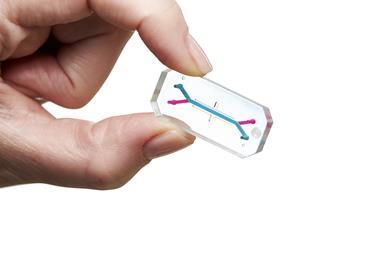
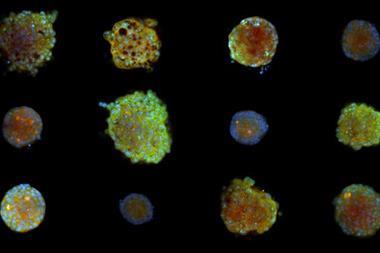
The programme will cover 3D biology, microfluidics, immune-competent models and functional readouts, with presentations on patient-derived models and organoid technologies.
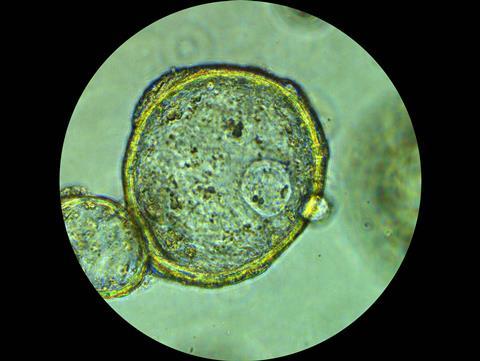
Juergen Loskutov of GSK will discuss patient-derived 3D sarcoma models and their potential to predict clinical outcomes, while Andrea Gamir Moralla of GSK will focus on increasing gut complexity using patient-derived intestinal organoids.
The session will conclude with a panel on the future of in vitro models.
AI in medicinal chemistry
On day two, the focus on AI will continue into medicinal chemistry, with a dedicated track looking at its use in compound discovery and optimisation.
Paul Leeson, an independent medicinal chemistry consultant, will consider compound quality from the Rule of Five to the AI era, while Layla Hosseini-Gerami of Ignota Labs will discuss how AI could give failed drugs a second chance.
Automated molecular design and machine learning for chemical synthesis will also feature, including work from AstraZeneca combining machine learning with medicinal chemistry.
Looking back – and ahead
The conference’s 20th anniversary will also provide an opportunity to look at how drug discovery has changed over the past two decades – and what could come next.
Dr Sam Barrell CBE, CEO of LifeArc, will deliver the opening plenary keynote, Where need meets momentum: The next 20 years.
On day two, Dr Saleha Patel will chair 20 Years of Discovery: Lessons from the Past, Blueprints for the Next 20, featuring Dr Anne Phelan, SVP Head of Target Discovery at GSK; Dr Jason Mellad, Co-founder and CEO of OtoImmune; Prof Sir Mene Pangalos, former Executive Vice-President, R&D BioPharmaceuticals at AstraZeneca; and Prof Raghib Ali OBE, who leads Our Future Health.
The programme will be particularly relevant to scientists working across early drug discovery, whether in medicinal chemistry, translational research, automation or the development of more predictive experimental models.
Registration for ELRIG Drug Discovery 2026 has now closed after the event reached capacity, with no walk-in registrations available.

No comments yet