




Bisantrene was abandoned decades ago due to formulation challenges. Daniel Tillett, CEO, Racura Oncology, reveals how new mechanistic understandings are now changing the way researchers see the drug and its potential for targeting MYC.
Drug discovery is often portrayed as a linear process: identify a target, design a molecule, optimise its properties through medicinal chemistry and then advance it into clinical development. Yet some of the most important biological insights emerge when researchers revisit snubbed drugs and ask a different question: how and why it works.
At Racura Oncology, that question has shaped our work on bisantrene – a drug originally developed decades ago and abandoned despite promising activity in the clinic. What began as a programme aimed at reviving bisantrene for a niche application has expanded into a deeper understanding of the molecule’s mechanism of action and its potential role in targeting the gene MYC, one of cancer biology’s most wanted targets.
Our journey highlights an overlooked pathway for drug discovery scientists. Sometimes transformative advances do not arise from creating entirely new molecular entities, but from applying contemporary biological and translational research tools to compounds whose full therapeutic potential has never been understood.
Revisiting an overlooked oncology asset
Bisantrene was developed by Lederle Laboratories during the 1970s and 1980s. Originally investigated as an antibiotic, it subsequently demonstrated potent anticancer activity and was evaluated in more than 1,500 patients across multiple clinical studies, showing potent clinical activity in acute myeloid leukaemia (AML), breast cancer and ovarian cancer.
Despite these promising observations and approval by the French regulatory authorities in 1988 for AML, the drug never achieved clinical adoption. The primary obstacle was the drug’s formulation.
Upon infusion into the vein, the Lederle bisantrene formulation crystallises. This created significant challenges, including pain and vascular complications, and prevented peripheral intravenous delivery. Instead, administration of the drug required a slow two-hour central line infusion where the high blood flow rapidly diluted the drug concentrations below the threshold at which crystallisation occurred.
These practical limitations ultimately constrained broader clinical use despite encouraging therapeutic activity.
For Racura Oncology, the opportunity was clear: if the formulation issues could be overcome, the biological and clinical potential of the molecule could be reassessed using modern drug development approaches.

Reformulation as a platform for rediscovery
One potential approach to addressing bisantrene’s solubility limitations was to alter the molecular structure itself. However, creating a new chemical entity would have required restarting the entire clinical development process, with all the associated scientific, regulatory and commercial risks.
Instead, Racura pursued a reformulation strategy designed to preserve the known pharmacology of the molecule while solving its delivery challenge.
The resulting new formulation, RC220, uses proprietary excipients to maintain bisantrene solubility in the blood, enabling peripheral intravenous administration while maintaining the original pharmacokinetics. This provides a clinically practical administration route while preserving the biological properties of the active molecule.
While undertaking this reformulation work, Racura identified a previously unrecognised characteristic of bisantrene: the molecule undergoes structural alteration when exposed to light within specific wavelengths spanning the green-to-purple spectrum that results in loss of biological activity. This photoisomerisation discovery not only accounted for the clinical variability observed in historical studies, but also established the basis for new intellectual property protecting bisantrene.
However, the most significant discovery emerged from preclinical efforts aimed at understanding the drug’s underlying biology.
Uncovering a G-quadruplex-mediated mechanism
Historically, bisantrene was classified as a DNA-binding agent similar to many traditional cytotoxic agents. More recently, it has been proposed to function as an inhibitor of fat mass and obesity-associated (FTO), an RNA demethylase involved in epitranscriptomic regulation.
Our investigations at Racura Oncology challenged these findings. While bisantrene reproduces the biological effects of FTO inhibition – ie, it increases the levels of m6A RNA methylation – detailed mechanistic studies have indicated that bisantrene is not a direct FTO inhibitor. Instead, the science pointed towards a different mechanism of action centred on G-quadruplex stabilisation.
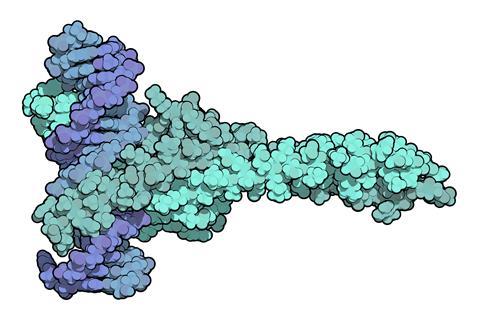
G-quadruplexes are highly ordered nucleic acid structures formed within guanine-rich regions of single-stranded DNA and RNA. These structures can act as regulatory elements controlling gene transcription and translation. Importantly, G-quadruplex motifs are enriched within the promoter regions of many important oncogenes, including c-MYC.
G-quadruplexes are highly ordered nucleic acid structures formed within guanine-rich regions of single-stranded DNA and RNA.
Our research has uncovered that bisantrene stabilises these G-quadruplex structures. By locking the c-MYC promoter into a transcriptionally repressive configuration, the molecule silences c-MYC expression and downstream oncogenic signalling.
This finding fundamentally changes how bisantrene should be viewed. Rather than acting primarily as a traditional cytotoxic, the molecule appears to exert its targeted biological effects through modulation of the key cancer growth regulator MYC.
For the drug discovery community, this represents an important example of how revisiting established compounds with modern mechanistic tools can reveal entirely new therapeutic opportunities.
Targeting MYC through an alternative route
The significance of this discovery is closely linked to the central role MYC plays in cancer biology.
MYC dysregulation is estimated to occur in up to 70 percent of all human cancers, making it one of the most attractive oncogenic targets across both solid and haematological malignancies. MYC regulates an extensive transcriptional programme controlling cellular proliferation, metabolism, growth, differentiation and survival. When aberrantly activated, it drives many of the hallmarks of cancer.
Despite decades of effort, MYC has remained one of oncology’s most challenging targets, as the protein lacks the binding pockets that typically facilitate small molecule drug design. It also functions primarily through protein–protein interactions and exerts its activity within the nucleus, creating additional barriers to direct pharmacological intervention. These characteristics have led MYC to be widely considered ‘undruggable’.
MYC has remained one of oncology’s most challenging targets, as the protein lacks the binding pockets that typically facilitate small molecule drug design.
Multiple strategies have been explored to overcome these limitations, including direct MYC inhibition, protein degradation approaches and disruption of MYC-associated complexes. While progress continues across the field, achieving robust and selective inhibition in the clinic remains challenging with little clinical activity seen to date.
G-quadruplex stabilisation offers a fundamentally different strategy. Rather than attempting to engage the MYC protein directly, the approach acts at the level of c-MYC gene expression. By stabilising promoter-associated G-quadruplex structures, transcription of c-MYC can be suppressed before the protein is produced. This indirect, but biologically targeted mechanism, may provide an attractive alternative route to modulating MYC-driven disease.
Given the prevalence of MYC dysregulation across cancer types, the potential therapeutic implications extend far beyond any single tumour indication.
Understanding the cardioprotective effect
Anthracyclines such as doxorubicin or epirubicin remain some of the most effective and broad acting anticancer drugs ever developed. Cardiotoxicity remains the major limitation of anthracycline therapy. Damage to cardiac tissue is cumulative and irreversible, restricting treatment duration and limiting the total lifetime dose patients can safely receive.
Emerging evidence suggests that MYC plays an important role in the cardiac stress responses. Exposure to cytotoxic therapies can activate MYC-dependent signalling pathways that contribute to cardiomyocyte dysfunction and cell death.
Emerging evidence suggests that MYC plays an important role in the cardiac stress responses.
By suppressing MYC activity, bisantrene may attenuate these stress-response pathways, reducing treatment-associated cardiac injury. This mechanistic explanation aligns with preclinical observations that bisantrene provides a heart protective effect when it is used with anthracyclines.
If validated through ongoing clinical research, this dual profile – combining improved anti-tumour activity along with cardioprotection – could represent a meaningful clinical advantage and improved patient outcomes and quality of life.
At Racura Oncology, clinical studies are now underway to characterise these cardioprotective and anticancer effects. A Phase I trial is evaluating the combination of doxorubicin and RC220 in solid tumour patients where doxorubicin has demonstrated historical efficacy.
Translating mechanism into clinical progress
Mechanistic insights ultimately only matter if they translate into meaningful patient outcomes.
In relapsed or refractory AML, where patients frequently have exhausted all available treatment options and may no longer be eligible for potentially curative transplantation, encouraging signals have been observed from bisantrene – both historically and also more recently. At Racura we supported two Phase II trials of bisantrene in very advanced AML patients where we observed an overall response rate and bridge to transplant in 40 percent of patients. Interestingly, MYC is overexpressed in up to 90 percent of AML patients, providing a clear mechanism for the empirically observed activity of bisantrene in this indication.
Racura Oncology is also advancing bisantrene and RC220 in additional clinical development programmes. A Phase I trial has been initiated evaluating RC220 in combination with an epidermal growth factor receptor (EGFR) TKI in mutant EGFR non-small cell lung cancer where MYC upregulation has been established preclinically to be an important cause of TKI resistance.
These programmes are designed not only to evaluate clinical activity but also to deepen understanding of the biology underlying response.
The next frontier: m6A biomarkers and precision oncology
Beyond MYC inhibition, we are exploring the relationship between bisantrene activity and m6A-associated biology.
N6-methyladenosine (m6A) is one of the most abundant and biologically important RNA modifications, influencing transcript stability, translation and gene expression programmes across multiple cancers. Increasing evidence suggests that dysregulated m6A signalling contributes to tumour progression, therapeutic resistance and disease heterogeneity.
Ongoing studies are investigating bisantrene effects on m6A biomarkers as potential indicators of response to bisantrene-based therapy. Such biomarkers could ultimately support patient stratification strategies, helping to identify populations most likely to benefit from treatment.
Dysregulated m6A signalling contributes to tumour progression, therapeutic resistance and disease heterogeneity.
In parallel, these insights may inform future generations of compounds designed to further exploit interactions between MYC regulation, G-quadruplex biology and epitranscriptomic control mechanisms.
For drug developers, this represents a broader opportunity: combining mechanistically informed therapeutics with biomarker-guided patient selection to maximise clinical benefit.
A lesson in biological discovery
The redevelopment of bisantrene illustrates how innovation can emerge from re-examining an old molecule through a modern scientific lens.
What began as a programme to revive bisantrene has evolved into a deeper understanding of how bisantrene works via the stabilising of G-quadruplex structures to silence MYC expression, potentially addressing one of oncology’s most important unmet challenges.
For Racura Oncology, this work continues to shape a broader platform focused on translating novel biological insights into therapeutics for patients with cancer.
More broadly, it serves as a reminder that novel drugs do not always originate from new molecules. Sometimes they emerge when we revisit existing compounds, challenge long-held assumptions and uncover the biology that was there all along.
















No comments yet