





Most inherited retinal diseases still have no approved therapy despite advances in gene therapy. This article explores why researchers are targeting shared disease mechanisms alongside individual mutations.
The emergence of gene therapy has changed the treatment of inherited retinal diseases (IRDs).¹ For the first time, patients with previously untreatable causes of blindness have seen precision medicine deliver meaningful clinical outcomes.
Landmark approvals have demonstrated that replacing or repairing defective genes can restore function in carefully selected patient populations, validating decades of research and providing renewed optimism throughout ophthalmology. Yet despite this progress, the majority of individuals living with IRDs still have no approved therapeutic option.
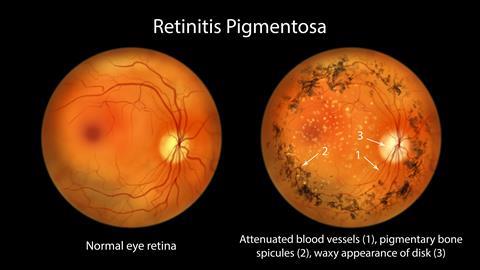
This is particularly evident in retinitis pigmentosa (RP), one of the leading inherited causes of blindness worldwide. More than 100 genes have been associated with RP and new disease-causing variants continue to be identified.² While mutation-specific therapies are highly targeted, each programme typically targets only a small subset of patients. As a result, many individuals remain ineligible for treatment because their specific mutation is too rare to support development of an individualised therapy.
As understanding of retinal biology improves, researchers are also investigating mutation-agnostic therapies. Rather than focusing exclusively on correcting individual genetic mutations, these therapies are designed to preserve retinal function regardless of the underlying genetic defect.
By targeting biological pathways shared across multiple forms of disease, these therapies could benefit more patients while addressing some of the limitations associated with highly individualised treatments.
The challenge of genetic diversity
IRDs affect millions of people worldwide and are among the most genetically heterogeneous groups of disorders in medicine.⁵ RP alone has been linked to more than 100 genes involved in biological processes including phototransduction, protein trafficking, ciliary function, RNA processing, mitochondrial activity and cellular metabolism.
Although the initiating mutations differ, many patients experience a similar pattern of disease progression. Rod photoreceptors gradually degenerate, followed by secondary cone loss, leading to peripheral vision loss, night blindness, declining central vision and, in many cases, eventual legal blindness.
This convergence raises an important question. If numerous genetic mutations ultimately lead to similar patterns of retinal degeneration, could targeting common mechanisms responsible for photoreceptor death provide an opportunity to intervene downstream? Evidence suggests it could.
Precision medicine still leaves many patients behind
Gene replacement has shown that correcting a single defective gene can produce meaningful clinical benefit. However, the logistics and economics of developing individualised therapies remain challenging.
Each mutation-specific programme requires extensive preclinical validation, manufacturing optimisation, regulatory review and clinical testing. For ultra-rare mutations affecting only a few hundred, or even a few dozen, patients worldwide, sustaining this level of investment is challenging.
Consequently, many people living with IRDs have a confirmed genetic diagnosis but no approved treatment. The challenge is not limited to approved therapies. Many patients are also excluded from clinical trials because they do not carry the mutation under investigation.
Mutation-agnostic therapies aim to complement, rather than replace, precision medicine by addressing this unmet need.
Targeting shared disease mechanisms
Rather than correcting the initiating genetic error, mutation-agnostic therapies target biological processes disrupted across multiple forms of disease. These include oxidative stress, mitochondrial dysfunction, chronic inflammation, metabolic imbalance, impaired cellular energy production and pathways involved in photoreceptor survival.
Rather than correcting the initiating genetic error, mutation-agnostic therapies target biological processes disrupted across multiple forms of disease.
By stabilising these shared mechanisms, the aim is to preserve retinal structure and function even when the underlying genetic defect remains. This shifts the focus from individual mutations to the biological processes that drive retinal degeneration.
Instead of asking, “Which mutation caused this patient’s disease?”, researchers increasingly ask, “Which biological pathways are failing across many forms of retinal degeneration and how can we intervene before irreversible cell death occurs?”
Although IRDs arise from a wide range of genetic mutations, many ultimately disrupt the retinal pigment epithelium (RPE), a key component of the retinal environment.
Instead of asking, “Which mutation caused this patient’s disease?”, researchers increasingly ask, “Which biological pathways are failing across many forms of retinal degeneration and how can we intervene before irreversible cell death occurs?”
Often described as the retina’s ‘caretaker’,³ the RPE maintains the visual cycle, recycles photoreceptor outer segments, regulates oxidative stress, supports mitochondrial function and provides the metabolic environment necessary for photoreceptor survival. As these support cells become metabolically compromised, their ability to sustain healthy photoreceptors declines, regardless of the initiating mutation.
This biological convergence creates an important therapeutic opportunity.
Rather than correcting every individual mutation, researchers may be able to intervene downstream by restoring the metabolic health of retinal support cells and strengthening biological pathways shared across multiple forms of disease.
Instead of replacing precision medicine, this strategy complements gene-specific therapies by targeting common mechanisms involved in retinal degeneration. This could increase the number of patients eligible for treatment.
Metabolism has emerged as an important therapeutic target
One of the most promising downstream targets emerging from this research is retinal metabolism.⁴
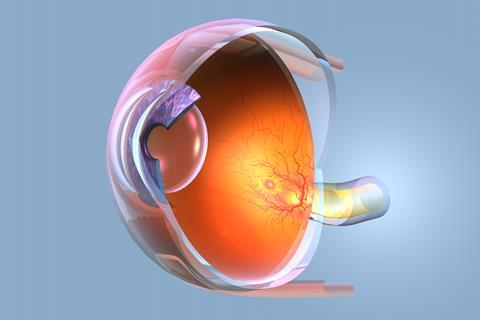
The retina is one of the body’s most metabolically active tissues, consuming extraordinary amounts of energy to support continuous photoreceptor function. Even modest disruptions in cellular metabolism can accelerate degeneration, particularly in photoreceptors already stressed by inherited genetic defects.
Research suggests that metabolic dysfunction is not simply a consequence of retinal degeneration but may actively contribute to disease progression.
As photoreceptors lose their ability to efficiently generate and utilise energy, oxidative stress increases, mitochondrial function declines and survival pathways become compromised. These processes may occur across multiple genetic forms of retinitis pigmentosa, making metabolic support a potential mutation-independent therapeutic strategy.
One example is the evaluation of metabolic therapies designed to improve retinal cellular resilience rather than replace individual genes. Metformin, a well-characterised metabolic modulator with decades of clinical use, is among the compounds being investigated for its potential to support retinal metabolism and preserve photoreceptor function across multiple IRDs.⁷
A recent US patent application covering the use of metformin for IRDs reflects growing interest in metabolism-based therapies.⁸
Systems biology in inherited retinal disease
Advances in systems biology have strengthened the case for mutation-agnostic therapies.
Historically, many drug discovery programmes focused on individual genes or isolated molecular targets. Advances in computational biology, transcriptomics, proteomics and metabolomics now allow researchers to examine the biological networks that govern disease progression.
Rather than viewing IRDs as hundreds of separate disorders, systems biology reveals overlap among pathways regulating inflammation, oxidative stress, metabolism, mitochondrial function and cellular survival.
This understanding may help identify therapeutic targets that influence multiple downstream processes. For complex diseases such as retinitis pigmentosa, these findings may prove particularly valuable.
Practical advantages of mutation-agnostic therapies
Mutation-agnostic therapies may also offer practical advantages for patients, physicians and healthcare systems. As they are not restricted to individual genetic variants, they could simplify patient identification and reduce barriers to treatment. Although genetic testing remains important for diagnosis and disease characterisation, eligibility would no longer depend on a single mutation.
They may also simplify clinical development by enabling more diverse patient populations to be enrolled and generating data across multiple genetic subtypes.
From a commercial perspective, therapies for larger patient populations may support more sustainable investment and encourage continued innovation in rare ophthalmic diseases.
Importantly, mutation-agnostic therapies are not intended to replace gene replacement. Instead, they may complement gene-specific therapies as part of future treatment strategies.
From a commercial perspective, therapies for larger patient populations may support more sustainable investment and encourage continued innovation in rare ophthalmic diseases.
Some patients may benefit most from mutation-specific correction, while others may receive mutation-agnostic therapies designed to preserve retinal health. Combination therapies may ultimately offer the greatest opportunity to preserve vision over longer periods.
Combination therapies for inherited retinal disease
The future of IRD treatment is unlikely to rely on a single therapeutic modality.
Preserving vision is likely to require therapies that address multiple biological mechanisms rather than a single target.
Gene replacement can correct the initiating mutation. Neuroprotective therapies may help maintain surviving photoreceptors. Metabolic interventions may improve cellular resilience. Anti-inflammatory and antioxidant strategies may reduce ongoing damage. Advances in drug delivery could enable repeated treatment as disease evolves.
Together, these complementary therapies could help preserve vision for longer by targeting different aspects of disease progression.
Expanding hope to more patients
The success of precision gene therapy has demonstrated what is possible. It has also highlighted opportunities to develop therapies that could benefit a wider range of patients.
For the millions of individuals affected by IRDs, progress should not depend solely on whether their particular mutation has become the focus of a development programme.
Mutation-agnostic therapies could broaden access to treatment by targeting biological mechanisms shared across genetically diverse diseases. By focusing on preserving photoreceptor health rather than correcting individual mutations, these therapies may complement advances in precision medicine while benefiting more patients.
For the millions of individuals affected by IRDs, progress should not depend solely on whether their particular mutation has become the focus of a development programme.
Curative Biotech is advancing this mutation-agnostic approach through the development of therapies designed to preserve retinal function by addressing shared biological mechanisms rather than individual genetic mutations. By focusing on retinal metabolism and the health of the retinal pigment epithelium, the company’s research aims to complement gene-specific therapies. This could expand potential treatment options for patients with inherited retinal diseases who currently have no approved therapy, regardless of the mutation driving their disease.
Precision medicine is likely to remain central to IRD research, while therapies targeting shared biological mechanisms may complement gene-specific treatments. Together, these strategies could broaden treatment options for patients with IRD.
Ultimately, success will be measured by the number of patients able to preserve meaningful vision, regardless of the mutation underlying their disease.
References
1. Russell S, Bennett J, Wellman JA, et al. Efficacy and safety of voretigene neparvovec (AAV2-hRPE65v2) in patients with RPE65-mediated inherited retinal dystrophy: a randomised, controlled, open-label, phase 3 trial. Lancet. 2017;390:849-860.
2. RetNet: Retinal Information Network [Internet]. Available from: https://retnet.org
3. Strauss O. The retinal pigment epithelium in visual function. Physiol Rev. 2005;85:845-881.
4. Hurley JB, Lindsay KJ, Du J. Glucose, lactate, and metabolic signaling in the retina. Annu Rev Vis Sci. 2015;1:359-381.
5. Hamel C. Retinitis pigmentosa. Orphanet J Rare Dis. 2006;1:40.
6. Ferrari S, Di Iorio E, Barbaro V, et al. Retinitis pigmentosa: genes and disease mechanisms. Prog Retin Eye Res. 2011;30:120-138.
7. Viollet B, Guigas B, Sanz Garcia N, et al. Cellular and molecular mechanisms of metformin: an overview. Clin Sci (Lond). 2012;122:253-270.
8. Curative Biotech. U.S. patent application covering methods for treating inherited retinal diseases using metformin. Patent application pending.





No comments yet