





AI is accelerating drug discovery, yet attrition rates remain high. Its greatest impact may lie not in finding drugs faster, but in helping researchers understand the complex biology driving disease.
Artificial intelligence (AI) has quickly become one of the defining technologies in pharmaceutical R&D. From predicting protein structures to screening enormous chemical libraries and designing novel compounds, AI is accelerating nearly every stage of the discovery process. Yet despite these advances, one statistic has remained remarkably consistent: approximately 90 to 95 percent of drug candidates that demonstrate promise in preclinical development never become approved therapies.1 This disconnect raises an uncomfortable question: If AI is making drug discovery dramatically faster, why isn’t it making it dramatically more successful?
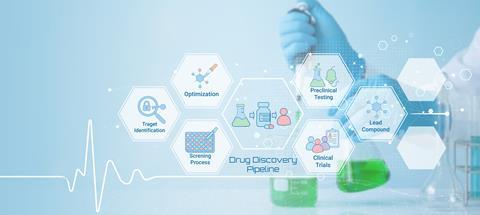
The answer may lie in the assumptions that continue to underpin modern drug discovery. For more than half a century, the industry has largely followed the same paradigm: identify a molecular target believed to drive disease, create a compound that modulates that target, and optimise its pharmacological properties before advancing it to the clinic. This approach has transformed medicine in areas where disease biology is relatively well understood.
If AI is making drug discovery dramatically faster, why isn’t it making it dramatically more successful?
Precision oncology is perhaps the clearest example, with therapies directed against specific oncogenic mutations producing remarkable improvements for carefully selected patient populations. Similar successes have emerged in rare genetic diseases and certain immunological disorders where individual molecular pathways play an outsized role in disease progression.
Those successes, however, have been far more difficult to replicate in diseases characterised by complex, interconnected biology. Neurodegenerative disorders, autoimmune diseases, psychiatric conditions, metabolic disorders and many reproductive health indications rarely arise from a single dysfunctional protein or signalling pathway. Instead, they emerge through interactions among multiple cell types, tissues, physiological systems and environmental influences that evolve over time. In these indications, reducing disease to a single molecular target often oversimplifies biology in ways that ultimately become apparent only during clinical development.
When a target isn’t enough
The lack of success in these therapeutic areas does not result from poor chemistry. In fact, many late-stage failures are not failures of pharmacology at all. Drug candidates frequently achieve robust target engagement, demonstrate the expected biological activity and perform exactly as designed from a mechanistic perspective. Instead, they fail because the underlying disease hypothesis was incomplete. The challenge of drug discovery lies not only in generating molecules against a target, but also in determining whether that target meaningfully influences disease in the context of an extraordinarily complex biological system.
That distinction helps explain both the promise and the limitations of today’s AI revolution. Most AI applications have been developed to improve the efficiency of the existing discovery paradigm. Machine learning models can prioritise targets, identify druggable binding sites, predict molecular properties, optimise lead compounds and analyse biological datasets at unprecedented speed. Yet while these capabilities represent important advances, they largely optimise a workflow that still begins with selecting an individual target. If the biological rationale behind that target is flawed or limited, AI simply enables researchers to move more confidently and more efficiently in the wrong direction. Faster hypothesis testing is undeniably valuable, but speed cannot compensate for an incomplete understanding of disease biology.
If the biological rationale behind that target is flawed or limited, AI simply enables researchers to move more confidently and more efficiently in the wrong direction.
The history of drug development offers numerous examples of this challenge. Torcetrapib, Pfizer’s CETP inhibitor of the early 2000s, remains one of the clearest demonstrations that successfully modulating a target does not necessarily produce meaningful clinical benefit. That therapy was designed to reduce cardiovascular risk by inhibiting cholesteryl ester transfer protein, increasing high-density lipoprotein (HDL) cholesterol while lowering low-density lipoprotein (LDL) cholesterol.
The rationale was compelling, supported by decades of epidemiological evidence linking higher HDL levels with lower rates of cardiovascular disease. Pharmacologically, the drug worked exceptionally well, producing exactly the biomarker changes researchers had hoped to achieve. Unfortunately, the Phase III ILLUMINATE trial was terminated after an increase in cardiovascular events and all-cause mortality emerged among the treatment group.2
The failure fundamentally changed how researchers thought about cardiovascular biology. HDL concentration proved to be a less effective surrogate for cardiovascular health than previously believed because it represented only one component of a much larger physiological network involving lipid transport, vascular biology, inflammation, endocrine signalling and compensatory feedback mechanisms. These findings, as well as those of many other failed development efforts, underscore the idea that understanding a disease requires more than understanding a single pathway within it. Biological systems are interconnected, adaptive and dynamic, thus manipulating one component can produce consequences that are impossible to predict when the surrounding system is not fully understood.
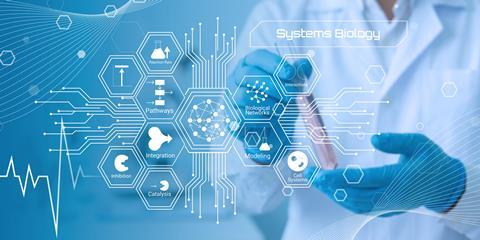
This realisation has driven growing interest in systems biology as a framework for drug discovery. Unlike traditional reductionist approaches, systems biology seeks to understand how genes, proteins, metabolites, cells, tissues and organs interact collectively and with external variables to produce health and disease. It recognises that pathology generally emerges from networks of biological interactions rather than isolated molecular events. For many complex diseases, therapeutic success depends less on completely inhibiting a single target than on subtly shifting multiple interconnected pathways towards a healthier biological state. In short, making a meaningful impact is often less about finding one perfect switch and developing the perfect tool to turn it off than it is about fine-tuning the right combination of factors.
Making sense of biological complexity
The scientific community has spent the past two decades generating many of the datasets needed to pursue this vision. Advances in genomics, transcriptomics, proteomics, metabolomics, spatial biology and single-cell technologies have transformed our ability to characterise disease at extraordinary molecular resolution, while advances in computing have increased our capacity to navigate these massive bodies of data. Yet these technologies also illustrate the limits of data generation alone. While omics datasets provide highly detailed snapshots of biological systems, disease unfolds over time through interactions that span multiple tissues and physiological systems. Understanding those interactions requires models capable of integrating heterogeneous data into a coherent representation of biological function rather than treating each dataset independently.
This is where AI could ultimately have its greatest impact. Rather than simply accelerating target identification or molecule design, emerging multimodal models offer the ability to integrate genomic, proteomic, imaging, clinical and longitudinal patient data into unified representations of disease biology. Instead of asking which protein correlates with disease, researchers can begin asking which biological networks interact to drive disease progression, how those networks differ across patient populations, what phenotypic markers define those differences, and where intervention is most likely to produce durable therapeutic benefit. AI becomes valuable not because it replaces biological insight, but because it makes systems-level biological modelling computationally feasible.
Reducing uncertainty in drug development
The implications extend far beyond scientific discovery. Some of medicine’s greatest unmet needs – including central nervous system disorders, autoimmune diseases and reproductive health conditions – remain woefully underfunded relative to their societal impact. This is not because researchers or investors question their importance. Rather, these therapeutic areas have earned a reputation for clinical unpredictability. Patient populations are heterogeneous, disease mechanisms remain incompletely understood, biomarkers often fail to capture underlying biology and Phase II trials can feel like high-stakes experiments with uncertain odds of success. Consequently, many potentially important therapeutic programmes struggle to attract sustained investment.
A systems biology approach can change that calculus by reducing biological uncertainty before clinical development begins. One of AI’s most promising contributions may be its ability to identify patient populations defined by mechanism rather than symptoms alone, reveal where disease processes are occurring and uncover biomarkers that reflect the biology driving progression instead of simply correlating with it.
A systems biology approach can change that calculus by reducing biological uncertainty before clinical development begins.
Depression illustrates the opportunity. Although selective serotonin reuptake inhibitors (SSRIs) remain among the most widely prescribed psychiatric medications, clinicians still have limited ability to predict which patients will respond. Behavioural, pharmacological and imaging evidence suggest that depression encompasses multiple biologically distinct conditions that present with similar clinical features.3 If researchers could distinguish those subpopulations using molecular and physiological markers, future therapies could be developed for well-defined biological mechanisms instead of broad clinical diagnoses, improving patient selection while reducing risk throughout development.
What needs to change
Realising this vision will require more than increasingly sophisticated algorithms. It will require longitudinal, multimodal data infrastructure capable of capturing disease progression across biological scales. It will require clinical trials designed to validate mechanisms alongside efficacy and biomarkers selected because they reflect causal biology rather than convenient correlation. Perhaps most importantly, it will require investors and research organisations willing to support biological understanding as a strategic asset rather than focusing exclusively on individual molecules that emerge from incomplete models of disease.
The pharmaceutical industry has spent decades becoming exceptionally good at discovering compounds against individual targets. AI is making that process faster than ever before. But improving development timelines alone is unlikely to meaningfully increase clinical success rates if the underlying view of disease remains fundamentally reductionist.
The next major advance in drug discovery will come not from replacing scientists with algorithms or identifying targets more efficiently, but from combining AI tools with systems biology to build a more complete understanding of human disease. As therapeutic challenges become increasingly complex and research resources more constrained, that shift may prove to be the difference between accelerating the discovery of novel molecules and accelerating the discovery of medicines that truly change patients’ lives.
References
-
Sun D, Gao W, Hu H, Zhou S. Why 90% of clinical drug development fails and how to improve it?. Acta Pharm Sin B. 2022;12(7):3049-3062. doi:10.1016/j.apsb.2022.02.002)
-
Tanne JH. Pfizer stops clinical trials of heart drug. BMJ. 2006;333(7581):1237. doi:10.1136/bmj.39059.438044.DB
-
Tozzi L, Zhang X, Pines A, et al. Personalized brain circuit scores identify clinically distinct biotypes in depression and anxiety. Nat Med 2024;30:2076–2087. Doi:10.1038/s41591-024-03057-9




No comments yet