



All Metabolic disorders articles
-
 News
NewsBCAT1 enzyme identified as fibrosis target after heart attack
Researchers at Nagoya University have identified BCAT1, an enzyme involved in proline supply for collagen synthesis, as a potential target for reducing cardiac fibrosis following myocardial infarction.
-
 News
NewsTazbentetol shows retinal neuroprotection potential in diabetic mouse model
Experimental synaptic restoration compound tazbentetol has demonstrated neuroprotective effects in the retinas of diabetic mice, offering a potential new therapeutic avenue for diabetic retinal neuropathy ahead of detectable vascular damage.
-
 News
NewsInsilico Medicine nominates AI-designed ISM1354 GIPR antagonist for obesity
Insilico Medicine has nominated ISM1354, an AI-designed small-molecule GIPR antagonist, as a preclinical candidate for obesity and related metabolic disorders.
-
 News
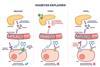
NewsMenin inhibitor KO-7246 shows β-cell regeneration in preclinical diabetes models
New preclinical data suggests that menin inhibitor KO-7246 can regenerate functional pancreatic β-cells and sustain improvements in blood glucose control across both Type 1 and Type 2 diabetes models.
-
 News
NewsBrain circuit linking cold exposure to metabolism identified in hypothalamus
Researchers at USF Health have identified a previously unknown brain circuit in the hypothalamus that coordinates eating behaviour, heat production and energy expenditure in response to cold, with implications for obesity and metabolic disease drug discovery.
-
 News
NewsKidney organoids reveal inflammation drives diabetic kidney disease
University of Washington researchers have used stem cell-derived kidney organoids to uncover inflammatory pathways that drive diabetic kidney disease.
-
 News
NewsBioLife patents effervescent oral peptide delivery platform targeting GLP-1 therapies
BioLife has been granted a US patent for its effervescent OralMatrix oral peptide delivery platform, with preclinical data showing measurable systemic semaglutide exposure and patent claims extending across six GLP-1 medicines.
-
 News
NewsOutSee secures £50k innovate UK grant for AI target validation
UK genomics and drug discovery company OutSee has received £50,000 in Innovate UK funding to develop an agentic AI sub-system designed to automate the initial triage of drug targets identified by its Nomaly genomics engine.
-
 News
NewsWhy cancer drug CADD522 could offer a new route to treating osteoporosis
A compound originally designed to block a cancer-associated protein has demonstrated unexpected benefits for bone health and metabolism in post-menopausal mice, suggesting a potential new mechanism for osteoporosis drug discovery.
-
 News
NewsGLP-1 drug semaglutide extends lifespan and slows ageing in older mice
A new NIH-funded study suggests the GLP-1 receptor agonist semaglutide may slow biological ageing and extend lifespan in older mice, raising the prospect that GLP-1 drugs could one day be developed as broad longevity-enhancing interventions.
-
 News
NewsPeptide vaccine targeting PCSK9 reduces cholesterol and atherosclerotic plaque in mice
A structure-guided peptide vaccine targeting PCSK9 has reduced LDL cholesterol and atherosclerotic plaque burden in mouse models, offering a potential longer-lasting alternative to existing PCSK9-targeting biologics, though primate results remain inconclusive.
-
 Article
Why inherited retinal disease treatment requires more than gene therapy
Most inherited retinal diseases still have no approved therapy despite advances in gene therapy. This article explores why researchers are targeting shared disease mechanisms alongside individual mutations.
-
 News
NewsTriple drug combination targets cancer and senescent cells simultaneously
A three-drug combination targeting shared metabolic vulnerabilities in cancer and senescent cells has improved physical performance and extended survival in aged mice, whilst avoiding the thrombocytopenia associated with existing navitoclax-based regimens.
-
 News
NewsMitochondrial microprotein discovery reveals new Type 2 diabetes genetic link
A newly identified mitochondrial microprotein, MENTSH, has been linked to increased Type 2 diabetes susceptibility in Mexican and Mexican American populations, pointing towards a potential precision medicine target.
-
 News
NewsGene therapy shows durable correction of methylmalonic acidemia in preclinical study
Preclinical findings from Genespire and SR-TIGET suggest a single administration of a liver-directed lentiviral gene therapy could provide lifelong correction of methylmalonic acidemia, a rare inherited metabolic disorder with no approved disease-targeted treatments.
-
 News
NewsNew kidney water regulation mechanism could improve polycystic kidney disease treatment
Scientists at Mayo Clinic have discovered a previously unknown mechanism by which kidneys regulate water balance, offering new therapeutic possibilities for polycystic kidney disease patients experiencing severe side effects from current treatments.
-
 Article
Machine learning identifies biological signals linked to emotional hunger
Researchers at Phenomix Sciences are using machine learning and genetic risk scoring to investigate emotional hunger, an obesity phenotype linked to emotional and reward-driven eating behaviours. Dr Timothy O’Connor discusses how the approach could improve patient stratification, obesity research and treatment selection.
-
 News
NewsMetabolic vulnerabilities identified in rare Fibrolamellar liver cancer
Researchers have identified metabolic vulnerabilities in Fibrolamellar cancer, a rare liver malignancy affecting adolescents and young adults, using functional profiling and mass spectrometry. The findings suggest chemotherapy-resistant tumours may be susceptible to metabolism-targeted therapies.
-
 News
NewsCholesterol trafficking disruption targets TP53-mutant cancers
Scientists have identified a mechanism to starve aggressive cancers by blocking cholesterol transport within tumour cells, offering a targeted approach for malignancies carrying TP53 mutations, present in half of all cancers.
-
 News
NewsStudy reveals how GLP-1 drugs trigger weight loss in brain cells
NIH researchers have identified the intracellular signalling pathways through which semaglutide and other GLP-1 receptor agonists induce weight loss, revealing why patient responses vary and treatment effects plateau over time.