



Preclinical research published has demonstrated that active immunisation against PCSK9 can generate durable antibody responses and reduce both circulating LDL-C and atherosclerotic lesion burden in mice.
A new preclinical study from researchers at Peking University has shown that a structure-guided peptide vaccine targeting PCSK9 can reduce cholesterol levels and atherosclerotic plaque burden in mouse models, highlighting its potential as a longer-lasting approach to managing atherosclerotic cardiovascular disease (ASCVD).
ASCVD remains a leading cause of death worldwide, with elevated low-density lipoprotein cholesterol (LDL-C) a major modifiable risk factor. PCSK9 has become an important therapeutic target because it regulates the recycling of LDL receptors in the liver and therefore influences circulating LDL-C levels.
Existing PCSK9-targeting monoclonal antibodies and small interfering RNA (siRNA) therapies can substantially reduce LDL-C. However, their cost and the need for repeated administration have encouraged researchers to explore longer-lasting and potentially more accessible alternatives.
Designing a targeted vaccine
The researchers investigated whether vaccination could stimulate the immune system to produce antibodies against PCSK9 over an extended period.
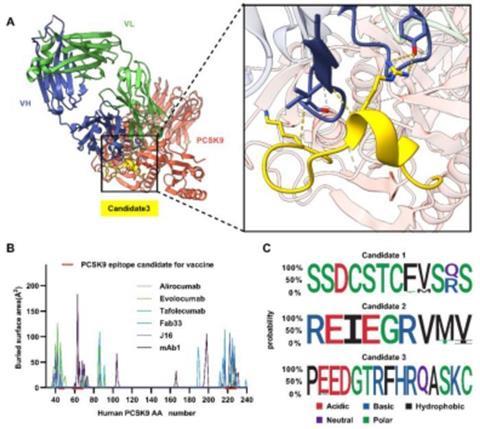
They used structures of PCSK9-antibody complexes from the Protein Data Bank alongside AlphaFold3-guided modelling to identify conserved regions of the protein that are exposed to antibodies. These regions were assessed as potential B-cell epitopes, which are parts of an antigen recognised by antibodies.
Three candidate constructs were developed. One, called PVC3, produced the strongest PCSK9-specific antibody response when formulated with the CpG and alum adjuvants.
In mice, vaccination generated durable anti-PCSK9 antibody responses, with antibody titres maintained for up to 24 weeks. Responses were also observed in guinea pigs and rhesus macaques.
Safety assessments in mice found no overt systemic toxicity or major histopathological abnormalities in the organs examined. The researchers also detected no T-cell response against the PCSK9 B-cell epitope alone, supporting what the study describes as a favourable preclinical safety profile.
Cholesterol and plaque reductions in mice
The researchers next tested PVC3 in two mouse models of hypercholesterolaemia.
In a model induced by an adeno-associated virus carrying the human PCSK9 D374Y variant, vaccination inhibited increases in LDL-C and total cholesterol following the viral challenge. It also reduced lipid accumulation in the liver.
The researchers then tested the vaccine in ApoE-deficient mice, which spontaneously develop high cholesterol and atherosclerotic lesions.
PVC3 reduced LDL-C levels by 29 percent at week four and 20 percent at week 14 compared with controls. The treatment also reduced the area of lesions in the aorta and decreased the proportion of necrotic core within plaques at the aortic root.
Together, these findings show that the vaccine not only affected circulating cholesterol in mice but also reduced measures of atherosclerotic disease.
Results in monkeys highlight a key question
The findings in rhesus macaques were less conclusive.
Healthy monkeys developed robust anti-PCSK9 antibody responses following vaccination and the researchers found no apparent liver, kidney or autoimmune safety signals in the tests performed.
However, PVC3 did not significantly change LDL-C, total cholesterol, HDL cholesterol or triglyceride levels compared with controls.
This difference between the mouse and primate results is important because it means the antibody response did not automatically translate into measurable lipid lowering in healthy non-human primates.
The researchers suggest that disease context could be important and say the vaccine should be investigated further in larger animals with dyslipidaemia.
What comes next?
The study provides a proof of concept for using active immunisation to target PCSK9. Rather than repeatedly administering an antibody or siRNA treatment, a vaccine approach aims to stimulate the patient’s own immune system to maintain an anti-PCSK9 response.
However, the findings remain firmly at the preclinical stage. They do not establish whether PVC3 would safely lower cholesterol or reduce cardiovascular events in humans.
Further work will include testing the approach in dyslipidaemic non-human primate models and investigating how the vaccine produces its effects. The researchers also plan to examine whether vaccination protects LDL receptors, changes levels of circulating free PCSK9 and produces PCSK9-neutralising activity.
If these studies support the approach, PCSK9 vaccination could become a different strategy for achieving sustained PCSK9 inhibition. For now, however, the contrasting results between mice and healthy monkeys underline the need for further validation before the technology can move towards clinical testing.







No comments yet