


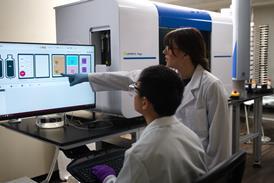
A newly developed insulin assay reduced testing time from four hours to around one hour in an evaluation of GLP-1 receptor agonist candidates, delivering comparable results to an established method.
Promega UK has launched a new insulin immunoassay designed to simplify the measurement of insulin secretion in metabolic disease research and drug discovery.
The Lumit Insulin Immunoassay uses a luminescence-based detection system that eliminates washing steps, allowing researchers to quantify insulin in cell culture and pancreatic islet samples in approximately 70 minutes.
The assay could support studies of pancreatic beta cell function and the evaluation of drug candidates targeting metabolic diseases, including GLP-1 receptor agonists.
Measuring insulin without washing steps
Insulin secretion is an important measure of pancreatic beta cell activity and is frequently assessed during the development of treatments for diabetes and other metabolic disorders.
Conventional insulin immunoassays can require multiple handling and washing steps, increasing the time needed to process samples. These requirements can become particularly challenging in high-throughput screening, where researchers must evaluate large numbers of compounds.
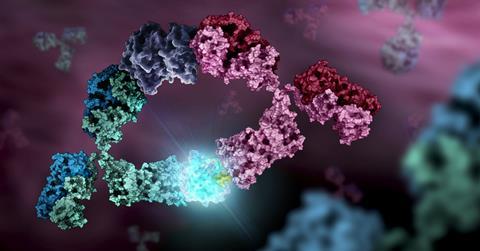
Promega’s new assay uses its Lumit technology, which relies on primary antibodies labelled with complementary components of the NanoBiT luciferase system.
When insulin is present, two antibodies labelled with complementary fragments of NanoBiT luciferase bind to the same insulin molecule, bringing the fragments together to form an active enzyme. Adding a substrate then generates a luminescent signal proportional to the insulin concentration in the sample.
This homogeneous, add-mix-read format removes the need for washing, fixation or sample dissociation.
According to Promega, the assay has a detection limit of 10 picomolar and a linear measurement range extending from 10 picomolar to 8 nanomolar. It has been validated in both 96- and 384-well microplate formats, with a reported signal-to-background ratio exceeding 200.
Evaluating GLP-1 receptor agonists
Researchers at Imperial College London, led by Dr Ben Jones from the Department of Metabolism, Digestion and Reproduction, have used the assay to compare the potency and activity of three GLP-1 receptor agonist drug candidates.
The researchers obtained results comparable to those generated using an established insulin homogeneous time-resolved fluorescence (HTRF) assay, according to Promega.
However, the Lumit assay required approximately one hour, compared with four hours for the HTRF method, and provided a broader linear measurement range.
These characteristics could be useful when screening compounds that influence insulin secretion or investigating the effects of GLP-1 receptor activation on pancreatic beta cells.
“Insulin secretion measurement is central to metabolic disease research, from GLP-1 receptor agonist potency testing to beta cell function assessment,” said Darren Heywood, Senior Product Manager at Promega UK.
“Our new Lumit Insulin Immunoassay addresses this directly – it tracks insulin in a simple add-mix-read format that delivers results faster and with greater confidence, helping researchers accelerate drug discovery and get more actionable data.”
The assay is also intended for applications involving large sample numbers, including high-throughput screening and perifusion experiments, where repeated measurements can be used to study changes in insulin secretion over time.
The Lumit Insulin Immunoassay is now available in two kit sizes, supporting 100 or 500 assays in 96-well format, or 400 or 2,000 assays in 384-well format.









No comments yet