



A UC Berkeley study using nine-month-grown human brain organoids has implicated hyperreactive astrocytes as primary contributors to tuberous sclerosis complex pathology.
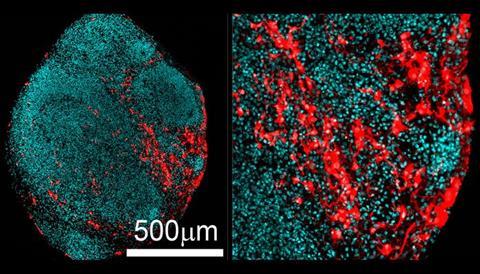
Tiny human brain organoids grown for almost a year are giving researchers a new look into tuberous sclerosis complex (TSC), a genetic disorder that can cause severe childhood epilepsy.
A new study by researchers at the University of California, Berkeley suggests that hyperreactive astrocytes may play a central role in the inflammation and seizures associated with TSC. Using these findings, researchers could design treatments aimed at calming these cells and reducing their damaging effects.
Studying TSC in the lab
TSC is characterised by lesions known as tubers that develop in the brain and can cause seizures that are often resistant to standard anti-seizure medicines. The condition can also affect organs including the heart, skin and kidneys.
The disorder is caused by mutations in either the TSC1 or TSC2 genes, which regulate a major cellular pathway known as mTOR. Children who inherit one faulty copy can develop a second mutation in the other copy, resulting in abnormal cells and the formation of tubers.
Researchers have traditionally suspected that abnormal neurons were primarily responsible for the seizures. However, the new findings suggest that astrocytes could play a much earlier role.
“As soon as these astrocytes are born, they are reactive and look like they’ve been triggered into a disease state. This is arising as a primary result of the mutation,” said Helen Bateup, a Berkeley professor of neuroscience and of molecular and cell biology. “So now we can rethink the disease pathophysiology. It’s not necessarily the case that the neurons are the only cause of seizure activity and the glia become involved later. It could be the other way around, or it could be that both cell types contribute to seizures and epilepsy.”
Growing human brain models
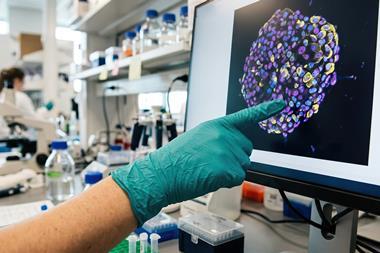
The researchers used human stem cells to create brain organoids measuring only a few millimetres across. Unlike conventional two-dimensional cell cultures, the three-dimensional organoids develop characteristics that more closely resemble those found in a developing human brain.
Organoids offer significant advantages over traditional two-dimensional cell cultures because they can produce biological characteristics that more closely resemble those observed in patients.
The researchers grew the organoids for at least nine months because human astrocytes take longer to develop their mature properties than those in mice. This meant the team had to maintain the organoids for an unusually long period to capture the stages of development relevant to TSC.
The researchers found that progenitor cells in TSC organoids began producing reactive astrocytes at a stage when they would normally be generating neurons.
“In the organoid model, the most impacted cells are astrocytes. So that’s why I’m favoring the idea that they’re really driving a lot of the pathology,” Bateup said. “Developing the organoid system was a big advance in our ability to more closely mimic patient brain phenotypes. We now have a much better, or really the only robust model to study tuber cell development.”
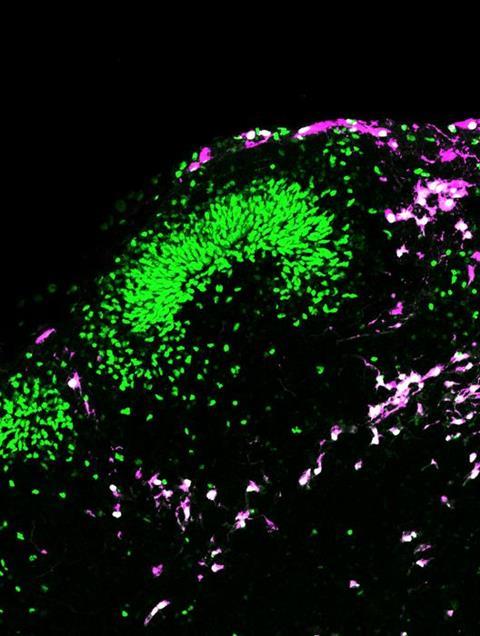
Potential treatment target
The team found that reactive astrocytes expressed many of the same genes associated with neurodegenerative diseases such as Alzheimer’s. Similar protein expression patterns were also identified in tissue taken from 10 patients with TSC.
The findings raise the possibility of targeting reactive astrocytes with existing drugs that suppress inflammation. Bateup said such an approach could potentially reduce the damage caused by the cells without interfering with the mTOR pathway throughout the body.
“If it’s really glia-driven and there’s all these angry cells causing problems, how much can we fix by just suppressing that?” she said. “Can you calm down the glia and ideally bring them back to a homeostatic state, or if that’s not possible, just shut off their ability to cause damage to the surrounding cells? I think that’s feasible.”
Going forward, further work will be needed to determine whether targeting astrocytes can reduce seizures and improve outcomes for people with TSC. However, this study is an important and promising first step towards that evenutal goal.



No comments yet