


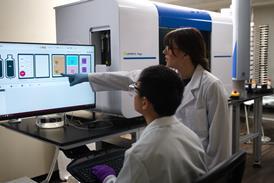
bit.bio’s ioAstrocytes 2.0 pairs with ioGlutamatergic Neurons to deliver reproducible, all-human co-culture models for MEA-based electrophysiology, offering drug developers a more predictive platform for assessing neuronal network activity, seizure risk and neurotoxic effects.
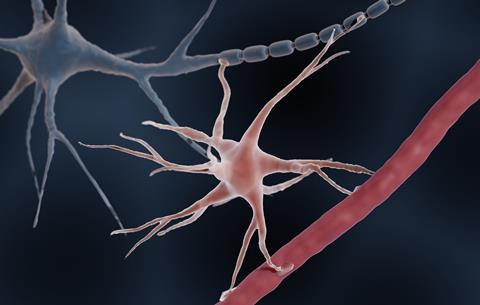
Cambridge-based biotechnology company bit.bio has launched ioAstrocytes 2.0, a human cell model designed to help researchers investigate brain function, assess potential seizure risks and evaluate neurotoxicity during drug development.
The new product builds on an early access version launched in June 2024 and has been refined in response to feedback from researchers. It is designed to work alongside bit.bio’s ioGlutamatergic Neurons, enabling reproducible co-culture experiments using human cells, including functional studies conducted on multi-electrode arrays (MEA).
The system uses bit.bio’s opti-ox deterministic cell programming technology to produce consistent cells and simplify experimental workflows.
Supporting functional brain research
Astrocytes are key support cells in the brain that help neurons mature and communicate. Their inclusion in laboratory models can give researchers a more representative understanding of how the human brain responds to drugs and disease.
“Astrocytes are fundamental to how neurons mature and communicate, so they need to be part of any model used to understand how the brain responds to drugs and disease,” said Dr Emma Pepperell, CEO of bit.bio.
“With ioAstrocytes 2.0, researchers can build neuron–astrocyte co-cultures entirely from consistent human cells and use them in the functional assays that inform decisions in drug discovery, including MEA. They are a good example of how we develop our products alongside the scientific community, and another step towards the predictive, human-relevant models the field needs.”
When cultured with ioGlutamatergic Neurons, ioAstrocytes 2.0 support electrophysiology studies that monitor neuronal network activity. Researchers can use changes in firing patterns and bursts of electrical activity following compound exposure to investigate seizure liability and other potential neurotoxic effects earlier in drug development.
Localised firing can be observed after two to three weeks, while organised and synchronised network bursting is consistently established by day 36 in vitro.
A consistent human cell model
The two cell types are genetically matched, having been derived from the same donor. This provides a defined alternative to approaches that rely on rodent astrocytes or human cells that can be difficult to source and variable to produce.
The company said the system offers a reproducible basis for measuring changes in neuronal function over time and in response to disease-related stimuli. This could be particularly useful in neurodegenerative disease research, where changes in network activity and astrocyte dysfunction are increasingly recognised as early features.
ioAstrocytes 2.0 demonstrate key astrocyte functions from day seven, including phagocytosis and cytokine secretion, enabling researchers to investigate how inflammatory signalling and impaired cellular clearance affect neuronal health and network function. To support routine use, the culture protocol has also been simplified to a fully serum-free, two-step workflow, with each vial containing twice as many cells.
Expanding the ioCells portfolio
“Understanding how drugs and chemicals affect the human brain depends on models that behave like human tissue and give reproducible answers,” said Tom Harris-Brown, Senior Manager, Business Development, Toxicology at bit.bio. ”ioAstrocytes 2.0 support robust, synchronised network activity in co-culture with neurons on MEA, providing an all-human foundation for assessing neurotoxicity and network effects with greater confidence. It also allows researchers to uncover mechanisms that may be missed in monocultures.”
The launch forms part of bit.bio’s wider development of interoperable, multicellular human in vitro models. Tri-culture systems combining ioAstrocytes 2.0, ioMicroglia and ioGABAergic Neurons are also in development.










No comments yet