





Maintaining analytical continuity from early research through to quality control remains a challenge for many cell and gene therapy developers. At ASGCT 2026, Oxford Nanopore Technologies outlined how sequencing-based workflows could help bring multiple analytical assessments together within a single workflow.

Cell and gene therapy developers face a difficult analytical challenge. Product identity, vector integrity, impurities and structural variants must all be assessed throughout development, often using multiple assays designed to answer different questions.
As programmes move towards commercialisation, those requirements can become difficult to manage. Assays established during research do not always transfer smoothly into quality control environments, creating additional work during process development, technology transfer and validation.
The role of analytics in supporting cell and gene therapy development was a prominent topic at the 2026 annual meeting of the American Society of Gene and Cell Therapy (ASGCT) in Boston. Oxford Nanopore Technologies was among the companies discussing how sequencing could help support programmes from discovery through to quality control.
In this article, Carrie Maynard, Associate Director, Biopharma Segment and Dr Veronica Fowler, Head of BioPharma, Product Management at Oxford Nanopore Technologies, discuss the challenges associated with fragmented analytical workflows and explain how sequencing could support a more consistent analytical strategy from discovery through to quality control.
Managing analytical complexity
As cell, gene and mRNA-based therapies move closer to commercialisation, developers are under pressure to generate increasingly detailed analytical data. Full-length vectors and transcripts must be characterised, structural variants identified and product identity confirmed, while ensuring analytical methods can ultimately be standardised and validated for quality control.
Many organisations continue to rely on multiple orthogonal assays – separate tests designed to assess specific product attributes – to answer those questions. While these approaches can provide valuable information, managing numerous methods across development and manufacturing can create additional complexity, particularly as programmes progress towards good manufacturing practice (GMP) environments.
This is prompting developers to reconsider how analytical data are generated and used throughout development and manufacturing.
“As cell, gene and mRNA-based programmes move toward commercialisation, developers are shifting toward analytical approaches that are both deeper and more operationally practical,” says Maynard.
Many legacy analytical methods were not designed for the complexity of modern advanced therapies, Maynard explains, and developers are looking for approaches that can answer multiple analytical questions while reducing assay burden.
As cell, gene and mRNA-based programmes move toward commercialisation, developers are shifting toward analytical approaches that are both deeper and more operationally practical.
Sequencing is attracting attention as it can generate detailed information on multiple product attributes within a single workflow. For developers seeking greater continuity between R&D and quality control, the technology offers a potential route towards more consolidated analytical strategies.
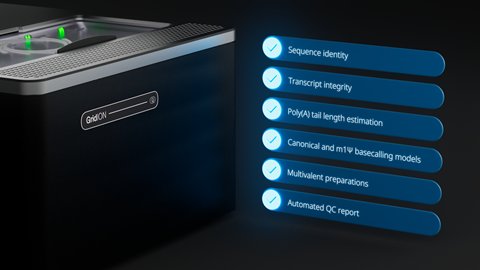
Oxford Nanopore sequencing enables complete molecules to be read from end to end, allowing researchers to examine full constructs, impurities and structural variants within a single workflow. This can provide a more complete picture of construct composition and integrity, helping teams identify structural changes and other characteristics that may influence product quality and manufacturability.
“That whole picture view fundamentally changes how programmes are built,” says Maynard.
Applying the same sequencing workflow throughout development could improve data comparability while reducing assay redesign and simplifying technology transfer as programmes mature.
“The result is fewer assays, more insight and analytical workflows that can scale from discovery through to QC,” adds Maynard.
Reducing fragmentation in quality control
Transferring analytical methods from research into GMP environments remains a significant challenge. Workflows established during discovery often require additional validation and adaptation before they can support quality control, increasing both time and complexity.
“A major challenge is the fragmentation of quality control. Early-stage teams often rely on a patchwork of orthogonal assays to assess integrity, identity and purity, but these methods rarely translate cleanly into GMP environments,” explains Maynard.
Early-stage teams often rely on a patchwork of orthogonal assays to assess integrity, identity and purity, but these methods rarely translate cleanly into GMP environments.
The strategy of Oxford Nanopore Technologies centres on consolidating multiple analytical assessments into sequencing-based workflows that can support both development and quality control. The objective is to provide greater continuity between discovery, analytical development and GMP-aligned quality control.
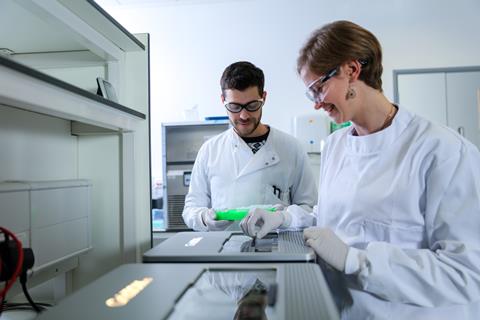
Maynard believes a single-platform approach could help reduce operational complexity while simplifying technology transfer.
Assessing vector quality
For quality control teams, understanding product quality involves far more than confirming the presence of the intended construct.
Changes to vector structure, including deletions, truncations and recombination events, can influence both product quality and manufacturing outcomes. Identifying these alterations reliably is therefore an important part of analytical assessment.
Dr Veronica Fowler believes sequencing can provide information on vector quality and structure that may be difficult to obtain using traditional quality control methods.
“With any-read-length sequencing, complete vector genomes can be captured in a single continuous read, preserving long-range structural information essential for evaluating product integrity,” explains Fowler.
This allows developers to examine complete vector genomes while maintaining the context needed to identify structural changes that may otherwise be difficult to detect.
With any-read-length sequencing, complete vector genomes can be captured in a single continuous read, preserving long-range structural information essential for evaluating product integrity.
Fowler says a single sequencing workflow can be used to assess multiple quality attributes simultaneously. Integrity, identity, purity and structural fidelity can all be evaluated within the same workflow, reducing the need for separate assays and supporting greater consistency between development and quality control.
Strengthening safety assessments
Safety remains a key consideration throughout therapeutic development and manufacturing, particularly when it comes to detecting potential contamination.
One area receiving increasing attention is adventitious viral agent (AVA) detection. AVAs are unintended viral contaminants that may be introduced through raw materials, cell substrates or manufacturing processes. Identifying these contaminants is an important part of ensuring product safety and meeting regulatory expectations.
Traditional testing approaches often rely on targeted assays, such as PCR-based methods, that are designed to detect specific viruses of concern. While highly sensitive, these methods are limited to the agents included within the test panel and may not detect unexpected contaminants.
Fowler says sequencing offers a different approach. By sequencing native nucleic acids directly, Oxford Nanopore sequencing can be used to screen for a broad range of known and potentially unknown viral contaminants within a single assay.
The ability to detect multiple contaminants using a single workflow can complement existing safety testing strategies and support broader assessments of contamination risk.
One platform from R&D to QC
As programmes mature, analytical workflows need to support both research and GMP-aligned quality control.
“Fragmented analytics slow programmes down and create unnecessary friction between R&D, process development and QC,” says Maynard.
Quality control teams face particular pressure. Many organisations are expected to increase throughput and efficiency without significantly increasing headcount. At the same time, analytical expectations continue to grow.
Fowler notes that developers are also looking carefully at how analytical knowledge can move from discovery into regulated environments without extensive redesign.
“Developers are increasingly focused on building analytical strategies that can move smoothly from exploratory R&D into regulated QC without needing to totally redesign assays,” explains Fowler.
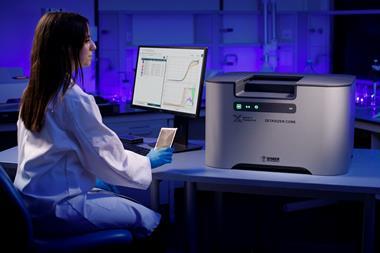
With Oxford Nanopore, developers can generate sequencing data during discovery and process development using the company’s GridION sequencing device before transferring those analytical workflows onto the Q-Line GridION for GMP-aligned quality control.
Developers are increasingly focused on building analytical strategies that can move smoothly from exploratory R&D into regulated QC without needing to totally redesign assays.
Advancing sequencing-based quality control
Both Maynard and Fowler expect sequencing-based quality control workflows to become more capable as the technology continues to develop.
Fowler points to improvements in sequencing accuracy, more automated workflows and analysis pipelines designed for vector integrity, identity and impurity profiling as areas that could further strengthen sequencing-based quality control.
“We’re particularly excited about innovations that will make consolidated, sequencing-based QC even more powerful and accessible,” says Fowler.
She also highlights advances in analysis pipelines tailored to applications such as vector integrity, identity and impurity profiling, alongside improvements that support implementation within GMP environments.
We’re particularly excited about innovations that will make consolidated, sequencing-based QC even more powerful and accessible.
For developers, the potential benefits extend beyond laboratory efficiency. Earlier identification of product quality issues may help reduce batch failures, while more streamlined analytical workflows could simplify technology transfer and reduce the need for assay redesign as programmes mature.
Fowler believes these advances could help developers identify issues earlier in development while supporting the production of safer and more consistent therapies.
“Ultimately, these innovations mean that people waiting for life-changing cell, gene and mRNA-based treatments can receive them sooner, with greater confidence in their quality.”
To learn more about the work of Oxford Nanopore Technologies in cell and gene therapy analytics, visit the company’s website. (https://nanoporetech.com/biopharma)












No comments yet