



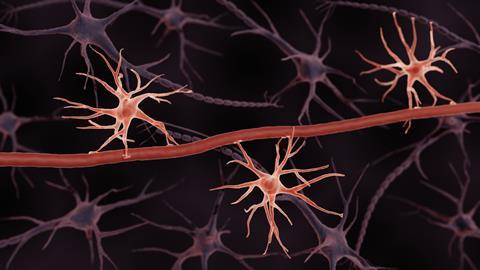

The blood–brain barrier protects the brain from harmful substances, but it also prevents many medicines from reaching their target. Researchers are investigating whether focused ultrasound could safely improve drug delivery.
Developing effective treatments for neurological diseases remains one of the greatest challenges in drug discovery. While advances in biologics, gene therapies and other targeted medicines have transformed many areas of medicine, delivering these therapies to the brain continues to present a major obstacle.
The blood–brain barrier (BBB), which protects the central nervous system (CNS) from harmful substances circulating in the bloodstream, also prevents many potentially beneficial drugs from reaching their intended targets.
Researchers estimate that the BBB excludes the vast majority of large-molecule therapeutics, including antibodies and many gene therapies, while also limiting the penetration of most small molecules. As a result, promising drug candidates may fail not because they lack therapeutic potential, but because they cannot reach effective concentrations within the brain.
One technology under investigation is low-intensity focused ultrasound (LIFU), which enables researchers to temporarily and reversibly increase BBB permeability at specific locations. Rather than permanently disrupting the barrier or relying on invasive procedures, the technique aims to create a controlled window during which therapeutics can enter targeted regions of the brain.
Dr Davinder Ramsingh, Chief Medical Officer at Openwater, spoke to Drug Target Review about the science behind LIFU-enabled blood–brain barrier modulation and what it could mean for the future of CNS drug development.
Why the blood–brain barrier remains a challenge
The BBB performs an essential biological function by protecting the brain from toxins, pathogens and fluctuations in blood chemistry. However, the same tightly regulated structure also creates one of the biggest obstacles in CNS drug development.
According to Ramsingh, this presents a significant challenge for researchers developing therapies for neurological diseases.
“The BBB is often cited as excluding more than 98 percent of small-molecule drugs and nearly all large-molecule therapeutics from meaningful brain penetration,” he explains. “This makes many neurological diseases like Alzheimer’s and brain cancers extremely difficult to treat, as therapeutics are simply unable to penetrate the brain in high enough concentrations to be effective.”
For drug developers, this means delivery is often as important as the therapeutic itself. Without sufficient exposure at the site of disease, even highly promising drug candidates may struggle to demonstrate efficacy.
This makes many neurological diseases like Alzheimer’s and brain cancers extremely difficult to treat, as therapeutics are simply unable to penetrate the brain in high enough concentrations to be effective.
Using ultrasound to temporarily open the barrier
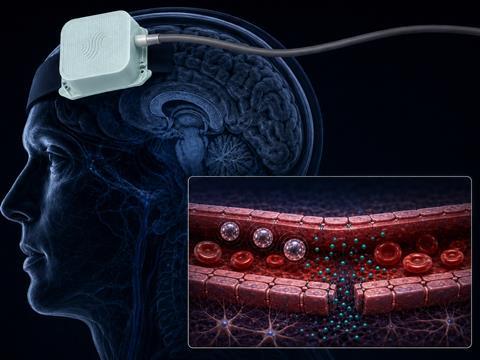
LIFU offers a different strategy to conventional drug delivery approaches. Rather than modifying the therapeutic molecule itself or delivering drugs directly into the brain through invasive procedures, the technology temporarily increases BBB permeability in a highly targeted location.
The technique combines focused ultrasound with intravenously administered microbubbles. When ultrasound is applied to a specific brain region, the microbubbles oscillate in response to the sound waves, temporarily loosening the tight junctions between cells that form the BBB. The barrier then naturally returns to its normal state within hours.
For Ramsingh, one of the key strengths of the technique is its precision.
“What makes this different from other drug delivery strategies is its precision and reversibility,” he says. “We aren’t flooding the system with chemicals or requiring invasive surgery. Rather, LIFU creates tiny, temporary openings that safely resolve and close within minutes to hours.”
We aren’t flooding the system with chemicals or requiring invasive surgery. Rather, LIFU creates tiny, temporary openings that safely resolve and close within minutes to hours.
The effect is localised to the targeted region, leaving surrounding brain tissue largely unaffected and making the technology particularly attractive for repeated treatment in chronic neurological disorders.
Clinical studies begin to demonstrate potential
Although research is still progressing, clinical studies are beginning to demonstrate the potential of ultrasound-mediated BBB modulation across several neurological indications.
Studies in patients with recurrent glioblastoma have shown that focused ultrasound can transiently open the BBB repeatedly while increasing local concentrations of systemically administered therapies within the brain. These findings support the potential of focused ultrasound to overcome one of the major barriers to effective treatment delivery in neuro-oncology.
“Early studies suggest it may activate the brain’s natural immune and lymphatic clearance pathways to help remove amyloid plaques, raising the possibility of therapeutic effects even without delivering a drug,” Ramsingh explains. “This still needs validation in larger clinical studies, but it remains one of the most compelling areas in the field.”
Researchers are also evaluating the technology in other neurological disorders, including Parkinson’s disease, CNS lymphoma and epilepsy, although further clinical evidence will be needed before widespread adoption.
Delivering the right therapy at the right time
Temporarily opening the BBB is only part of the challenge. Researchers must also understand how best to deliver therapies during the limited period when the barrier remains permeable.
“Timing is the most critical factor because the ultrasound-induced BBB opening is temporary and typically normalises within a few hours,” says Ramsingh. “Researchers and clinicians must carefully map out this delivery window to optimise exactly when and where to administer the drug for maximum absorption.”
Timing is the most critical factor because the ultrasound-induced BBB opening is temporary and typically normalises within a few hours.
Safety also remains a key consideration. Treatment parameters must remain within carefully defined limits to avoid unwanted cavitation or tissue damage, while researchers continue to investigate how ultrasound may influence local inflammation, transport proteins and the behaviour of therapeutics after they enter brain tissue.
These considerations may become particularly important as researchers evaluate different therapeutic modalities, each with distinct pharmacokinetic properties and delivery requirements.
Implications for CNS drug development
If BBB modulation proves safe, reproducible and scalable, it could have implications for more than individual therapies.
Large therapeutic molecules, including monoclonal antibodies, gene therapies and nanoparticle-based medicines, are among the drug classes expected to benefit most from improved brain delivery. More broadly, enhanced delivery could allow researchers to revisit therapeutic strategies that may previously have failed.
“It can meaningfully alter CNS drug pipelines,” Ramsingh says. “Some CNS therapies may have failed or underperformed because adequate brain exposure could not be achieved. If BBB modulation can safely and reproducibly improve target-tissue delivery, it could create an opportunity to revisit certain therapeutic strategies and design future CNS trials around delivery as a controlled variable.”
As portable LIFU platforms continue to be developed, researchers are also considering how the technology could be incorporated into clinical trials more routinely, potentially making ultrasound-guided drug delivery more accessible beyond specialist centres.
Although further clinical validation is needed, low-intensity focused ultrasound is emerging as a promising tool for addressing one of the longest-standing challenges in CNS drug development. Rather than replacing existing therapies, it could provide a new way of delivering them to the brain, expanding the range of neurological diseases that may ultimately become treatable.












No comments yet