


A new review is calling for rigorous molecular target validation, improved pharmacokinetic assessment and earlier mechanistic evidence to move plant-derived anti-inflammatory compounds from correlative findings to actionable drug candidates.
Plant-derived compounds have huge potential as sources of anti-inflammatory drugs, but translating promising laboratory findings into real treatments is difficult, according to a review led by researchers at the Naval Medical University.
The review examines the barriers limiting the development of natural compounds into therapeutic candidates. Led by Professor Weidong Zhang at the university’s School of Pharmacy, the authors propose a framework for evaluating compounds based on their chemical properties, molecular targets, binding strength, administered dose, disease-relevant mechanisms and clinical evidence.
The authors argue that improvements in downstream signalling pathways or disease-related symptoms should not automatically be interpreted as evidence that a compound directly interacts with a particular molecular target.
What are plant-derived anti-inflammatory compounds?
Plant-derived anti-inflammatory compounds are naturally occurring molecules found in plants that can influence biological processes involved in inflammation. They include polyphenols, flavonoids, alkaloids and terpenoids, many of which are being investigated for their potential therapeutic properties.
Unlike some targeted drugs designed to act on a specific protein or receptor, natural compounds can influence several signalling pathways involved in the inflammatory response. These include NF-κB, MAPK and JAK-STAT, which help regulate inflammatory gene expression, immune cell activity and the production of inflammatory molecules.
However, demonstrating that a compound reduces inflammation does not necessarily establish how it works at the molecular level. Researchers must determine whether it binds directly to a specific protein, indirectly influences a signalling pathway or produces an effect through another mechanism.
Why does this matter for drug discovery?
A compound may demonstrate promising anti-inflammatory activity in laboratory experiments but still fail as a therapeutic candidate. Poor absorption, rapid metabolism and insufficient concentrations reaching diseased tissues can prevent it from producing the same effects in the body.
Understanding its molecular targets, pharmacological activity and achievable dose is therefore essential for determining whether a plant-derived compound has genuine therapeutic potential.
Understanding molecular targets
Chronic inflammation contributes to a variety of conditions, including autoimmune diseases, metabolic disorders, neurodegenerative diseases and cardiovascular disease. Although existing anti-inflammatory treatments can be effective, incomplete responses, long-term safety concerns and high costs associated with some targeted therapies highlight the need for additional approaches.
The review highlights differences in the strength of evidence supporting proposed mechanisms, distinguishing direct target binding from downstream pathway changes and computational predictions. Establishing direct target engagement is particularly important when determining whether a compound’s biological effects are likely to translate into therapeutic benefit.
Drug exposure presents another challenge
The researchers highlight drug exposure as a big obstacle. Many plant-derived compounds demonstrate activity at low micromolar concentrations in laboratory experiments, but their free concentrations in the bloodstream can be substantially lower following oral administration.
Consequently, even when a compound can bind to a proposed target, insufficient concentrations in diseased tissues may prevent it from reaching the levels needed to produce a pharmacological effect, emphasising that dose must be evaluated together with target engagement evidence.
Clinical evidence must also be interpreted carefully. For example, studies have reported improvements in pain and physical function when curcumin formulation BCM-95 or resveratrol is combined with conventional treatments for knee osteoarthritis. However, these findings do not establish that the benefits result from direct binding to proposed targets such as IKKβ or SIRT1.
Similarly, clinical evidence for Tripterygium preparations in rheumatoid arthritis cannot automatically validate pure triptolide, as many studies have investigated extracts or mixtures of glycosides.
New technologies could strengthen drug discovery
The review also mentions several technologies that could improve the identification and validation of plant-derived compounds.
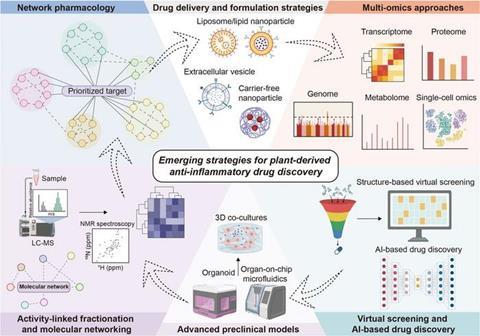
Network pharmacology, multi-omics, virtual screening and artificial intelligence can help prioritise candidates and generate hypotheses. However, the authors say that these approaches can not replace experimental validation of molecular targets.
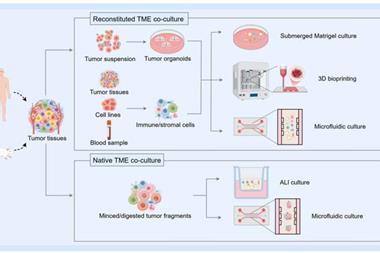
Three-dimensional co-culture systems, organoids and organ-on-a-chip models could also provide more physiologically relevant environments for investigating interactions between immune, stromal and vascular cells.
Similarly, extracellular vesicles and biomimetic nanocarriers could improve compound stability and tissue-specific delivery, although scalable manufacturing and batch consistency need to be considered.
Combination therapies offer a potential route forward
Rather than replacing existing targeted treatments, plant-derived compounds may be better suited to use as complementary therapies.
However, the authors caution that combining two compounds does not necessarily produce pharmacological synergy. Future studies should distinguish additive effects from genuine synergy while investigating dose-sparing potential, pharmacokinetic interactions and toxicity.
The review concludes that the key challenge is establishing whether plant-derived compounds can engage defined molecular targets at achievable concentrations in diseased tissues.
“Moving mechanistic and pharmacological validation earlier, separating direct target evidence from downstream pathway changes and separating clinical evidence for extracts from evidence for pure compounds are key to advancing the field from correlative discoveries to actionable candidates,” the authors stated.



No comments yet