
The role of live-cell imaging in evaluating drug responses
By  Mark Clymer2026-11-25T07:30:00
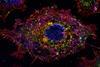
Two compounds can produce similar endpoint results yet trigger very different cellular responses. Live-cell imaging allows researchers to track these differences and identify effects that conventional assays may miss.
A compound that appears promising in an initial screen may cause toxicity several hours later. Another may appear less effective but produce a sustained response. A small population of resistant cells may even go undetected when results are averaged across an entire sample.
How much of this information are researchers missing by relying on endpoint measurements alone? Mark Clymer, Vice President of Products at ACCU-SCOPE, examines what live-cell imaging can reveal about drug activity, when it is most useful and the technical challenges researchers must address to ensure their findings are reliable.
Already a member? Sign in