



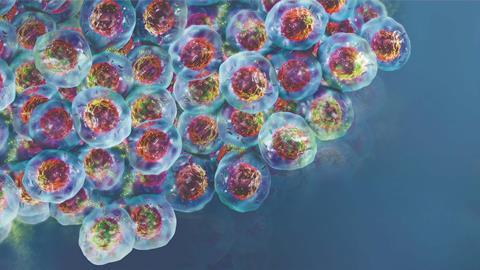

As new approach methodologies (NAMs) move into mainstream drug discovery, advanced models are demanding more from the assays used to measure them. Discover the six requirements for generating reliable, reproducible and biologically meaningful data.
As drug development shifts towards new approach methodologies (NAMs) such as organoids and 3D models, traditional 2D assays often fall short of what these physiologically relevant models require to characterise them.
This article outlines six requirements for assays to succeed in this space: non-lytic/kinetic readouts, ability to multiplex assays, model-compatible chemistry, signal-to-biology correspondence, reproducibility and AI compatibility.
NAMs in drug development
NAMs are a burgeoning cohort of research approaches proposed as alternatives to animal testing in the drug development pipeline. They include in silico, in chemico and advanced 3D cell in vitro models (organoids, spheroids, organs-on-chips).
Their usage is in part driven by the 2022 Food and Drug Omnibus Reform Act (FDORA), which includes the FDA Modernization Act 2.0 for the authorisation of cell-based and computer models as alternatives to animal testing for drug development.
In March of 2026, the US Food and Drug Administration (FDA) released a draft guidance document covering considerations on the use of NAMs (FDA & CDER, 2026). This increased regulatory momentum has driven demand for assays and tools that are equipped for these advanced approaches.
Trends in NAM use
The shift towards more physiologically relevant models is part of a larger movement away from singular readouts to multi-dimensional characterisation of a cell’s state. Singular readouts from 2D cell cultures (viability, cytotoxicity) have been the anchor in cell-based screening for decades because they are affordable and compatible with high-throughput workflows.
Despite their strengths, there are several challenges with directly transferring these assays into 3D model systems. Firstly, the time and financial investment is dramatically higher for both developing and maintaining advanced cellular models. Using a traditional endpoint assay lyses the cell, thus removing any potential additional readouts. For samples grown over several hours, days or weeks, these assays are not a valuable solution.
The shift towards more physiologically relevant models is part of a larger movement away from singular readouts to multi-dimensional characterisation of a cell’s state.
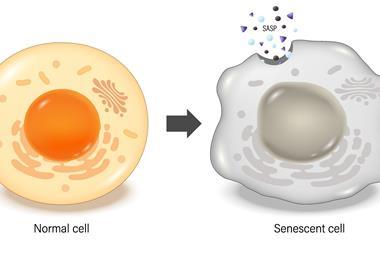
Secondly, endpoint readouts can skip the mechanistic action driving the result. For example, metabolic switching will precede a drop in cell viability. Attaining a more comprehensive view of a 3D culture provides insight into cellular processes that drive these downstream cell states. It can also uncover a missed biological response, such as a senescent cell population that is still alive. Physiologically relevant models need physiologically relevant readouts to be worth the investment and paint the full picture that regulators require.
The data these richer models generate feeds a third shift: the growing role of in silico methods. Computational approaches use existing toxicology databases, published literature and high-throughput screening results to predict how a compound behaves before it is tested in vitro.
The multi-dimensional readouts from advanced models supply mechanistic and temporal data that make these predictions more human-relevant than simply knowing the chemical structure. This relies on quality datasets, as they set the ceiling on what these models can do. Reliable and sensitive assays generate datasets that improve the reproducibility of computer modelling.
The requirements for assays to fit into these workflows are very high. This article covers the primary requirements of assays for their successful integration into NAM research.
What are the needs of NAMs?
Getting a high-value measurement out of an expensive model
1. Non-lytic/kinetic readouts
A 3D model is a system that requires a long time to develop and reach appropriate physiological relevance. As a result, many of the biological processes researchers measure unfold over hours, days or even weeks. Common assay solutions read a single defined timepoint by lysing and consuming the cells to acquire a signal. These endpoint methods are common and well established in 2D culture. As the field pushes advanced physiological systems as a replacement for the complexity of a human model, endpoint assays are less desirable. The solution to this need is kinetic assays that provide real-time readouts. These give a fuller, more continuous picture of what you are studying.
2. Multiplexable readouts
Advanced 3D cell cultures carry a high investment cost, so it becomes essential to capture as much data as possible from each sample. Ideally, your assays are compatible, so you can measure multiple parameters from the sample without running subsequent or parallel samples. One way to approach this is to have your readouts rely on different chemistry so that you can distinguish them. Bioluminescent enzymatic activity, for example, is easily decoupled from fluorescent activity. Because the two signals occupy different detection channels, you can run them together in the same sample without one obscuring the other. This lets you pair a fluorescent cytotoxicity readout with a luminescent viability readout in the same well, resolving these measurements within the same well instead of requiring separate plates.
3. Model-compatible chemistry
The readout you choose matters when measuring 3D systems, because these models are far more complex than 2D flat planes of cells. A 3D model is typically much larger, and it often integrates several cell types into a single structure to more closely represent a true biological system, tissue or organ. This complexity means that assays designed for 2D culture do not automatically transfer to 3D. Assay chemistry, reagent penetration and the resulting signal output differences may lead to inaccurate interpretation from assay results. For this reason, assays that have been optimised and thoroughly validated for 3D systems boost confidence that the measurements coming out of any model are accurate during drug development. Such optimisations can include using stronger lytic reagent and extended incubation times.
Making measurements usable at the scale drug development demands
4. Signal to biology correspondence
Assume an assay is physically capable in a model: that it penetrates the structure and produces sufficient signal strength. That is only half the picture. It is equally important to validate that the assay is measuring the appropriate response inside your cells, that the signal corresponds to what is happening within the model system. This is most often validated through an orthogonal confirmation. One recommendation is to compare the assay readout against a known-response control, providing a reference point to confirm the assay reports the expected answer.
5. Reproducibility/standardisation
A significant challenge within NAMs research is the lack of reproducibility and consistency across the field. This is somewhat inherent to the models themselves. Spheroids and organoids are, by definition, less uniform well-to-well. That variability is part of what makes them physiologically valuable, but it also creates real challenges when the desire is to run large numbers of samples and generate consistent findings. Compounding this, the relatively recent regulatory recommendations mean the field is still burgeoning and has not yet had time to settle. There is a need for consistent ways to compare large samples and datasets, both against one another and over time. Lot-to-lot reproducibility of stable reagent results is mandated in the guidance proposed by the FDA. Fluorophore-based readouts can struggle to provide this consistency, while enzymatic readouts inherently provide reagent batch consistency.
6. AI compatibility
The shift towards NAMs carries heavy emphasis on in silico studies: large computational models built on data generated by assays in these systems. Feeding an AI-based computational model requires data that are robust, reproducible and most importantly, scalable. AI models need data at a volume that low-throughput methods cannot easily reach; data for these AI models most often come from assays that scale to 384- or 1536-well formats. This is crucial as future drug discovery will increasingly incorporate AI agents and AI therapeutic identification. As that shift happens, the assays generating the training data need to be consistent and compatible enough that in silico models can be trusted to support drug development.
Conclusion
Regulators have demanded fit-for-purpose measurements, asking for assays that provide sensitive, reproducible, standardised answers that can train AI models. If regulations continue the same way, these requirements will only continue to increase.
As NAMs are more incorporated into the drug development pipeline, the considerations above become more important. Within drug development, the model is only as trustworthy as the data it produces. Getting that data right is what will allow these systems to carry the responsibility that is being asked of them.
Citations
FDA, & CDER. (2026). General Considerations for the Use of New Approach Methodologies in Drug Development Guidance for Industry DRAFT GUIDANCE. https://www.fda.gov/drugs/guidance-compliance-regulatory-information/guidances-drugs
FDA Modernization Act 2.0. (2022). S. 5002, 117th Congress. Retrieved from https://www.govinfo.gov/app/details/BILLS-117s5002cps











No comments yet