




The PsychAD Consortium is using human genetics, single-cell genomics and automated screening to pinpoint potential drug targets for Alzheimer’s disease and investigate their therapeutic potential.
Genetic studies have identified numerous variants associated with Alzheimer’s disease, but determining which genes and cell types contribute to disease remains a challenge for drug discovery. Even when a genetic association is established, researchers must determine whether modifying the implicated gene could provide therapeutic benefit.
The PsychAD Consortium is investigating these questions using a large-scale molecular atlas of the human brain. The resource contains single-nucleus RNA sequencing data from more than 6.3 million nuclei collected from 1,494 donors, including individuals with Alzheimer’s disease, Parkinson’s disease and other neurological and psychiatric disorders.
By integrating these data with human genetics and experimental screening, researchers aim to identify disease-associated mechanisms and prioritise potential therapeutic targets.
Professor Panos Roussos, Professor of Psychiatry and Genetics and Genomic Sciences at the Icahn School of Medicine at Mount Sinai and Contact Principal Investigator of the PsychAD Consortium, explained how the research is being used to investigate the biological mechanisms underlying brain disorders.
“Human genetics provides evidence about inherited differences that influence disease risk,” he said. “However, a genetic association often leaves several questions unanswered: which gene is affected, in which cell type, and through what biological mechanism?”
Identifying cell-specific therapeutic targets
Analysing brain tissue as a whole can conceal disease-associated changes in specific cell populations. By combining human genetics with single-cell data, researchers can investigate which genes are affected by genetic risk variants and identify the brain cell types in which those effects occur.
One example identified by PsychAD researchers involves the epidermal growth factor receptor (EGFR), a cell-surface receptor involved in signalling pathways that regulate cell growth, survival and other cellular functions.
The researchers identified distinct genetic signals regulating EGFR expression in astrocytes, which help support and maintain neurons, and oligodendrocytes, which produce the insulating myelin sheath around nerve fibres.
However, only the genetic signal regulating EGFR in astrocytes overlapped with Alzheimer’s disease risk. This suggests that astrocytes may be a particularly relevant cell type for investigating EGFR’s potential involvement in the disease.
For drug discovery, identifying the relevant cell type can help researchers design more targeted experiments to investigate EGFR’s potential involvement in Alzheimer’s disease. Further studies will be needed to establish whether modifying its activity could provide therapeutic benefit.
Investigating shared mechanisms across brain disorders
The consortium’s analyses have also identified molecular mechanisms that may be relevant to more than one neurological disorder.
For example, genetic analyses revealed shared pathways in microglia, the brain’s resident immune cells, associated with Alzheimer’s and Parkinson’s disease.
These findings suggest that some potential therapeutic mechanisms may extend across traditional diagnostic categories. Rather than selecting targets solely according to disease diagnosis, researchers could investigate biological pathways that contribute to multiple conditions.
However, shared molecular changes do not necessarily have the same function in each disorder. Some may contribute to disease progression, while others could reflect cellular damage or protective responses.
“Even a genuinely shared mechanism could require different interventions at different disease stages,” Roussos explained.
Determining whether these pathways have a causal role and whether modifying them produces functional benefit, will be necessary before they can be considered validated therapeutic targets.
Even a genuinely shared mechanism could require different interventions at different disease stages.
Connecting human brain data with robotic screening
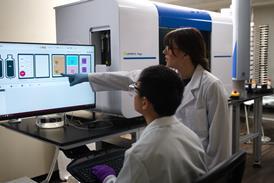
To investigate whether disease-associated molecular processes can be modified experimentally, PsychAD is connecting its human brain datasets with automated compound screening.
The robotic platform supports compound testing in human induced pluripotent stem cell-derived neurons, including excitatory and inhibitory neurons. Researchers assess compound responses using gene expression analysis and high-content imaging, including Cell Painting, which captures changes in cellular shape and internal structures.
“PsychAD supplies disease-associated molecular patterns against which those compound responses can be compared,” Roussos explained. “This allows us to nominate compounds that might counter a harmful process or reinforce a protective one.”
Compounds are prioritised according to the strength of the supporting human evidence, relevance to the cell type, reproducibility, dose dependence and cell viability. However, interpreting these responses requires care. Some disease-associated changes may reflect protective responses rather than processes that should be reversed.
The choice of experimental model is also important. For example, a mechanism identified in microglia cannot be adequately investigated using neuronal cultures alone. Stem cell-derived models also have limitations in reproducing the biology of the ageing human brain.
“Automation lets us examine many more possibilities systematically,” Roussos said. “The critical step remains establishing why a compound produces its effects and whether those effects are beneficial.”
Promising compounds must therefore undergo further testing to establish their mechanism of action, functional benefit, target engagement and potential for therapeutic development.
Automation lets us examine many more possibilities systematically.
Accounting for molecular variation in Alzheimer’s disease
PsychAD research has also identified substantial molecular differences between individuals with Alzheimer’s disease.
Patients with the same diagnosis may exhibit different patterns of gene regulation, cellular activity and disease-associated biological pathways.
For drug discovery, this raises questions about which mechanisms are sufficiently consistent across patients to support broadly applicable treatments and which may be more relevant to particular patient subgroups.
The consortium is also investigating resilience, including why some individuals retain relatively good cognitive function despite substantial Alzheimer’s pathology.
What is cognitive resilience in Alzheimer’s disease?
Cognitive resilience describes the ability to maintain cognitive function despite substantial Alzheimer’s pathology. Some individuals exhibit extensive amyloid-beta plaque deposition and neurofibrillary tau tangles at post-mortem examination, yet experienced little or no cognitive impairment during their lifetime.
Identifying the cellular programmes associated with resilience could reveal protective mechanisms that may be suitable for therapeutic investigation. However, these molecular differences do not yet represent established clinical categories. Translating them into personalised treatments will require biomarkers that can be measured in living patients and accurately reflect the relevant brain biology.
Prospective studies will also be needed to determine whether these biomarkers can predict treatment response and support patient selection in clinical trials.
Establishing whether a target is suitable for drug discovery
Identifying a gene associated with Alzheimer’s disease does not necessarily mean it represents a viable drug target. Researchers must first establish whether the association is reproducible and identify the relevant gene, cell type and biological mechanism.
Experimental studies are then needed to determine whether increasing or decreasing the target’s activity produces beneficial effects in appropriate human cellular models.
“Changing an RNA signature alone is insufficient,” Roussos explained. “Depending on the mechanism, relevant outcomes could include neuronal survival, synaptic function, electrical activity, or glial cell support for neurons.”
Changing an RNA signature alone is insufficient.
Complementary genetic and pharmacological experiments can help confirm that these effects result from modifying the intended target. Researchers must also assess selectivity, toxicity, delivery to the relevant brain cells and whether a suitable therapeutic window can be achieved. “A target can be biologically important yet difficult to modify safely,” Roussos said.
Making human brain data available for drug discovery
The PsychAD Consortium is making its molecular datasets and analytical tools available to the wider research community, allowing scientists to investigate disease mechanisms and therapeutic hypotheses beyond those examined in its initial studies.
The resource could support further research into genetic risk, mechanisms shared between neurological disorders and the biological processes associated with resilience. As researchers begin testing these findings in experimental models, the next challenge will be determining which disease-associated mechanisms can be targeted safely and effectively.














No comments yet