


Researchers at Johns Hopkins Medicine have found that a drug called corin can slow the growth of atypical teratoid rhabdoid tumours in animal models.
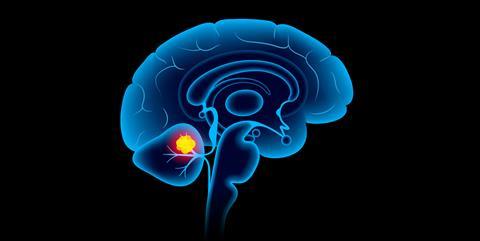
A drug developed by researchers at Johns Hopkins Medicine could offer a new treatment approach for atypical teratoid rhabdoid tumours (ATRT), an aggressive form of brain cancer that primarily affects infants.
The drug, called corin, works by encouraging cancer cells to mature into a less aggressive state, rather than remaining locked in an immature, rapidly growing state. Preclinical findings suggest it could reduce tumour growth and improve survival, potentially offering an alternative approach for a cancer with limited treatment options.
Addressing an unmet need in infant brain cancer
ATRT is the most common form of brain tumour in infants and has a poor prognosis. Just over one third of affected infants survive following intensive treatment, which can involve surgery, chemotherapy, radiotherapy and stem cell transplants.
Even those who survive frequently experience lifelong complications associated with their treatment, highlighting the need for therapies that target the disease through different mechanisms.
“New therapies that work in different ways are desperately needed,” says co-senior author Eric Raabe, Associate Professor of Oncology and Pathology at Johns Hopkins Medicine. “Corin works to address the root cause of ATRT. It reduces the growth of ATRT tumour cells in the brains of lab mice and mice with ATRT tumours treated with corin live longer.”
Corin was originally developed at Johns Hopkins Medicine by study co-author Philip Cole, now a Professor at Harvard University. The drug targets a protein involved in maintaining cancer cells in an immature state associated with rapid growth and resistance to treatment.
Reprogramming cancer cell development
The researchers investigated corin’s effects in laboratory-grown cells and animal models of ATRT and discovered that the drug inhibited tumour cell growth, promoted cell death and altered epigenetic regulation of gene expression.
In particular, corin enabled genes associated with cell maturation to become active, encouraging immature tumour cells to develop towards a more differentiated state.
The team also observed tumour cell death and the maturation of embryonic cells into brain cells in mice with ATRT. Animals treated with corin survived longer than those that did not receive the drug.
Further experiments found that suppressing the expression of RCOR2 produced similar effects to corin, supporting the drug’s proposed mechanism of action through an epigenetic regulatory complex known as CoREST.
“Corin works by forcing ATRT cancer cells that are stuck in a fast-growing, chemotherapy-resistant embryonic state to mature,” Raabe explains. “As they mature, the cells express tumour-suppressing proteins that turn off growth, cause some cells to die and may make the tumour more vulnerable to chemotherapy.”
Exploring combination therapies
The researchers believe corin could potentially be combined with existing chemotherapy treatments or used as a maintenance therapy following initial treatment to eliminate remaining cancer cells and reduce the risk of recurrence.
Current work is now investigating whether combining corin with decitabine, another drug that targets epigenetic gene regulation, could strengthen its anti-tumour effects.
The longer-term aim is to develop combination therapies suitable for clinical trials. The team has also devised a potential drug-delivery strategy using an Ommaya reservoir, a coin-sized device implanted beneath the scalp that can deliver medication directly to the tumour or into the cerebrospinal fluid.
“The device sends the drug right to the tumour,” Raabe explains. “That should help prevent unwanted side effects elsewhere in the body.”
Potential beyond ATRT
Although the findings are still at the preclinical stage, corin could have applications beyond infant brain cancer. Previous preclinical research has suggested potential benefits in skin cancer, malignant peripheral nerve tumours and malignant rhabdoid tumours, another aggressive childhood cancer.
“The collaborative environment at Johns Hopkins Medicine has allowed us to repurpose a drug developed here and use it to target a new type of tumour,” Raabe says. “We continue to collaborate across departments and disciplines and with our colleagues at other institutions to benefit our patients.”





No comments yet