



Removing SRC-3 from regulatory T cells reduced tumour immunosuppression in preclinical models, allowing cytotoxic T cells and natural killer cells to infiltrate tumours. Dr David Lonard and Dr Sonal Gupta discuss how altering Treg activity could restore anti-tumour immunity.
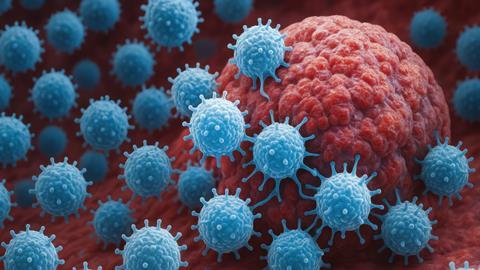
Regulatory T cells (Tregs) are essential for keeping immune responses under control. In cancer, however, that same suppressive function can become a problem. Tregs that accumulate within tumours can restrict the activity of immune cells that would otherwise attack cancer cells.
Research into steroid receptor coactivator-3 (SRC-3) has identified a potential way of altering that suppression. Although SRC-3 has historically been studied for its role in steroid hormone signalling and cancer cell proliferation, researchers found that it is highly expressed in Tregs and regulates a broad set of genes involved in their activity.
In preclinical models, removing SRC-3 in Treg cells reduced the heightened immunosuppressive activity of Tregs within tumours without eliminating their suppressive function elsewhere. The altered Tregs also allowed CD4+ T helper cells, CD8+ cytotoxic T cells and natural killer cells to enter tumours, providing a possible route to generating or restoring an anti-tumour immune response.
Dr David Lonard, Chief Scientific Officer at CoRegen and Professor of Molecular and Cellular Biology at Baylor College of Medicine, and Dr Sonal Gupta, Chief Medical Officer at CoRegen, spoke to Drug Target Review about how the link was identified, what the preclinical studies have shown and the questions that now need to be answered in patients.
An unexpected role for SRC-3 in regulatory T cells
The link between SRC-3 and immune regulation emerged from an unexpected observation. Researchers studying mice lacking SRC-3 throughout the body found lymphoproliferation, an abnormal increase in B and T immune cells. This was difficult to reconcile with the established focus of their research, which had largely examined how steroid receptor coactivators act within cancer cells.
The finding led the researchers to examine SRC-3 expression across immune cells.
“We took a focused look at SRC-3 expression in immune cells and found that it was expressed very highly in regulatory T cells,” Lonard said.
Further work indicated that SRC-3 was not controlling only one aspect of Treg biology.
“We found that it acts as a master regulator of genome-wide expression in that cell type,” he explained.
We took a focused look at SRC-3 expression in immune cells and found that it was expressed very highly in regulatory T cells.
Dr David Lonard, Chief Scientific Officer, CoRegen and Professor of Molecular and Cellular Biology, Baylor College of Medicine
The researchers then investigated what happened when SRC-3 was removed from Tregs.
“When we knocked out SRC-3, it really handicapped the immunosuppressive activity of Tregs in the tumour microenvironment,” Lonard said.
Importantly, the effect was not the same outside tumours. SRC-3 knockout Tregs retained some of their basal suppressive function in healthy tissues, where Tregs normally help control immune responses.
The finding raised the possibility of altering the behaviour of Tregs within tumours without completely disabling the cells.
Gupta also highlighted a difference between this strategy and therapies directed at proteins on the Treg surface.
“What David and Dr Bert O’Malley’s lab have actually done is change the basic biology from inside the Treg, rather than trying to target something on the surface of the Treg,” she said.
Disrupting multiple mechanisms of immune suppression
One reason SRC-3 is of interest is that its removal affected several components of the Treg immunosuppressive programme rather than a single pathway.
“When we knock out SRC-3, we see something different. We have a cassette of immunosuppressive programmes that are not completely eliminated, but are all downregulated,” Lonard said.
These included the immune checkpoint molecules PD-1, PD-L1, CTLA-4 and LAG-3, which help regulate immune-cell activity, as well as CCR4, a chemokine receptor involved in Treg migration.
When we knock out SRC-3, we see something different. We have a cassette of immunosuppressive programmes that are not completely eliminated, but are all downregulated.
Dr David Lonard, Chief Scientific Officer, CoRegen and Professor of Molecular and Cellular Biology, Baylor College of Medicine
The result was not a complete loss of Treg function. Instead, several mechanisms contributing to immunosuppression were reduced simultaneously.
“We have a Treg cell that is not completely incapacitated, but is no longer able to achieve the heightened immunosuppression that a tumour needs to protect itself from the effector immune system,” Lonard explained.
This provides a different way of interfering with tumour immunosuppression from targeting an individual immune checkpoint.
Could tumour immunosuppression be reduced without disrupting immune regulation?
Changing Treg biology creates an important challenge. Any anti-tumour effect needs to be considered alongside the cells’ normal role in preventing excessive immune responses.
The researchers therefore developed a genetic model in which SRC-3 was specifically removed from Tregs. They initially expected that interfering with their suppressive activity might lead to autoimmune effects.
“We really didn’t know what to expect. We thought there was a likelihood that we would observe some autoimmune pathology in these animals,” Lonard said.
That was not what they observed. “These animals were still healthy, with a normal lifespan and normal reproductive function.”
The researchers then investigated the effect in syngeneic mouse tumour models, which allow anti-tumour activity to be studied in the presence of an intact immune system. The work included models of breast cancer, prostate cancer, pancreatic cancer, glioblastoma, colon cancer, melanoma and non-small cell lung cancer.
“We found strong anti-tumour effects, with tumours completely eradicated in these aggressive syngeneic models,” Lonard said.
The findings remain preclinical. Whether the same balance between reducing tumour immunosuppression and maintaining normal immune regulation can be achieved in humans is therefore a central question for clinical investigation.
Opening the tumour to immune attack
The tumour models also provided clues to how SRC-3 knockout Tregs generated an anti-tumour response.
After being transferred into tumour-bearing animals, the knockout Tregs infiltrated the tumours and suppressed the activity of wild-type Tregs already present. This was followed by the entry of CD4+ T helper cells, CD8+ cytotoxic T cells and natural killer (NK) cells.
“It’s really removing the barrier that is blocking these other effector immune cells from entering the tumour,” Lonard said.
By reducing the suppressive environment, the animals’ own effector immune cells were able to enter the tumour and generate an anti-tumour response.
This indirect mechanism also provides a useful contrast with CAR T-cell therapy.
“CAR T cells directly kill cancer cells,” Gupta said. “SRC-3 knockout Tregs do not directly kill cancer cells. They enable the killing of cancer cells through an indirect mechanism of action.”
Gupta described the effect in terms of removing the barrier created by suppressive Tregs. “That barrier is lifted and they allow the body’s own immune system to actually kill the cancer cells,” Gupta said.
SRC-3 knockout Tregs and CAR T cells
| SRC-3 knockout Tregs | CAR T cells | |
|---|---|---|
|
Role |
Reduce Treg-mediated immunosuppression |
Directly recognise and kill target cells |
|
Mechanism |
Alter the suppressive programme within Tregs |
Introduce a receptor recognising a defined antigen |
|
Anti-tumour response |
Allows endogenous immune cells to enter and attack the tumour |
Engineered T cells directly attack antigen-positive cells |
|
Targeting |
Not directed at a specific tumour-associated surface antigen |
Typically relies on recognition of a defined surface antigen |
Will the same biology translate to humans?
Results from mouse models provide the foundation for the work, but they cannot establish whether SRC-3 will have the same role in human Tregs.
There are some indications that aspects of the biology are shared. Lonard said mouse immune cells with high SRC-3 expression showed similar gene-expression patterns to those seen in human blood. He also pointed to previous research into SRC-3 in cancer cells, where similar biological roles have been reported in mice and humans.
Those similarities provide a rationale for testing the mechanism clinically, but evidence from patients will be needed to determine whether the anti-tumour effects seen in mouse models translate.
“The proof is always in the pudding,” Gupta said. “Showing it in a clinical trial with actual patients is very important.”
The therapy being tested is an autologous cell therapy in which SRC-3 is knocked out of a patient’s own Tregs before the cells are reinfused into the patient. The Phase I/IIa study is initially evaluating the therapy in two metastatic breast cancer indications and also in metastatic prostate cancer.
Alongside safety and tumour activity, Gupta said the clinical work will examine cellular kinetics, cytokine changes and changes within the tumour microenvironment using tumour biopsies. These measurements could help establish whether the biological changes identified in preclinical models are also occurring in patients.
What still needs to be established
Several questions remain as the work moves from preclinical models into clinical testing.
The first is whether the tumour clearance and protection against recurrence reported in preclinical studies will translate to patients. Safety will be equally important, particularly whether changing Treg function produces short- or long-term effects that were not apparent in animal models.
“We want to understand the safety profile and whether there are short-term or long-term toxicities that will be identified in the clinical trial,” Gupta said.
Another question is how broadly the biology applies across cancer types. The preclinical programme has included several solid tumour models, but evidence from patients will be needed to establish whether the effect extends to additional indications.
We want to understand the safety profile and whether there are short-term or long-term toxicities that will be identified in the clinical trial.
Dr Sonal Gupta, Chief Medical Officer, CoRegen
There is also a practical challenge. The therapy is autologous, meaning each treatment is produced using cells from an individual patient. Moving from early clinical testing to larger studies would therefore require manufacturing to support greater numbers of individual patient batches, leading to a strategic partnership between CoRegen and Lonza, one of the world’s largest and most established CDMOs.
“For an autologous therapy like ours, manufacturing is the product because every single batch is produced for an individual patient,” Gupta said.
SRC-3 was originally investigated largely for its activity within cancer cells. Its role in Tregs has identified another potential way to target cancer by reducing the immune suppression surrounding a tumour.
The preclinical findings suggest that removing SRC-3 can reduce the heightened suppressive activity of Tregs, allow other immune cells to enter tumours and generate an anti-tumour response without completely eliminating Treg function.
Clinical investigation will now need to establish whether the same effects can be achieved safely in patients.






No comments yet